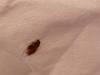
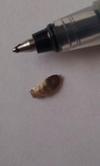
Quick answer: Bugs commonly mistaken for bed bugs include bat bugs and swallow bugs (close relatives that look almost identical), ticks, carpet beetles, young cockroaches, fleas and spider beetles. A bed bug is flat, oval and reddish-brown, about the size of an apple seed, with no working wings. It can't jump, and it doesn't stay attached to your skin. If a bug fails any of those tests, it's probably something else.1,2,3,4
Key Takeaways
- Bat bugs and swallow bugs are the hardest to tell apart. You need magnification to check the hairs behind the head or the antennae.5,3
- Ticks have eight legs as nymphs and adults and stay attached to skin for days. Bed bugs have six legs and feed for minutes, then leave.6,7,2
- Carpet beetles are round and fly; their larvae are fuzzy. Neither bites, but larval hairs can cause an itchy rash.8,9
- Baby cockroaches run fast and have long antennae; young German cockroaches also have a pale stripe down the back.10,11
- If it jumps, it isn't a bed bug. Fleas jump; bed bugs only crawl.2,12
- Get a positive ID before you treat, because bird and bat bugs, beetles and fleas each need a different fix.2,13
Found a small brown bug and not sure it's a bed bug? Lots of insects get mistaken for them. Use the quick checks and comparison table below to narrow it down, then jump to the bug that matches. For photos of bed bugs at every stage, see our bed bug pictures gallery.
Is It a Bed Bug? Four Quick Checks
- Shape: flat and oval like an apple seed when unfed, not round, long or shield-shaped.1,2
- Wings: no working wings. Bed bugs have only tiny wing pads and can't fly.1,14
- Movement: it crawls. Bed bugs can't jump.2
- On you? Bed bugs feed and leave. A bug living on your scalp or stuck in your skin is more likely a louse or a tick.2,15,6
In this guide
Bugs That Look Like Bed Bugs: Comparison Table
| Bug | Size | Fastest way to tell it from a bed bug | Bites people? |
|---|---|---|---|
| Bed bug | 5 to 7 mm (adults); nymphs 1.5 to 4.5 mm | Flat, oval, reddish-brown, wingless; found in bed seams and furniture | Yes1,2 |
| Bat bug | About the same | Longer hairs behind the head (needs magnification); found near bat roosts | Occasionally5,3 |
| Swallow bug | About the same | Last two antenna segments nearly equal (needs magnification); near swallow nests | Occasionally5,3 |
| Tick | Pinhead to pea-size when fed | Eight legs (adults and nymphs); attaches to skin for days | Yes6,7 |
| Carpet beetle | About 1/10 to 3/16 in | Round, hard wing covers, flies to windows; larvae fuzzy | No8 |
| Young cockroach | Varies | Long antennae, pale stripe down the back, runs fast | No10,4 |
| Flea | Up to 1/8 in | Flattened side to side; jumps | Yes, mostly ankles12,13 |
| Spider beetle | 1 to 5 mm | Round, shiny body and long spidery legs; near stored food | No4,16 |
| Kissing bug | 1/2 to 1 in | Much bigger, winged, cone-shaped head, striped edge on the abdomen | Yes17,18 |
| Booklouse | 1 to 2 mm | Soft, pale, in damp places with mold | No19 |
| Bird mite | About 1/32 in | Period-size specks with eight legs, near a bird nest | Yes, while looking for a host20,13 |
Bat Bugs vs. Bed Bugs
Bat bugs are close relatives of bed bugs and look nearly identical to the naked eye.21,3 The reliable difference takes a hand lens or microscope: on a bat bug, the fringe hairs just behind the head are longer than the width of its eye; on a bed bug, they're shorter.5,3
Where you find them is a strong clue. Bat bugs turn up near bat roosts, often on upper floors or near attics, chimneys and wall voids, and usually one at a time rather than in clusters. They bite people occasionally, especially when bats leave or are removed, and they can survive months without feeding.3,22
What to do: get a positive ID, then deal with the bats. Don't handle bats, because they can carry rabies, and if anyone may have touched or been bitten by one, call your health department. Some bats are endangered and local laws may protect them, so hire a professional to seal entry points while the bats are gone (about October through early April) or to install one-way exits in early spring, before pups are born.3,23 Treating only your bed won't solve a bat bug problem; the roost has to be dealt with.2,13


Swallow Bugs and Other Bird Bugs
Swallow bugs live in cliff swallow mud nests and can wander indoors, especially in late winter and spring before the birds return and in fall after they leave.3,22 To tell one from a bed bug, look at the antennae under magnification: in swallow bugs the last two segments are nearly the same length, while in bed bugs the last segment is about half the length of the one before it.5,3
Other bird bugs in North America include the chimney swift bug and the poultry bug, and both can bite people now and then.24,22 None of these bat or bird bugs can reproduce on human blood.3
What to do: have an entomologist or pest professional confirm the bug, then treat the nest site and keep the birds out.2,13 Swallows are protected under the federal Migratory Bird Treaty Act: an active nest with eggs or chicks can't be removed without a permit, but an empty nest can. Pigeon, starling and house sparrow nests aren't protected. Check with a wildlife professional before you remove a nest.25,20
Ticks vs. Bed Bugs
The quickest test is to count legs. Tick nymphs and adults have eight legs; bed bugs have six. Newly hatched "seed ticks" have six legs, but they're pinhead-size and pale.7,26,27
The other giveaway is attachment. A tick buries its mouthparts in your skin and feeds for days, swelling up as it does. Bed bugs feed for a few minutes and then go back into hiding.6,2 Most ticks live outdoors, but the brown dog tick can live and breed indoors and crawl up walls and curtains.6,26,27
What to do: remove an attached tick with fine-tipped tweezers close to the skin and pull straight up with steady pressure, without twisting. See a doctor if you get a fever or rash in the weeks after a bite.6,7,28 For brown dog ticks indoors, treat your dog through your vet and treat the cracks where ticks hide.26
Carpet Beetles vs. Bed Bugs
Adult carpet beetles are small, round beetles, like tiny lady beetles, about 1/10 to 3/16 inch long. They're black or mottled with white, brown and yellow scales, and they have hard wing covers and fly, often gathering at windows.8,4 Bed bugs are flat, oval and wingless.1
Carpet beetle larvae look like small, hairy caterpillars, often striped light and dark brown with tufts of hair. They live in dark spots and feed on wool, fur, feathers, pet hair and lint, and they leave behind brown, bristly shed skins.8,4
Carpet beetles don't bite, but in some people the larval hairs cause an itchy rash or welts that can feel like bites.9,4
What to do: vacuum thoroughly, remove lint and pet hair, wash or dry-clean infested items and store woolens in sealed containers. A few adults at a window aren't cause for alarm, but act if you find larvae. See a doctor about a persistent rash.8,9

Baby Cockroaches vs. Bed Bugs
Young German cockroaches are wingless like bed bugs, but they're longer and more cylinder-shaped than a bed bug's short, oval body. Look for long antennae, a pair of short "tails" at the rear and, on young German cockroaches, a light stripe down the middle of the dark back.4,10,11 They run fast when disturbed.10,11
Cockroaches live mostly in kitchens and bathrooms near food, water and warmth, and usually turn up in bedrooms only when an infestation is heavy or food is scarce. They don't feed on blood, but their droppings and shed skins can trigger asthma.10,4
What to do: clean up food and grease, seal cracks and use gel baits or bait stations rather than foggers.10

Think you found a bed bug?
Get a free, no-obligation quote from a local bed bug exterminator.
Call 1-877-673-2704Free quote · No obligation · We may earn a referral fee when you call.
Fleas vs. Bed Bugs
Fleas are smaller than adult bed bugs (up to about 1/8 inch) and reddish-brown, but they're flattened side to side, so they look like they're standing on edge. Bed bugs are flattened top to bottom.12,1 The surest sign: fleas jump, and bed bugs can't.2,12
Fleas usually come from pets or wildlife and bite mainly around the ankles and lower legs.13,12
What to do: treat pets with a vet-recommended flea product, vacuum often and wash pet bedding weekly.12
Spider Beetles vs. Bed Bugs
Spider beetles are about 1 to 5 mm long, with a round, shiny, hard body and long, thin, hairy legs that make them look like tiny spiders. Some are reddish-brown and can look like a bed bug that has just fed.4,29,16 They're found near stored food such as grain, seeds and dried fruit, and they don't bite.29,16,4
What to do: find and throw out infested food, vacuum shelves and keep dry goods in sealed containers.29
Kissing Bugs
Kissing bugs (also called conenose bugs) belong to the assassin bug family, not the bed bug family, but they also feed on blood at night. They're much bigger, about 1/2 to 1 inch long, with wings, a long cone-shaped head and red, orange or yellow markings along the edge of the abdomen.17,18,30 They live in wood rat and other animal nests, and adults are drawn to outdoor lights at night and can fly into homes.17
Some kissing bugs carry the parasite that causes Chagas disease, which spreads through the bug's droppings rather than the bite itself. The CDC says these bugs don't regularly spread Chagas in the U.S., though it estimates about 280,000 people in the country have the disease.17,31 A 2025 article in the CDC journal Emerging Infectious Diseases reported kissing bugs in 32 states.32
What to do: don't touch one bare-handed. Trap it in a container or bag, freeze it and note where and when you found it. Texas A&M University's kissing bug program accepts specimens from across the U.S.18 See a doctor if you think you were bitten and feel unwell.31
Booklice, Bird Mites, Lice and Other Look-Alikes
- Booklice: 1 to 2 mm, soft and pale tan or gray. They live in damp places and feed on mold on books, paper and windowsills. They don't bite. Lowering humidity usually gets rid of them.19,4
- Bird and rodent mites: specks about the size of a period, with eight legs, usually near a nest by a window or wall. They move indoors when a bird or rodent dies or leaves the nest, and they bite people while looking for a host. Bird mites can't reproduce on human blood.20,13
- Head and body lice: lice live on the person: head lice on the scalp, body lice in the seams of clothes worn every day. Bed bugs don't stay on people.15,33,2
- Flour and grain beetles: about 1/8 inch, narrow and reddish-brown, found in flour, cereal and other dry foods. They don't bite.34,35
- Stink bugs: shield-shaped and much bigger, and they smell when disturbed. Adults gather on houses in the fall to overwinter but don't breed indoors.36
Getting bites but can't find a bug? Other causes, from fibers to skin conditions, can feel like bites. See our guide to itching in bed with no bugs.13
How to Get a Bug Identified
- Save it. Drop the bug into a small, leak-proof vial or pill bottle of rubbing alcohol. Don't tape it to paper or mail it loose in an envelope. Or seal it in a zip-top bag and freeze it overnight.21,37,38
- Note the details: where and when you found it, and how long it is.21,39
- Send it to an expert. Your county Cooperative Extension office can identify insects or tell you where to send them.39,40 University labs also accept samples; the Cornell Insect Diagnostic Laboratory charges $30 for a personal sample.38
- Or call a pest professional who can identify the bug and inspect your home.2
If it's confirmed as a bed bug, see how to check for other signs and our guide on how to get rid of bed bugs. For a closer look at bed bugs themselves, see what bed bugs look like.
What the Research Shows
- Bed bugs have about 100 relatives. The bed bug family has roughly 100 species worldwide, most of which feed on bats or birds. Only the common and tropical bed bugs live permanently with people.41,42,43
- Only bed bugs can breed on human blood. Bat and bird bugs bite people occasionally, but none can reproduce on us.3
- Kissing bugs are widespread. Researchers writing in a CDC journal in 2025 counted kissing bugs in 32 U.S. states and locally acquired Chagas cases in 8.32
Bugs That Look Like Bed Bugs: Frequently Asked Questions
What bug looks the most like a bed bug?
Bat bugs and swallow bugs. They're close relatives and look nearly identical; telling them apart takes magnification.5,3
How can you tell a tick from a bed bug?
Count the legs: tick nymphs and adults have eight, bed bugs have six. Ticks also attach to your skin and feed for days; bed bugs feed and leave.6,7,2
Do carpet beetles bite like bed bugs?
No. Carpet beetles don't bite, but their larvae's hairs can cause an itchy rash that feels like bites.8,9
What are tiny bugs that look like bed bugs but aren't?
Common ones are booklice, carpet beetle larvae, young cockroaches, spider beetles and bird mites.4,13 Check where you found them: bed bugs are usually in bed seams and furniture where people sleep or sit.44
Can a bug that jumps be a bed bug?
No. Bed bugs crawl; they can't jump or fly. A small jumping bug is more likely a flea.2,12
References
- Bed Bugs: Appearance and Life Cycle. U.S. EPA. www.epa.gov
- Potter MF. Bed Bugs (ENTFACT-636). University of Kentucky Entomology, rev. 2026. entomology.mgcafe.uky.edu
- Bed bug look-alikes. Colorado State University Agricultural Biology, modified March 2024. agsci.colostate.edu
- Bed bug look-alikes (review attributed to IPM Institute of North America). PCT, undated. www.pctonline.com
- Cimicids (bed bugs and relatives) talk slides. Colorado State University, Bioagricultural Sciences, 2020. webdoc.agsci.colostate.edu
- Pasternak A, Larson J, Cipriani M. Ticks and Disease in Kentucky (ENTFACT-618). University of Kentucky Entomology. entomology.mgcafe.uky.edu
- Cranshaw WS, Peairs FB. Colorado Ticks and Tick-Borne Diseases (Fact Sheet 5.593). Colorado State University Extension, 2019, reviewed 2025. extension.colostate.edu
- Choe DH. Pest Notes: Carpet Beetles (Pub. 7436). UC IPM, 2020. ipm.ucanr.edu
- Jacobs S. Carpet Beetle Dermatitis. Penn State Extension, 2010, rev. 2015. extension.psu.edu
- Potter MF. Cockroach Control (ENTFACT-614). University of Kentucky Entomology, rev. 2026. entomology.mgcafe.uky.edu
- Cockroach Control Manual. University of Nebraska–Lincoln Extension in Lancaster County, undated. lancaster.unl.edu
- Rust MK. Pest Notes: Fleas (Pub. 7419). UC Statewide IPM Program. ipm.ucanr.edu
- Potter MF. Mystery Bites: Insect and Non-Insect Causes (ENTFACT-649). University of Kentucky Entomology, rev. 2026. entomology.mgcafe.uky.edu
- Doggett SL, Dwyer DE, Peñas PF, Russell RC. Bed bugs: clinical relevance and control options. Clin Microbiol Rev 25(1):164–192, 2012. pmc.ncbi.nlm.nih.gov
- About Head Lice. CDC. www.cdc.gov
- A spider beetle, Gibbium aequinoctiale (Stored Product Pests gallery). University of Florida Entomology and Nematology, 2005. entnemdept.ufl.edu
- Greenberg L, Schmidt JO, Klotz SA, Klotz JH. Pest Notes: Conenose Bugs (Pub. 7455). UC IPM, 2013. ipm.ucanr.edu
- Found a Bug? Kissing Bugs and Chagas Disease community science program. Texas A&M University. kissingbug.tamu.edu
- Jacobs S, Skvarla M. Booklice. Penn State Extension, 1998, rev. 2024. extension.psu.edu
- Hahn J. Bird and rodent mites. University of Minnesota Extension, reviewed 2024. extension.umn.edu
- Bed Bug Identification. Purdue University Extension Entomology. www.extension.entm.purdue.edu
- Cranshaw WS, Camper M, Peairs FB. Bat Bugs, Bed Bugs and Relatives (Fact Sheet 5.574). Colorado State University Extension, 1997, rev. 2013. www.extension.colostate.edu
- Preventing Rabies from Bats. CDC, 2025. www.cdc.gov
- Hamlili FZ, Bérenger JM, Parola P. Cimicids of Medical and Veterinary Importance. Insects 14(4):392, 2023. mdpi.com
- Nuisance Swallows. U.S. Fish and Wildlife Service, 2021, modified 2024. fws.gov
- Lord CC. Brown Dog Tick, Rhipicephalus sanguineus (EENY-221). UF/IFAS Featured Creatures, 2001. journals.flvc.org
- Walker K, Yaglom H, Gouge DH, Brophy M, Casal M, Ortiz Encinas V. The Brown Dog Tick and Epidemic Rocky Mountain Spotted Fever in Arizona and Northwestern Mexico (AZ1769). University of Arizona Cooperative Extension, 2018. extension.arizona.edu
- About Ticks and Tickborne Disease. CDC. www.cdc.gov
- Spider Beetle. Iowa State University Extension and Outreach, Yard and Garden, 2016. yardandgarden.extension.iastate.edu
- Byron MA, Capinera JL. Eastern Bloodsucking Conenose, Triatoma sanguisuga (EENY581/IN1018). UF/IFAS Featured Creatures, rev. 2026. ask.ifas.ufl.edu
- About Chagas Disease. CDC. www.cdc.gov
- Beatty NL, Hamer GL, Moreno-Peniche B, Mayes B, Hamer SA. Chagas Disease, an Endemic Disease in the United States. Emerg Infect Dis 31(9), 2025. wwwnc.cdc.gov
- About Body Lice. CDC. www.cdc.gov
- Flour beetles. Texas A&M Urban and Structural Entomology Program. urbanentomology.tamu.edu
- Common Pantry Pests (Pantry Pests series). University of Illinois Extension, undated. extension.illinois.edu
- Jacobs S, Skvarla M. Brown Marmorated Stink Bug. Penn State Extension, 2015, rev. 2017. extension.psu.edu
- Procedures for submitting entomological samples of suspected home parasites. NC State Plant Disease and Insect Clinic. pdic.ces.ncsu.edu
- How to send a sample or photo to the IDL. Cornell Insect Diagnostic Laboratory. cals.cornell.edu
- Diagnostic sample guidelines. Texas A&M AgriLife Extension, Insects in the City. citybugs.tamu.edu
- Identifying Bed Bugs. NYS IPM Program, Cornell University. cals.cornell.edu
- Akhoundi M, Sereno D, Durand R, et al. Bed Bugs (Hemiptera, Cimicidae): Overview of Classification, Evolution and Dispersion. Int J Environ Res Public Health 17(12):4576, 2020. pmc.ncbi.nlm.nih.gov
- Weirauch C, Gerry A. Bed Bugs, Cimex lectularius, Cimex hemipterus and Leptocimex boueti. UC Riverside Center for Invasive Species Research, updated 2022. cisr.ucr.edu
- Family Cimicidae – Bed Bugs. BugGuide (Iowa State University), accessed 2026. www.bugguide.net
- Sutherland AM, Choe DH, Lewis VR. Pest Notes: Bed Bugs (Pub. 7454). UC IPM, 2013. ipm.ucanr.edu