Quick answer: Adult bed bugs are flat, oval, wingless insects about the size of an apple seed (5 to 7 mm, or 3/16 to 1/4 inch). They're reddish-brown when unfed and swell, get longer and turn redder after feeding. Young bed bugs are smaller and nearly clear or pale yellow, and eggs are pearly white specks about 1 mm long.1,2,3
Key Takeaways
- Adults look like apple seeds: flat, oval, reddish-brown and about 5 to 7 mm (3/16 to 1/4 inch) long.1,2,3
- Feeding changes their look. A bed bug that has just fed swells up, gets longer and turns bright red, then darkens over the next couple of days as it digests.1,2
- Babies are tiny and pale. Young bed bugs (nymphs) are about 1.5 to 4.5 mm and nearly clear or yellowish until they feed.1,2
- You can see every stage without a microscope, though eggs and the youngest nymphs are hard to spot.4,1,3
- They have no working wings. Bed bugs can't fly or jump, but they crawl quickly.3,5
- Get a positive ID before you treat. Bat bugs, carpet beetles and young cockroaches are often mistaken for bed bugs.3,6
Found a small brown bug in your bed and need to know if it's a bed bug? Start with the quick checklist below, then use the photos and size chart to compare. This guide also covers how their color changes after they feed, how to tell them from look-alikes, and exactly what to do with a bug you've caught.
Is It a Bed Bug? A 30-Second Checklist
A bug is likely a bed bug if most of these are true:1,3,7,5
- It's flat and oval, not long and narrow or round like a beetle.
- It's about the size of an apple seed or smaller, and reddish-brown (or bright red if it just fed).
- It has six legs and no wings you can see, and it crawls rather than flies or jumps.
- You found it on or near a bed, couch or other place where people sleep or sit for long periods.
If it matches, save the bug and get it identified, then check your bed for other signs. If it doesn't, compare it with the common look-alikes.
In this guide
What Do Adult Bed Bugs Look Like?
Adult bed bugs (Cimex lectularius) are flat, oval and wingless, roughly the size, shape and color of an apple seed.1,2,6 Up close, look for these features:1,8,9
- Body: broad, flat and oval when unfed, thin enough to slip into a crack the width of a credit card.1,10,11
- Color: reddish-brown or mahogany.3,7,2
- Legs and antennae: six thin legs and two antennae with four segments.1,6
- Mouthparts: a beak with three segments, folded under the head when the bug isn't feeding.1,12
- Hairs: short, golden hairs over the body.1,9
- Wings: only small pads, not real wings. Bed bugs can't fly, and they don't jump like fleas.8,9,3
Although they can't fly, bed bugs crawl quickly across floors, walls and ceilings.3 A University of Tennessee timing clocked one bed bug covering about 6 inches in just over 4 seconds.13 They also have scent glands that can give a heavy infestation a sweet, musty odor, though the smell is rarely noticeable otherwise.1,3
How Big Are Bed Bugs?
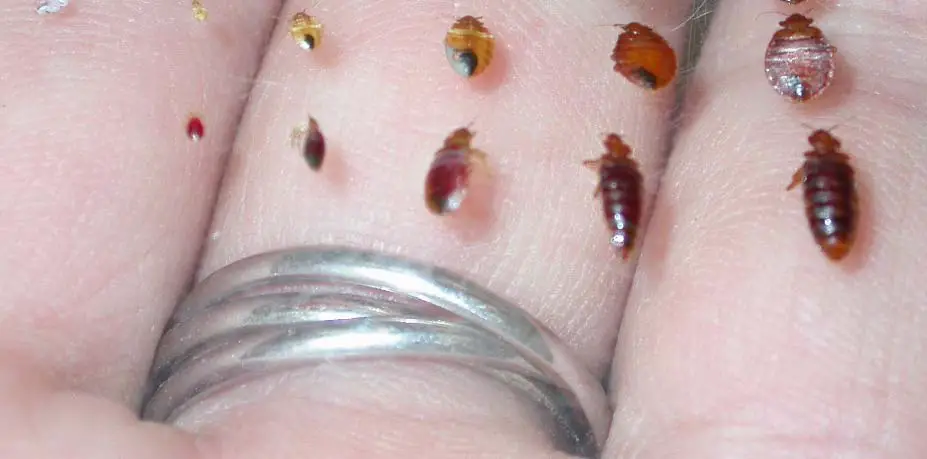
Bed bugs are small but visible. Here is how big each stage gets, using sizes from the U.S. Environmental Protection Agency:1
| Stage | Length | About the size of |
|---|---|---|
| Egg | 1 mm (about 1/25 in) | A pinhead1,2 |
| Newly hatched nymph | 1.5 mm (1/16 in) | A pinhead3,10 |
| Older nymphs | 2 to 4.5 mm (up to 3/16 in) | A small sesame seed10 |
| Adult | 5 to 7 mm (3/16 to 1/4 in) | An apple seed or a lentil1,3 |
The Centers for Disease Control and Prevention (CDC) puts it another way: bed bugs range from 1 mm to 7 mm, "roughly the size of Lincoln's head on a penny."5

Bed Bug Color: Brown, Red or Black?
A bed bug's color depends on its age and how recently it ate:
- Brown or reddish-brown: unfed adults.1,3,7
- Bright red: adults and nymphs that have just fed. They also swell and stretch out, so a fed adult looks longer and rounder, almost like a tiny football.1,2,10
- Dark or nearly black: bugs that are digesting a meal. Over a couple of days the blood darkens, and the belly can look blackish or show a black spot.2,12,10
- Clear, white or pale yellow: young nymphs that haven't fed yet.1,2,13
Are there black bed bugs? Not as a separate kind of bed bug. A "black bed bug" is usually a regular bed bug partway through digesting its meal. If the small black bugs you're finding are round and shiny, or gather at windowsills, they're more likely carpet beetles.2,10,14,15
What Do Baby Bed Bugs and Eggs Look Like?
Young bed bugs, called nymphs, look like smaller, paler adults. They molt five times before becoming adults and need a blood meal before each molt.13,8 Unfed nymphs are clear to whitish-yellow and can be nearly invisible. After feeding, they turn bright red and look like a plump raspberry seed.1,2,16
Bed bug eggs are about 1 mm long, pearly white and shaped like a tiny bean or grain of rice.1,10 Eggs more than five days old show a red eye spot through the shell.1,2,17 Learn more in our guide to bed bug eggs.
Can You See Bed Bugs With the Naked Eye?
Yes. Adults, nymphs and eggs can all be seen without a microscope.4 Adults are the easiest. The hardest to see are eggs and newly hatched nymphs that haven't fed, which are pale and about the size of a pinhead.1,3,2 A flashlight and a magnifying glass make checking much easier.3
You'll often spot the signs they leave before you see a bug: tiny dark spots of droppings, rusty stains on sheets, and empty shed skins. On fabric, the dark spots can bleed into the cloth the way a marker dot would.11,18 See our full guide to signs of bed bugs.

Think you found a bed bug?
Get a free, no-obligation quote from a local bed bug exterminator.
Call 1-877-673-2704Free quote · No obligation · We may earn a referral fee when you call.
How Can You Tell Male and Female Bed Bugs Apart?
From above, the easiest way to tell them apart is the tip of the abdomen. Females have a rounded abdomen; males have a pointed tip.8,13,9


Bed bugs mate in an unusual way: the male pierces the female's body wall to inseminate her.8,17 In a Virginia Tech study, females kept with males and mated repeatedly laid fewer eggs than females mated only once.19
Whatever its sex, finding even one bed bug is reason to inspect thoroughly. A single mated female can start an infestation on her own.17,20
What Is the Tropical Bed Bug?
The common bed bug is the species found throughout the United States.21,22 Its tropical cousin, Cimex hemipterus, is the main species near the equator.8,7 In 2015, tropical bed bugs were found in a Florida home, the first published report of the species in the state in more than 60 years.21,23 They have also been confirmed in Hawaii.24
The two look nearly identical. The difference is the shape of the shield behind the head, which is wider with flared edges on the common bed bug, and you need magnification to see it.8,21,22 Tropical bed bugs are highly resistant to insecticides, so a professional ID matters if you live in Florida or Hawaii.24
What Bugs Look Like Bed Bugs?
Bed bugs are sometimes mistaken for ticks, cockroaches and carpet beetles.3 Here are the quickest ways to tell the common look-alikes apart:
| Bug | How it differs from a bed bug |
|---|---|
| Bat bugs and swallow bugs | Nearly identical. Under magnification, the hairs on the shield behind the head are longer than the width of the eye. Suspect them if bats or swallows roost on or in the building.7,10,25,6 |
| Carpet beetles | Small, round beetles with wings, often found at windows. Their larvae are fuzzy. They don't bite, but larval hairs can irritate skin.14,15,26 |
| Young German cockroaches | Longer and more cylinder-shaped than a bed bug's short, oval body, with long antennae and two short "tails." They run fast.15,27,28 |
| Fleas | Smaller, flattened side to side, and they jump. Their bites occur mainly around the ankles.29,3 |
| Ticks | Nymphs and adults have eight legs (newly hatched larvae have six), and a feeding tick stays attached to the skin for several days.30,31,32 |
| Spider beetles | Flea-sized, oval and dark brown. Pantry pests that don't feed on blood.15 |
| Booklice | Smaller than bed bug nymphs and translucent white to gray or brown. They feed on mold and fungi, not blood.15 |


Cockroach eggs look nothing like bed bug eggs. A German cockroach lays a brown, purse-shaped egg case about 1/4 to 1/3 inch long that holds 30 to 40 eggs.33,34 Bed bug eggs are separate, loose eggs about 1 mm long, laid a few a day.1,3,7 For more side-by-side photos, see our guide to bugs that look like bed bugs.
Found a Bed Bug? What to Do Next
Don't panic, and don't spend money on treatment until you know what you're dealing with. Get the bug identified first:
- Save the bug. Drop it into a small, leak-proof vial or pill bottle of rubbing alcohol.6,35 Don't tape it to paper; some labs won't accept it that way.6 If you have no alcohol, seal it in a zip-top bag and freeze it overnight to kill it. Cornell's insect lab asks for bed bugs to be frozen this way before they're mailed.36
- Take a clear, close-up photo from several angles, measure the bug or note its length (size is hard to judge from a photo), and write down where and when you found it.35,37,6
- Send it to an expert. Your county Cooperative Extension office can identify insects or tell you where to send them. University labs such as the Cornell Insect Diagnostic Laboratory also accept samples and photos for a fee.10,36
- Or call a professional. A licensed pest control company can identify the bug and inspect your home.3
While you wait for an answer, inspect your bed and furniture for droppings, eggs and shed skins. If it's confirmed, our guide on how to get rid of bed bugs walks you through treatment options, from do-it-yourself steps to hiring an exterminator.
What the Research Shows
- One female can be enough. Genetic studies of infested apartment buildings suggest an entire infestation can start from just a few bugs, possibly a single mated female.8,20,38
- Mating has a cost. In a Virginia Tech study, females mated repeatedly laid about 27% fewer eggs than females mated once.19
- The tropical bed bug is back in the U.S. It was reported in Florida in 2015, the first published record there in more than 60 years, and has also been confirmed in Hawaii.21,23,24
What Do Bed Bugs Look Like: Frequently Asked Questions
What do bed bugs look like to the human eye?
Adults look like small, flat, reddish-brown apple seeds with six legs and two antennae. After feeding, they look swollen, longer and redder.1,2
How big is a bed bug?
Adults are about 5 to 7 mm (3/16 to 1/4 inch) long. Nymphs range from about 1.5 to 4.5 mm, and eggs are about 1 mm.1
What color are bed bugs?
Unfed adults are brown or reddish-brown. Recently fed bed bugs are bright red, then darken as they digest. Young unfed nymphs are clear to pale yellow.1,2
Do bed bugs have wings? Can they fly or jump?
No. Bed bugs have only small wing pads, so they can't fly, and they don't jump. They crawl.8,3,5
What do baby bed bugs look like?
Like tiny, pale versions of adults, about 1.5 to 4.5 mm long. They're clear or yellowish until they feed, then bright red.1,2
What do bed bugs look like on a mattress?
You'll usually see small reddish-brown bugs along the seams, piping and tags, along with tiny dark spots, rusty stains and pale shed skins. About 85% of bed bugs are found in or near the bed.7,11
Is one bed bug a sign of an infestation?
Not always, but treat it as a warning. A single mated female can start an infestation, so inspect carefully17,20 and consider placing interceptor traps under the bed legs.3
References
- Bed Bugs: Appearance and Life Cycle. U.S. EPA. www.epa.gov
- Miller DM. How to Identify a Bed Bug Infestation. Virginia Tech, via VDACS (undated). www.vdacs.virginia.gov
- Potter MF. Bed Bugs (ENTFACT-636). University of Kentucky Entomology, rev. 2026. entomology.mgcafe.uky.edu
- Bed Bug Myths. U.S. EPA (archived Jan 19, 2025 snapshot). 19january2025snapshot.epa.gov
- About Bed Bugs. CDC, reviewed 2024. www.cdc.gov
- Bed Bug Identification. Purdue University Extension Entomology. www.extension.entm.purdue.edu
- Sutherland AM, Choe DH, Lewis VR. Pest Notes: Bed Bugs (Pub. 7454). UC IPM, 2013. ipm.ucanr.edu
- Doggett SL, Dwyer DE, Peñas PF, Russell RC. Bed bugs: clinical relevance and control options. Clin Microbiol Rev 25(1):164–192, 2012. pmc.ncbi.nlm.nih.gov
- Baker P. Bed bugs (slides, 2012 Vector Control Conference). University of Arizona, via Arizona Dept. of Health Services, 2012. azdhs.gov
- Identifying Bed Bugs. NYS IPM Program, Cornell University. cals.cornell.edu
- How to Find Bed Bugs. U.S. EPA. www.epa.gov
- Bed Bugs. Orange County Mosquito and Vector Control District (CA). ocvector.specialdistrict.org
- Biology and Identification. University of Tennessee bed bug program (bedbugs.tennessee.edu). bedbugs.tennessee.edu
- Pest Notes: Carpet Beetles (Pub. 7436). UC IPM. ipm.ucanr.edu
- Bed bug look-alikes (review attributed to IPM Institute of North America). PCT (undated). www.pctonline.com
- Miller DM, Rogers J. How to Identify a Bed Bug Infestation (ENTO-4P). Virginia Cooperative Extension, 2012. pubs.ext.vt.edu
- Miller DM, Polanco A, Rogers J. Bed Bugs Biology and Behavior (ENTO-8P). Virginia Cooperative Extension, 2019, reviewed 2024. pubs.ext.vt.edu
- Homeowners' DIY Bed Bug Control Guidance. Georgia Dept. of Public Health. dph.georgia.gov
- Polanco AM, Miller DM, Brewster CC. Reproductive potential of field-collected populations of Cimex lectularius L. and the cost of traumatic insemination. Insects 2(3):326–335, 2011 (Virginia Tech). vtechworks.lib.vt.edu
- Bed bug infestations are a family affair (Schal, Vargo, Booth genetics research). NC State University News, Dec 2011. news.ncsu.edu
- Campbell BE, Koehler PG, Buss LJ, Baldwin RW. Recent documentation of the tropical bed bug (Hemiptera: Cimicidae) in Florida since the common bed bug resurgence. Florida Entomologist 99(3), 2016. dx.doi.org
- Campbell B. The New Old Bed Bugs: Tropical Bed Bugs. PCT, Dec 2016. www.pctonline.com
- Tropical Bed Bugs Found in Florida after 60-Year Absence. Entomology Today (Entomological Society of America), Oct 2016. entomologytoday.org
- New hard-to-kill bed bug species is invading the US, experts say. UC Riverside College of Natural and Agricultural Sciences, Feb 2024. cnas.ucr.edu
- Bed bug look-alikes. Colorado State University Agricultural Biology, modified March 2024. agsci.colostate.edu
- Jacobs S. Carpet Beetle Dermatitis. Penn State Extension, 2010, rev. 2015. extension.psu.edu
- Cockroach Control Manual. University of Nebraska–Lincoln Extension in Lancaster County (undated). lancaster.unl.edu
- Cockroach Control (ENTFACT-614). University of Kentucky Entomology. entomology.mgcafe.uky.edu
- Rust MK. Pest Notes: Fleas (Pub. 7419). UC Statewide IPM Program. ipm.ucanr.edu
- Cranshaw WS, Peairs FB. Colorado Ticks and Tick-Borne Diseases (Fact Sheet 5.593). Colorado State University Extension, 2019, reviewed 2025. extension.colostate.edu
- Pasternak A, Larson J, Cipriani M. Ticks and Disease in Kentucky (ENTFACT-618). University of Kentucky Entomology. entomology.mgcafe.uky.edu
- ACE Preparation Course: Biting and Stinging Pests. Texas A&M AgriLife Extension Entomology, 2021. extensionentomology.tamu.edu
- Pest Notes: Cockroaches (Pub. 7467). UC IPM. ipm.ucanr.edu
- Valles SM. German Cockroach, Blattella germanica (EENY-002). UF/IFAS Extension, 1996, rev. Dec 2024. ask.ifas.ufl.edu
- Procedures for submitting entomological samples of suspected home parasites. NC State Plant Disease and Insect Clinic. pdic.ces.ncsu.edu
- How to send a sample or photo to the IDL. Cornell Insect Diagnostic Laboratory. cals.cornell.edu
- Diagnostic sample guidelines. Texas A&M AgriLife Extension, Insects in the City. citybugs.tamu.edu
- Saenz VL, Booth W, Schal C, Vargo EL. Genetic analysis of bed bug populations reveals small propagule size within individual infestations but high genetic diversity across infestations from the eastern United States. J Med Entomol 49(4):865–875, 2012. bioone.org