Quick answer: Bed bugs have three life stages: egg, nymph and adult. Nymphs molt five times, and each stage needs a blood meal to grow. In a warm home with someone to feed on, an egg becomes an egg-laying adult in about five weeks. Adults live several months to about a year. Without food, most bed bugs die within one to four months at room temperature, but they can last a year or more in a cold room.1,2,3
Key Takeaways
- Egg, five nymph stages, adult. There's no larva or pupa; nymphs look like small, pale adults.4,2
- About 5 weeks from egg to adult at 70 to 80°F with a host. Cold slows them down, and below about 55°F they stop developing.1,2,5
- 3 to 4 or more generations a year can grow indoors.6,7,8
- A female lays about 1 to 3 eggs a day on most laying days, and about 130 to 500 in her life.9,10,11
- Populations can double about every two weeks under good conditions.2,9
- Starving them out rarely works. Older nymphs and adults can last months without a meal.3,1
Knowing the bed bug life cycle explains why infestations grow so fast, why one treatment is rarely enough, and why leaving a home empty won't starve them out. For close-ups of each stage, see bed bug eggs, baby bed bugs and what adult bed bugs look like.
In this guide
What Are the Stages of the Bed Bug Life Cycle?
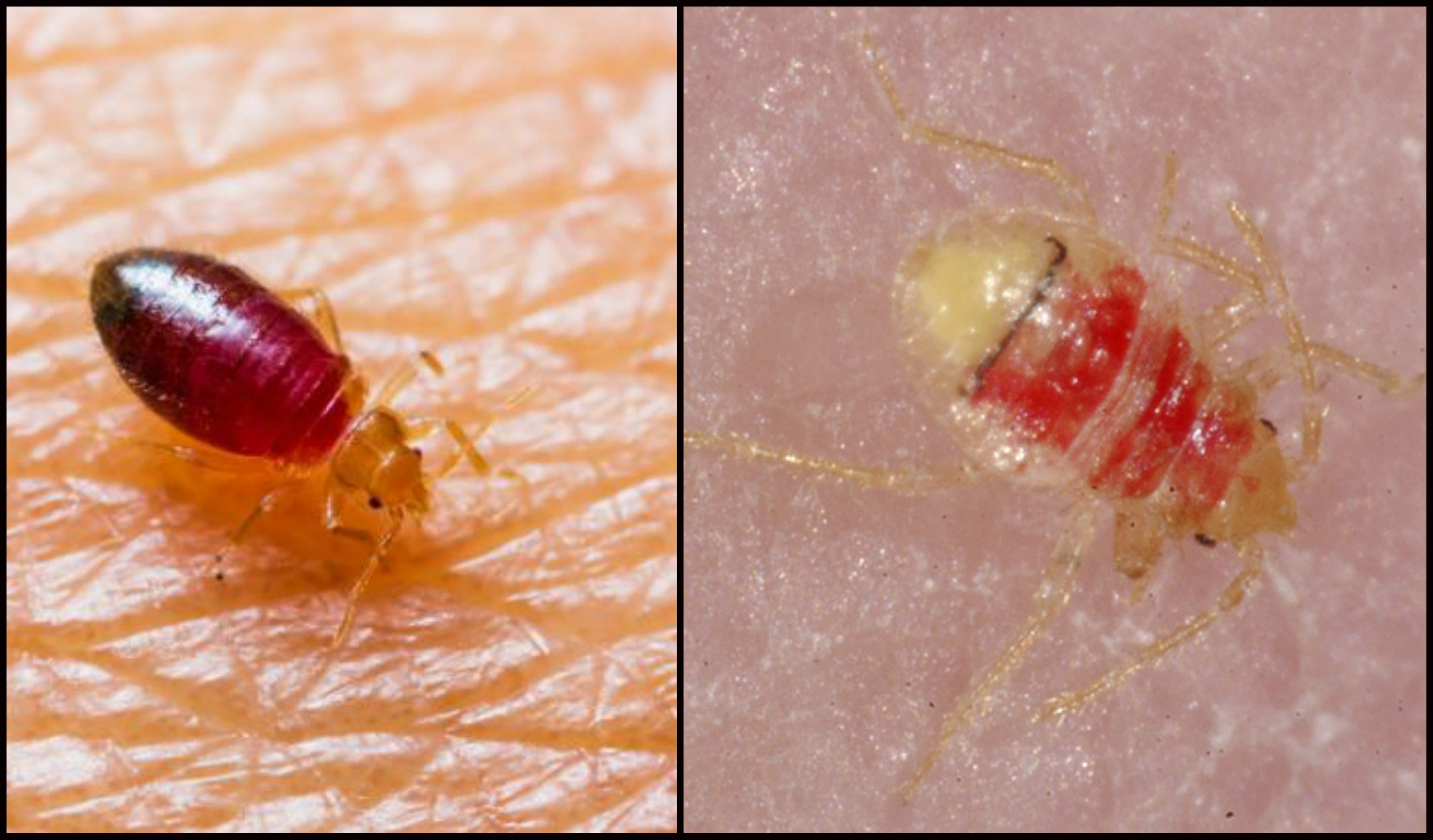
Bed bugs grow by incomplete metamorphosis: egg, then five nymph stages, then adult.4,2 Each nymph must take a blood meal before it can molt to the next stage. Without a host, it stays where it is until it feeds or dies.11,2

| Stage | Size | Time in stage (warm home, host nearby) | What happens |
|---|---|---|---|
| Egg | 1 mm | About 6 to 10 days | Glued into cracks; an eye spot shows after about 5 days |
| 1st-stage nymph | 1.5 mm | About 5 to 8 days if it feeds soon | Must find its first meal; the most fragile stage |
| 2nd to 5th-stage nymphs | 2 to 4.5 mm | About 5 to 8 days each if fed | Feed, then molt to the next stage |
| Adult | 5 to 7 mm | Several months to about a year | Mates; females lay eggs after each meal |
How Long Does the Bed Bug Life Cycle Take?
It depends mostly on temperature and how easily bugs can reach a person. At 70 to 80°F with regular meals, a bed bug can go from egg to adult in about a month to five weeks.1,2 Cooler rooms or fewer chances to feed stretch that to 4 months or more.11,7,5
| Room temperature | Egg to adult (lab, fed right away) |
|---|---|
| 82 to 94°F | About 20 days (3 weeks) |
| 73°F | About 38 days (5 to 6 weeks) |
| 64°F | About 87 days (3 months) |
| 59°F | About 150 days (5 months) |
| 55°F | Development stalls; young nymphs stop molting |
Totals add egg and nymph times from a classic British lab study. In a home, add the days nymphs wait for a meal. Source:5
So warmth speeds bed bugs up, and cold slows them down. Extension guides say bed bugs develop fastest at about 70 to 82°F.11,7 In the lab, growth was fastest at about 82 to 94°F.5 Indoors, that adds up to 3 to 4 or more generations a year.6,7,8 See baby bed bugs for how long each nymph stage takes at different temperatures.
How Do Bed Bugs Reproduce?
Bed bugs mate by "traumatic insemination." The male pierces the female's body wall and injects sperm, which travels to her ovaries over several hours.2,12 Repeated mating wounds females: in one study, females mated again and again laid about 27% fewer eggs than females mated once.10
- Feeding comes first. A female needs a blood meal before each round of egg laying. She starts laying about 3 days after a meal, keeps laying for about 10 days, then must feed again.10,2
- Eggs per day: usually 1 to 3 on laying days.9,1
- Eggs per lifetime: lab studies average about 130 to 160, and extension guides give 200 to 500. The 500 figure traces to one unusual female that laid 541.2,10,11,12
- One is enough. A single mated female with regular meals can start an infestation on her own.2,10
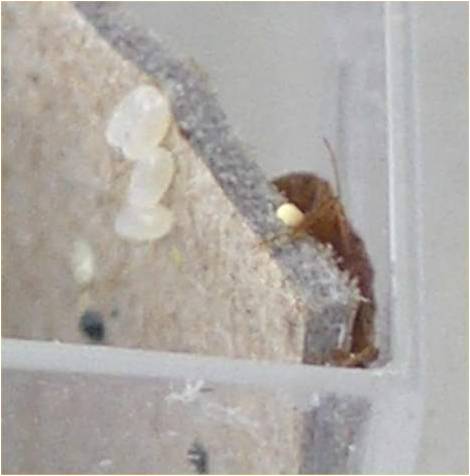
See bed bug eggs for what eggs look like and where females lay them.
How Fast Do Bed Bugs Multiply?
Fast. Under good conditions (above 70°F, below 90°F and a host nearby), a bed bug population can double about every 16 days.2 A lab study of a field strain found it doubled about every 13 days.9 In that study, a growing population was about 54% nymphs, 34% eggs and only 12% adults, so most of what you'd find is young bugs and eggs.9
These are lab numbers. In real homes, crushing, insecticides and limited access to people slow growth, and some small infestations stall.13 But waiting to see what happens usually lets an infestation get bigger.
How Long Do Bed Bugs Live?
With regular meals, adult bed bugs live about 10 months on average.1,7 In the lab, well-fed adults at room temperature lived from about 3 to 10 months (99 to 300 days).2 In real homes, lives are probably shorter, likely several months, because of missed meals, temperature swings, insecticides and crushing.2,12

Bed bugs feed mostly between midnight and 5 a.m., but hungry bugs will feed during the day, especially if you sleep then.2,1 They prefer people but will bite pets, birds and rodents.1,7
Seeing bed bugs at every stage?
Get a free, no-obligation quote from a local bed bug exterminator.
Call 1-877-673-2704Free quote · No obligation · We may earn a referral fee when you call.
How Long Can Bed Bugs Live Without Food?
It depends on the stage and the temperature. In a lab study at about 79°F, starved bed bugs survived on average:3
| Stage | Average time without food (about 79°F) |
|---|---|
| 1st-stage nymph | About 2 to 5 weeks |
| 2nd-stage nymph | About 1 to 2 months |
| 3rd to 5th-stage nymphs | About 1 to 4 months |
| Adults | About 1.5 to 3 months |
Insecticide-resistant field strains died sooner than lab strains. The longest survivor lived about 143 days. Source:3
Cold changes everything. Bed bugs typically survive 1 to 4 months without food in a heated building, but possibly a year or longer at 55°F or below.1 In older lab studies, adult females lasted up to 425 days at 50°F.3 That's where the "a year without food" claims come from: cold rooms, not heated homes.3,2
Bottom line: leaving a heated home empty for a few weeks won't starve bed bugs. Young nymphs die within weeks, but older nymphs and adults can last months.3,1
What Kills Bed Bugs at Each Stage?
- Heat: eggs are the hardest stage to kill. At 113°F, adults die in about 95 minutes, but eggs need about 7 hours. At 122°F, all stages die in under a minute.14,15
- Dryer: dry items on medium-high heat for 10 to 20 minutes.1
- Cold: 0°F for at least 3.5 days kills all stages, including eggs.16
- Starvation: not practical, as shown above.3
See how to get rid of bed bugs and natural remedies rated by the evidence for step-by-step methods.
Why the Life Cycle Matters for Getting Rid of Bed Bugs
- Eggs survive many treatments. That's why experts advise two follow-up visits, about two weeks apart, to treat bugs that hatched after the first visit.17 Eggs hatch in about 6 to 10 days in a warm room, and hatchlings need about a month to grow up and start laying eggs, so a two-week gap catches them early.2,6
- Keep monitoring for weeks. Bed bugs don't feed on a fixed schedule, so one empty check proves little.17 Interceptor cups under the bed legs help confirm they're gone.1 One option is ClimbUp interceptors (we earn a small commission).
- Watch cool rooms and stored items longer. Cold slows every stage and helps bugs survive without food.5,1
- Only live bugs and unhatched eggs prove they're still there. Shed skins, hatched eggs and stains can be old.15 See signs of bed bugs.
Need help? See how to choose an exterminator. For free quotes from local bed bug exterminators, call 1-877-673-2704 (we may be paid when you call), or ask an exterminator online (we may be paid when you use this link).
What the Research Shows
- Temperature sets the pace. In a classic British lab study, eggs didn't hatch below about 55°F and young nymphs stopped molting at about that point, and growth took about four times longer at 64°F than at 82°F or warmer.5
- Starvation survival depends on stage. At about 79°F, newly hatched nymphs lasted about a month or less without food, and resistant field strains died sooner than lab strains.3
- Populations grow fast. A life-table study found a field population could double about every 13 days.9
- Mating costs females. Females mated repeatedly laid about 27% fewer eggs than those mated once.10
- Eggs resist heat. At 113°F, eggs needed about 7 hours to die, compared with about 95 minutes for adults.14
Bed Bug Life Cycle: Frequently Asked Questions
How long is the bed bug life cycle?
About 5 weeks from egg to adult in a warm home with regular meals, and 4 months or more when it's cool or meals are scarce.2,1,11,5
How many stages do bed bugs have?
Three: egg, nymph and adult. The nymph stage has five steps, with a molt after each.4,2
How long do bed bugs live?
Adults live about 10 months on average with regular meals, often less in real homes.1,2
How long can bed bugs live without food?
Usually 1 to 4 months at room temperature. In a cold room, up to a year or more.1,3
Can bed bugs survive a year in an empty house?
Only if it's cold. In a heated home, most starved bed bugs die within a few months.1,3
How many eggs does a bed bug lay?
Usually 1 to 3 a day on laying days, and roughly 130 to 500 in a lifetime depending on conditions.9,10,11
Can one bed bug start an infestation?
Yes. One mated female with regular meals can start an infestation by herself.2,10
How fast do bed bugs multiply?
Under good conditions, a population can double about every two weeks.2,9
Why do exterminators come back after two weeks?
To treat bugs that hatched from eggs that survived the first treatment, before they can lay eggs of their own.17,2
This page earns commissions from some product links (we may be paid when you buy), which doesn't change our ratings.
References
- Potter MF. Bed Bugs, ENTFACT-636. University of Kentucky Entomology, rev. March 2026. entomology.mgcafe.uky.edu
- Miller DM, Polanco A, Rogers J. Bed Bugs Biology and Behavior, ENTO-8P. Virginia Cooperative Extension, 2019 (reviewed August 2024). pubs.ext.vt.edu
- Polanco AM, Miller DM, Brewster CC. Survivorship during starvation for Cimex lectularius L. Insects 2(2):232–242, 2011. www.mdpi.com
- U.S. Environmental Protection Agency. Bed Bugs: Appearance and Life Cycle. U.S. EPA, n.d. www.epa.gov
- Johnson CG. The ecology of the bed-bug, Cimex lectularius L., in Britain: report on research, 1935–40. Journal of Hygiene 41(4), December 1941 (Cambridge University Press PDF). www.cambridge.org
- Hahn J, Kells S. Bed bugs. University of Minnesota Extension, reviewed 2023. extension.umn.edu
- Davis H, Whitworth RJ, Cloyd RA, Otte C, Norton A. Bed Bugs, MF2926. Kansas State University Agricultural Experiment Station and Cooperative Extension Service, November 2022. bookstore.ksre.ksu.edu
- NC State Extension (Department of Entomology and Plant Pathology; authors listed by title only). Bedbugs: Biology and Control. NC State Extension Publications, June 30, 2018. content.ces.ncsu.edu
- Polanco AM, Brewster CC, Miller DM. Population growth potential of the bed bug, Cimex lectularius L.: a life table analysis. Insects 2(2):173–185, 2011. vtechworks.lib.vt.edu
- Polanco AM, Miller DM, Brewster CC. Reproductive potential of field-collected populations of Cimex lectularius L. and the cost of traumatic insemination. Insects 2(3):326–335, 2011. vtechworks.lib.vt.edu
- Sutherland AM, Choe DH, Lewis VR. Pest Notes: Bed Bugs, Publication 7454. UC Statewide IPM Program, 2013. ipm.ucanr.edu
- Doggett SL, Dwyer DE, Peñas PF, Russell RC. Bed bugs: clinical relevance and control options. Clinical Microbiology Reviews 25(1):164–192, 2012. pmc.ncbi.nlm.nih.gov
- Pinto & Associates (reprinted). How fast can infestations grow? Pest Control Technology, March 2021. pctonline.com
- Kells SA, Goblirsch MJ. Temperature and time requirements for controlling bed bugs (Cimex lectularius) under commercial heat treatment conditions. Insects 2(3):412–422, 2011. www.mdpi.com
- National Pest Management Association. Bed Bug Best Management Practices: A Guide for Pest Management Professionals (rev. July 2023, v2). NPMA, 2023. www.npmapestworld.org
- Olson JF, Eaton M, Kells SA, Morin V, Wang C. Cold tolerance of bed bugs and practical recommendations for control. Journal of Economic Entomology 106(6):2433–2441, 2013 (Rutgers archive PDF). archive.sebs.rutgers.edu
- Miller DM. Bed Bug Treatment: What You Should Expect. Virginia Tech, via Virginia Department of Agriculture and Consumer Services, n.d. www.vdacs.virginia.gov
