Quick answer: Baby bed bugs are called nymphs. They look like small, pale adults. Newly hatched nymphs are about 1.5 mm long, the size of a pinhead, and the oldest are about 4.5 mm. They're straw-colored or nearly see-through when hungry and bright red after a meal. Each of the five stages needs a blood meal to molt, and each molt leaves an empty, bug-shaped shell behind.1,2,3
Key Takeaways
- Five baby stages: bed bugs grow through five nymph stages, from about 1.5 mm to 4.5 mm, before becoming adults.1
- There are no bed bug larvae. Bed bugs hatch looking like tiny adults; anything fuzzy or worm-like is a different insect.4,5
- They need blood to grow. Every stage must feed before it can molt.2,6
- Warm homes speed them up. At 70 to 82°F, egg to adult can take about 5 weeks. Around 55°F, growth stops.6,7,8
- They bite from day one, but many people don't react to the first bites.9,10
- Shells mean breeding, not always current bugs. Shed skins can stay long after an infestation is gone.11
If you've found a tiny pale or red bug, or a see-through empty shell, this guide will help you tell whether it's a baby bed bug and what it means. For the full cycle from egg to adult, see the bed bug life cycle.
In this guide
What Do Baby Bed Bugs Look Like?
Baby bed bugs have the same flat, oval shape and six legs as adults, but they're smaller and paler, with a thinner outer shell.6,12 Their color tells you when they last ate:
- Hungry: clear, whitish-yellow or straw-colored. Unfed nymphs can be nearly invisible, especially the newest ones.1,2,3
- Just fed: bright red and plump. This is the easiest time to spot them.13,3
- Digesting: a dark spot shows in the belly, and the bug darkens and flattens over the next couple of days.3,14,12

Adults are reddish-brown, about 5 to 7 mm long (the size of an apple seed), and you can tell males (pointed tail end) from females (rounded tail end) only in adults.1,15,12 For more photos, see bed bug pictures and what bed bugs look like.
How Big Are Baby Bed Bugs?
Each stage is a little bigger than the last. Feeding also stretches them, so a fed nymph looks longer than an unfed one.1
| Stage | Length | About the size of |
|---|---|---|
| Egg | 1 mm (1/25 inch) | A pinhead |
| 1st-stage nymph | 1.5 mm (1/16 inch) | A pinhead or small sesame seed |
| 2nd-stage nymph | 2 mm (1/13 inch) | |
| 3rd-stage nymph | 2.5 mm (1/10 inch) | |
| 4th-stage nymph | 3 mm (1/8 inch) | |
| 5th-stage nymph | 4.5 mm (3/16 inch) | |
| Adult | 5 to 7 mm (3/16 to 1/4 inch) | An apple seed |
Lengths from the EPA; inch figures are rounded conversions. Sources:1,14

Are There Bed Bug Larvae?
No. Bed bugs grow by incomplete metamorphosis: egg, then nymph, then adult, with no larva or pupa. Larvae (like caterpillars, grubs and maggots) belong to insects that change form completely as they grow.4 So when people say "bed bug larvae," they mean nymphs.
If what you found is fuzzy or worm-shaped, it isn't a bed bug. Common look-alikes include:
- Carpet beetle larvae: hairy and carrot-shaped, cream to brown.5
- Fleas: narrow from side to side, and they jump. Bed bugs can't jump.16,2
- Booklice: tiny (1 to 2 mm), soft and pale, found in damp places; they don't bite.17
- Bat bugs: nearly identical to bed bugs and usually found near bat roosts. Telling them apart takes a magnifier and a close look at the hairs behind the head.6,14,9
See bugs that look like bed bugs for photos.
How Fast Do Baby Bed Bugs Grow?
A nymph has to take a blood meal before each molt. Without a host, it stays in its current stage until it feeds or dies.2,7 Temperature matters most. Growth is quick at about 70 to 82°F, the range experts call ideal.6,18 It slows sharply in cool rooms and stops around 55°F, where young nymphs stop molting and very few eggs hatch.8
| Room temperature | Time for all 5 nymph stages (lab, fed right away) | Egg hatch time |
|---|---|---|
| 94°F | About 15 days | About 5 days (at 86°F) |
| 73°F | About 29 days | About 9 days |
| 64°F | About 66 days | |
| 59°F | About 119 days | |
| 55°F | Young nymphs stop molting | About 49 days, and very few hatch |
From a classic lab study; in a home, add the time nymphs wait for a meal. Source:8
In a warm home with someone to feed on, most nymphs molt within about 5 days of a meal, and a bed bug can go from egg to adult in about 5 weeks.7,2 Cooler rooms or fewer chances to feed can stretch that to 4 months or more.6,18,8
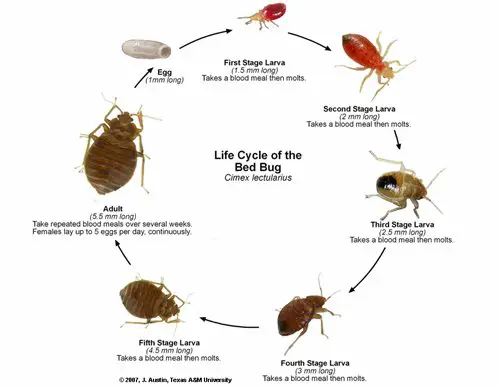
Eggs are about 1 mm, pearl-white and glued in place, and they usually hatch in under 10 days in a warm home. A female typically lays a few eggs a day.1,2,7 See bed bug eggs for more.
Do Baby Bed Bugs Bite?
Yes. Newly hatched nymphs feed at the first chance they get, and every stage feeds on blood.9,15 They pierce the skin with a thin beak. The bite is usually painless, and a meal takes about 3 to 10 minutes.2,19,15

Many people don't notice the bites at first:
- About 30% of people don't react even after repeated bites, and older adults are less likely to react.2,20
- Marks can take up to 14 days to appear.19
- In a volunteer study, most people had no reaction to their first bites, but 18 of 19 eventually reacted after repeated exposure.10
That's why you should look for the bugs and their signs, not just bites. See bed bug bites.
Found baby bed bugs?
Get a free, no-obligation quote from a local bed bug exterminator.
Call 1-877-673-2704Free quote · No obligation · We may earn a referral fee when you call.
What Do Bed Bug Shells Look Like, and What Do They Mean?
Bed bug "shells" are the skins nymphs shed as they grow. Each bed bug molts five times on its way to adulthood; adults don't molt again.3,4
- What they look like: empty, bug-shaped husks with the same outline as a bed bug, pale and see-through to light tan.13,3,2
- Size: it depends on which stage shed it, so shells range from about 1.5 mm to 4.5 mm.1,3
- Not eggshells: empty eggshells are about 1 mm, bean-shaped, and stay glued in place after hatching.1,18,14
- Where they turn up: where bugs gather, such as mattress seams, behind headboards, along baseboards and where walls meet the ceiling, usually with dark spots and eggs.13,3 See where bed bugs hide.
Do shells mean you still have bed bugs?
Not on their own. Since nymphs molt only after feeding, shells show that bed bugs were feeding and growing.2,13 But shells, like old stains and dead bugs, can be left over from a past infestation. Only live bugs or unhatched eggs prove bed bugs are there now.11 One bug can leave up to five skins, so a few shells don't mean a few bugs.3
How to tell an old infestation from an active one
- Look for live bugs of any size, especially bright red or plump nymphs, which fed within hours.3
- Look for unhatched eggs. Eggs older than about 5 days show an eye spot.1,13
- Vacuum up the old shells and spots, then check again. New shells or spots mean current activity.11
- Put interceptor traps under the bed legs. In a Purdue study, they caught about 6 times more bugs than looking alone.21 No catch doesn't prove no bugs, though.11
Can you vacuum bed bug shells?
Yes. Vacuuming removes shells, live bugs and dead bugs from seams, tufts and cracks. It won't reliably pull out eggs, and bugs can survive inside the vacuum, so seal the bag or contents and throw them out outdoors.22,11,2 See signs of bed bugs for the other clues to check.
How Long Can Baby Bed Bugs Live Without Food?
It depends on the stage. In a lab study at about 79°F, newly hatched nymphs lived about a month or less without feeding, second-stage nymphs about 1 to 2.5 months, and older nymphs and adults up to about 4 months.23 Cold rooms stretch that: at 55°F or below, bed bugs can last a year or more.2
So leaving a room empty for a few weeks won't starve out an infestation.23,2
How Do You Get Rid of Baby Bed Bugs?
The same way you get rid of adults. Nymphs hide in the same cracks and die from the same treatments.2,11,22
- Plan on follow-ups. Eggs keep hatching after the first treatment, so pros usually come back at least twice, about two weeks apart.24
- Use heat. Running dry clothes and bedding in the dryer on medium-high heat for 10 to 20 minutes kills all stages. A full or damp load needs longer, about 30 minutes.2,25 In whole-room heat treatments, holding hiding spots at about 118°F for 90 minutes kills all stages.11
- Or use cold. Holding items at 0°F for 3 days kills all stages.25
- Vacuum, encase and monitor. Vacuum seams and cracks, put bed bug covers on the mattress and box spring, and use interceptor cups under the bed legs.22,21 One option is ClimbUp interceptors (we earn a small commission).
Found baby bed bugs? See how to get rid of bed bugs, natural remedies rated by the evidence and how to choose an exterminator. For free quotes from local bed bug exterminators, call 1-877-673-2704 (we may be paid when you call), or ask an exterminator online (we may be paid when you use this link).
What the Research Shows
- Growth stops in the cold. In a classic British lab study, young nymphs stopped molting at about 55°F, and the nymph stages took four times longer at 59°F than at 73°F.8
- The youngest starve fastest. At about 79°F, newly hatched nymphs lasted about a month or less without food; older nymphs lasted up to about 4 months.23
- Reactions build with exposure. In a volunteer study, 18 of 19 people eventually reacted to bites, and the time to react shrank from about 10 days to seconds.10
- Many people never react. In a survey of 474 people in infested homes, 42% of those 65 and older reported no reaction, compared with 26% of people 11 to 65.20
- Low single-exposure numbers mislead. A 2014 pest company test found fewer than 5% of 900 volunteers reacted after a single feeding by 1 to 3 bed bugs, but that doesn't reflect ongoing infestations.26,20
Baby Bed Bugs: Frequently Asked Questions
Can you see baby bed bugs with the naked eye?
Yes, but it's hard. Unfed nymphs are pale and can be nearly invisible; they're easiest to spot when moving or bright red after feeding.1,3
Why is the baby bed bug red?
It just fed. Nymphs turn bright red and plump after a blood meal, then darken as they digest.3
If I found one baby bed bug, are there more?
Probably. A nymph hatched from an egg laid by a female that fed nearby, so check the bed and nearby furniture for other signs.7,13
How many times do bed bugs shed their skin?
Five times, once at the end of each nymph stage. Adults don't molt.3,4
Do bed bug shells mean I still have bed bugs?
Not necessarily. Shells can be left from a past infestation. Only live bugs or unhatched eggs confirm bed bugs are there now.11
Are bed bug larvae real?
No. Bed bugs have no larval stage. Young bed bugs are called nymphs and look like small adults.4
How long until a baby bed bug is an adult?
About 5 weeks in a warm home with regular meals, and 4 months or more in cooler conditions.7,2,6,8
Can baby bed bugs survive in a cold room?
Yes. Cold stops their growth but helps them survive longer without food.8,2
This page earns commissions from some product links (we may be paid when you buy), which doesn't change our ratings.
References
- U.S. Environmental Protection Agency. Bed Bugs: Appearance and Life Cycle. U.S. EPA, n.d. www.epa.gov
- Potter MF. Bed Bugs, ENTFACT-636. University of Kentucky Entomology, rev. 2026. entomology.mgcafe.uky.edu
- Miller DM, Rogers J. How to Identify a Bed Bug Infestation, ENTO-4P. Virginia Cooperative Extension, 2012. pubs.ext.vt.edu
- The Ohio State University, CFAES. Bed Bugs: Glossary of Terms. OSU u.osu.edu site, n.d. u.osu.edu
- Jacobs S. Carpet Beetle Dermatitis. Penn State Extension, rev. February 2015. extension.psu.edu
- Sutherland AM, Choe DH, Lewis VR. Pest Notes: Bed Bugs, Publication 7454. UC Statewide IPM Program, 2013. ipm.ucanr.edu
- Miller DM, Polanco A, Rogers J. Bed Bugs Biology and Behavior, ENTO-8P. Virginia Cooperative Extension, 2019 (reviewed 2024). pubs.ext.vt.edu
- Johnson CG. The ecology of the bed-bug, Cimex lectularius L., in Britain: report on research, 1935–40. Journal of Hygiene 41(4), December 1941 (Cambridge University Press PDF). www.cambridge.org
- NC State Extension (Department of Entomology and Plant Pathology; authors listed by title only). Bedbugs: Biology and Control. NC State Extension Publications, June 30, 2018. content.ces.ncsu.edu
- Reinhardt K, Kempke D, Naylor RA, Siva-Jothy MT. Sensitivity to bites by the bedbug, Cimex lectularius. Medical and Veterinary Entomology 23(2):163–166, 2009, doi:10.1111/j.1365-2915.2008.00793.x. pubmed.ncbi.nlm.nih.gov
- National Pest Management Association. Bed Bug Best Management Practices: A Guide for Pest Management Professionals (rev. July 2023, v2). NPMA, 2023. www.npmapestworld.org
- Ashbrook A, McCarthy J, Carlton CE. Cimex lectularius, Bed Bug (Hemiptera: Cimicidae), Pub. 3861. LSU AgCenter, November 16, 2022. www.lsuagcenter.com
- Miller DM. How to Identify a Bed Bug Infestation. Virginia Tech, via Virginia Department of Agriculture and Consumer Services, n.d. www.vdacs.virginia.gov
- New York State Integrated Pest Management Program. Identifying Bed Bugs. Cornell CALS, n.d. cals.cornell.edu
- Doggett SL, Dwyer DE, Peñas PF, Russell RC. Bed bugs: clinical relevance and control options. Clinical Microbiology Reviews 25(1):164–192, 2012. pmc.ncbi.nlm.nih.gov
- Rust MK. Pest Notes: Fleas, Publication 7419. UC Statewide IPM Program, updated 2010. ipm.ucanr.edu
- Skvarla MJ (orig. Jacobs S). Booklice. Penn State Extension, rev. July 2024. extension.psu.edu
- Davis H, Whitworth RJ, Cloyd RA, Otte C, Norton A. Bed Bugs, MF2926. Kansas State University Agricultural Experiment Station and Cooperative Extension Service, November 2022. bookstore.ksre.ksu.edu
- Centers for Disease Control and Prevention. About Bed Bugs. CDC, 2024. www.cdc.gov
- Potter MF, Haynes KF, Connelly K, Deutsch M, Hardebeck E, Partin D, Harrison R. The sensitivity spectrum: human reactions to bed bug bites. Pest Control Technology, February 2010. pctonline.com
- Wang C, Gibb TJ, Bennett GW. Interceptors in bed bug monitoring. Pest Control Technology, April 2009 (Purdue). www.extension.entm.purdue.edu
- Wang C, Cooper R. Cost-Effective and Money-Wasting Bed Bug Control Methods, FS1251. Rutgers NJAES Cooperative Extension, 2019. njaes.rutgers.edu
- Polanco AM, Miller DM, Brewster CC. Survivorship during starvation for Cimex lectularius L. Insects 2(2):232–242, 2011. www.mdpi.com
- Miller DM. Bed Bug Treatment: What You Should Expect. Virginia Tech, via Virginia Department of Agriculture and Consumer Services, n.d. www.vdacs.virginia.gov
- Hahn J, Kells S. Bed bugs. University of Minnesota Extension, reviewed 2023. extension.umn.edu
- Lawrence B, Harrison R. Bed bug white paper (Orkin commercial healthcare). Orkin LLC, May 2014. cdn.orkin.com

