Quick answer: Count the legs and look for antennae. Adult ticks have eight legs and no antennae, and their mouthparts stick out in front. Bed bugs have six legs and two antennae, with the beak tucked under the head. Where you found it matters too: a bug attached to your skin is almost always a tick, while bugs hiding in mattress seams are bed bugs.1,2,3,4,5,6,7
Key Takeaways
- Ticks are arachnids, related to mites and spiders, with eight legs as nymphs and adults. Bed bugs are insects with six legs and antennae.1,3,2
- Ticks hang on for days; bed bugs feed for a few minutes and crawl away.5,6
- Only one tick commonly infests homes: the brown dog tick, which centers on the dog and its resting spots rather than your bed.8,9
- Ticks can spread disease, including Lyme disease. Bed bugs aren't known to spread any.10,7
- Remove a tick with fine-tipped tweezers, pulling straight up. Skip the petroleum jelly, nail polish and heat.11
At a glance, an unfed tick and a bed bug look a lot alike: both are small, flat, brownish and wingless.1,7 University of Minnesota Extension notes that adult bed bugs are similar in appearance to a wood tick.12 This guide shows you how to tell them apart, with pictures, sizes, bites, disease risk and what to do about each.
In this guide
Tick vs. Bed Bug: Side-by-Side Comparison
| Feature | Tick | Bed bug |
|---|---|---|
| What it is | Arachnid, related to mites and spiders1 | Insect3,2 |
| Legs | 8 as nymphs and adults; 6 as newly hatched larvae1,13 | 63,2 |
| Antennae | None2 | Two (one pair)3,2 |
| Body | Flat teardrop that looks like one piece, with mouthparts sticking out in front1,4 | Flat oval with a separate head, thorax and abdomen; beak folded under the head when not feeding14,2,3 |
| Size (unfed adult) | About 3 to 4 mm for lone star ticks, a little smaller for brown dog ticks (about 2.3 to 3.2 mm), and smaller still for blacklegged ticks15,9 | About 1/4 to 3/8 inch (5 to 9 mm)12 |
| After feeding | Females swell to raisin size or larger1,9,16 | Swollen, longer and red14,12 |
| Where found | Grass, brush and woods, and on pets; the brown dog tick can live indoors17,9 | Mattress seams, bed frames and furniture near where people sleep7 |
| How it feeds | Stays attached for days5,18 | Feeds for minutes at night, then hides6,7 |
| Disease | Can spread Lyme disease and other illnesses10,19 | Not known to spread disease7,20 |
Pictures: Tick vs. Bed Bug
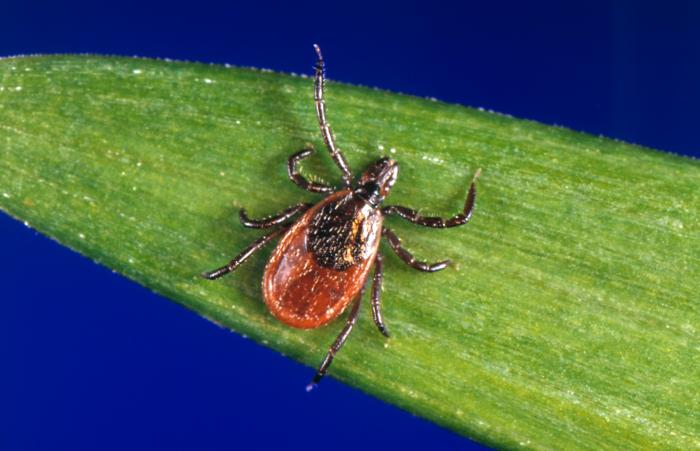
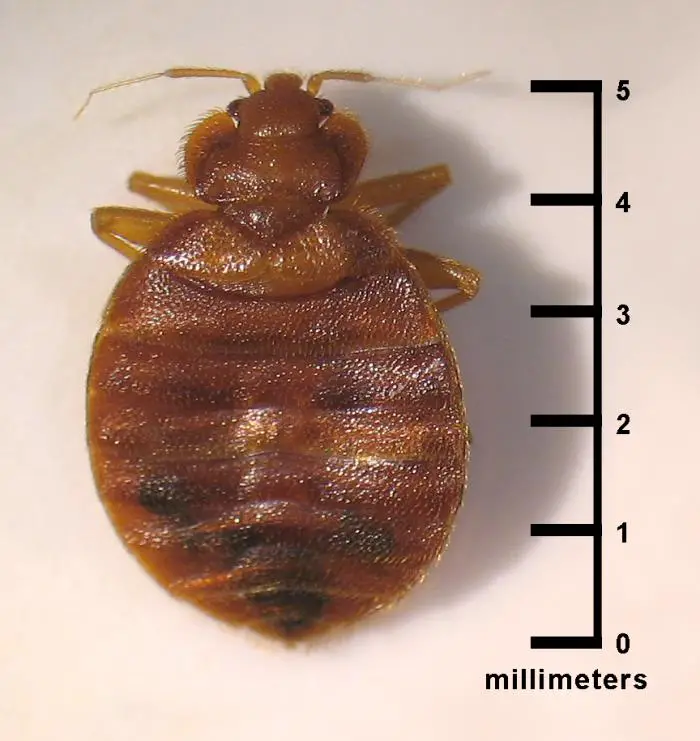
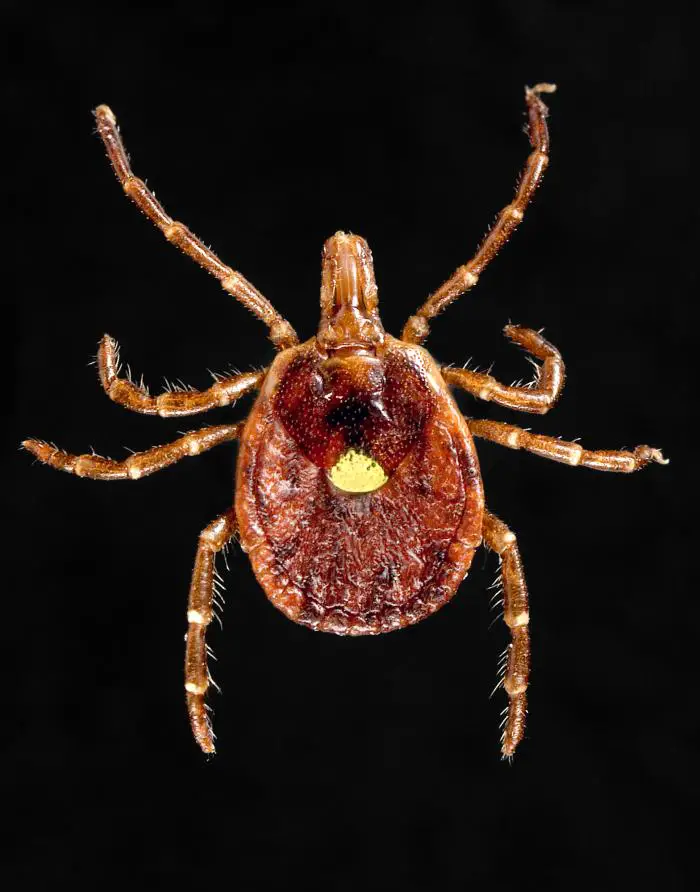
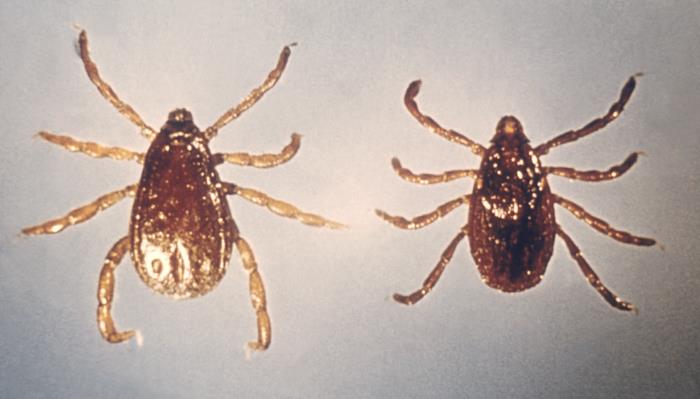
The look-from-above test: on a tick, you can see the mouthparts poking out at the front.4 On a bed bug, you see a head with two antennae, because its beak is folded underneath.2,3,21 One caution: newly hatched tick larvae have only six legs, so check for antennae too.1,2 For more bed bug photos, see bed bug pictures.
Tick vs. Bed Bug Size by Life Stage
| Stage | Size |
|---|---|
| Blacklegged tick nymph | About the size of a poppy seed22,1 |
| Lone star tick (larva / nymph / adult) | 0.5 to 1 mm / 1.5 to 2.5 mm / 3 to 4 mm15 |
| Brown dog tick adult | About 2.3 to 3.2 mm unfed; a feeding female can grow to raisin size9 |
| American dog tick female, fed | Can reach the size of a grape16 |
| Bed bug nymph | About 1/16 inch when newly hatched, up to about 1/6 inch3 |
| Bed bug adult | About 1/4 to 3/8 inch (5 to 9 mm)12 |
So a tick nymph is smaller than an adult bed bug, but a fully fed female tick is far bigger than any bed bug.22,1,9,16
Common U.S. Ticks and What They Look Like
- Blacklegged (deer) tick: the adult female has a reddish-orange to brown body with a dark shield and black legs. Found mainly in the eastern U.S.5,22,19
- American dog tick: brown with whitish or yellowish markings on the back. Found mostly east of the Rockies.5,13,19
- Lone star tick: reddish-brown; the adult female has a single white dot on her back. Found in the Northeast, South and Midwest.19,15
- Brown dog tick: plain reddish-brown with no markings, so any tick with white on its back isn't a brown dog tick. Found across the U.S.9,23,19
Where You Find Ticks vs. Bed Bugs
Ticks are picked up outdoors in grassy, brushy and wooded areas, including many people's own yards, and on animals.17 They can't jump or fly; they wait on the tips of grass and shrubs.10 On people, check the underarms, ears, belly button, backs of the knees, hair, waist and between the legs.17
Bed bugs live in mattress seams, box springs, bed frames, headboards and nearby furniture, usually within about 8 feet of where people sleep.7 See signs of bed bugs.
Can ticks live in your bed?
Not the way bed bugs do. Most ticks carried in from outdoors don't breed indoors and die within days to a couple of weeks, though a loose tick is sometimes found on bedding or furniture.24 The exception is the brown dog tick, which can complete its whole life indoors. It lives on dogs and hides in cracks, behind moldings and curtains, under rugs and in dog bedding.9,25
Not a tick? Think it's bed bugs?
Get a free, no-obligation quote from a local bed bug exterminator.
Call 1-877-673-2704Free quote · No obligation · We may earn a referral fee when you call.
Tick Bites vs. Bed Bug Bites
You can't reliably tell the biter from the mark; bed bug bites alone are often mistaken for other bites and rashes.26,27 The real clue is the bug itself: a feeding tick stays attached for days, while bed bugs bite and leave, so a bug embedded in your skin is a tick.5,6 Most tick bites are painless, with a small bump or a little redness.28
- Lyme disease rash: an expanding red rash that appears 3 to 30 days after the bite, often about a week later, and can reach 12 inches or more. It sometimes clears in the middle like a bull's-eye, but often doesn't.29 On brown or black skin it can be harder to see and may look like a bruise.30
- Bed bug bites: itchy welts on skin left uncovered in bed, such as the face, neck, arms and hands, often in lines or small clusters.7,26 About 30% of people don't react at all.6 See bed bug bites.
Disease Risk: Ticks vs. Bed Bugs
Bed bugs aren't known to spread disease. Their bites mainly cause itching and lost sleep.7,20 Ticks are a different story. In the U.S., they spread illnesses including Lyme disease, anaplasmosis, babesiosis, ehrlichiosis, Powassan virus, Rocky Mountain spotted fever and tularemia.10
- Blacklegged ticks spread Lyme disease, anaplasmosis, babesiosis and Powassan virus, among others.19
- American dog ticks spread Rocky Mountain spotted fever and tularemia.19
- Lone star ticks spread ehrlichiosis and tularemia, and their bites are linked to alpha-gal syndrome, an allergy to red meat.19,31
- Brown dog ticks can spread Rocky Mountain spotted fever in the Southwest and along the Mexico border, though bites on people are uncommon in the U.S.19,9
Not every tick carries disease, and not every species spreads Lyme.19,16 The sooner you remove a tick, the lower your risk.11
Found a Tick? How to Remove It
- Remove it right away with clean, fine-tipped tweezers.11
- Grip it as close to the skin as you can.11 Don't squeeze the body.30
- Pull straight up with steady, even pressure. Don't twist or jerk, which can leave mouthparts in the skin. If they stay in, remove them with tweezers only if it's easy; otherwise let the skin heal.11
- Clean the bite and your hands with soap and water, rubbing alcohol or hand sanitizer.11
- Check yourself for other ticks.11
- Get rid of the tick in a sealed bag or container, or flush it. Don't crush it with your fingers.11 Take a photo first if you want it identified.28
Don't use petroleum jelly, nail polish or heat, such as a lit match, to make it let go. These can agitate the tick and may push infected fluid into the skin.11,28
When to See a Doctor After a Tick Bite
- A rash or fever in the days to weeks after removing a tick. Tell your doctor when and where you were bitten.11
- An expanding red rash, or fever, chills, headache, fatigue or muscle and joint aches.29,28
- Fever and headache with a spotty rash, which can signal Rocky Mountain spotted fever; it can turn serious quickly without early treatment.32
- A tick you can't fully remove, or a bite that looks infected.28
- Get emergency care for a severe headache, trouble breathing, paralysis or heart palpitations.28
- Where Lyme disease is common, ask your healthcare provider whether preventive treatment after a bite makes sense.33
How to Get a Tick or Bed Bug Identified
- Ticks: the University of Rhode Island's free TickSpotters service identifies ticks from a photo, usually within 24 hours.34 The CDC doesn't generally recommend testing the tick itself for germs.11
- Bed bugs: your local Cooperative Extension office can identify a sample for free.35,36 University of Minnesota research found that 76% of samples submitted for bed bug identification weren't bed bugs.12 See what bed bugs look like and bugs that look like bed bugs.
- Prefer a second opinion? You can ask a pest expert online (we may be paid when you use this link).
Brown Dog Ticks Indoors vs. Bed Bugs: What to Do
Brown dog ticks
- Treat the dog first. Ask your veterinarian about a tick preventive. Check with a vet before using any tick product on a cat, since cats are very sensitive to many chemicals.8 For how to find and remove ticks on your dog, see our sister site's guide to ticks on dogs.
- Clean where the dog rests: wash dog bedding in hot water and dry it on high, vacuum along baseboards and under furniture, and seal cracks.9,18
- Expect it to take time. Eggs and young ticks can take weeks to develop, so repeat treatment may be needed, and heavy infestations often need a pest professional.18,9 Laundry alone won't end an infestation; treat the dog and the house too.24,9
Ticks you brought in from outside
No home treatment is needed.18 Tumble dry outdoor clothes on high heat for 10 minutes (longer if they're damp), shower within two hours of coming inside, and check yourself and your pets.17,8
Bed bugs
Bed bugs need a different plan: have the bug identified, run bedding and clothes through a hot dryer, use mattress encasements and interceptors, and use only EPA-registered products labeled for bed bugs. A pest professional may be needed.35 A ClimbUp interceptor (we earn a small commission) under each bed leg helps confirm them; see our bed bug traps guide. For free quotes from local exterminators, call 1-877-673-2704 (we may be paid when you call).
What About Fleas?
Fleas are the third common mix-up. They're tiny, wingless insects about 1/16 inch long, flattened side to side, and they can jump about 6 inches.18,37 Ticks and bed bugs can't jump.10,26 Flea bites usually land around the ankles.6 See bed bug bites vs. flea bites.
What the Research Shows
- Days vs. minutes: tick larvae feed for about 2 to 3 days, nymphs 4 to 7 and adult females 7 to 10, while bed bugs finish in about 3 to 15 minutes.5,6,3
- Remove it promptly: estimates of how long a blacklegged tick must feed to pass on Lyme disease range from about 24 to 48 hours, and Powassan virus can pass in as little as 15 minutes.16,13,5
- Not every tick is infected: in Pennsylvania, about 20% to 40% of blacklegged ticks carry the Lyme bacterium, depending on location.16
Tick and Bed Bug Myths
| Myth | What's true |
|---|---|
| Bed bugs have eight legs | Bed bugs have six legs. Eight legs means a tick.3,2,1 |
| Ticks bury their heads in your skin | It's the mouthparts that go into the skin.5,4 |
| Burn a tick off or smother it | The CDC says not to use heat, petroleum jelly or nail polish.11 |
| Ticks jump or drop from trees | Ticks can't jump or fly; they wait on grass and shrubs.10 |
| All ticks carry Lyme disease | In the U.S., Lyme is spread by blacklegged and western blacklegged ticks, and many of those aren't infected.19,16 |
Tick vs. Bed Bug: Frequently Asked Questions
How can you tell a tick from a bed bug?
Count the legs and look for antennae. Adult ticks have eight legs and no antennae, and their mouthparts stick out in front. Bed bugs have six legs and two antennae. A bug attached to your skin is almost always a tick.1,2,3,5,6
Do bed bugs look like ticks?
Yes, at a glance. Both are flat, oval, wingless and brownish. The giveaways are the legs, the antennae and behavior: ticks stay attached for days, while bed bugs feed for minutes and hide.12,3,1,5
Can ticks live in your bed?
Not the way bed bugs do. Ticks carried in from outside don't breed indoors. The brown dog tick can infest homes, but it lives on dogs and hides in cracks, on walls and in pet bedding.24,9,25
Are ticks or bed bugs more dangerous?
Ticks. They can spread Lyme disease and other illnesses, and lone star tick bites are linked to a red meat allergy. Bed bugs aren't known to spread disease.10,31,7
How many legs does a bed bug have?
Six. Bed bugs are insects. Ticks are arachnids with eight legs as nymphs and adults, though newly hatched tick larvae have six.3,2,1,13
Is it a flea, a tick or a bed bug?
Fleas jump and are flattened side to side, ticks attach and stay for days, and bed bugs come out at night, feed for a few minutes and go back into hiding.18,37,5,6
What should I do if I find a tick on me?
Remove it right away with fine-tipped tweezers, gripping close to the skin and pulling straight up. Clean the area, and see a doctor if you get a rash or fever in the following weeks.11,29
This page is general information, not medical or professional pest control advice. See a doctor about any tick bite that worries you. Photos: CDC Public Health Image Library (PHIL), used with credit to CDC and the photographers as PHIL requests.
References
- New York State IPM Program, Cornell University. Tick Biology. Cornell CALS, n.d. cals.cornell.edu
- Dombroskie JJ, Gabriel S, Brewer L. Basic Entomology for Identification. Cornell Garden-Based Learning, January 2013. bpb-us-e1.wpmucdn.com
- Quesada C, Gripp S. Biology, Habitat, and Management of Bed Bugs. Penn State Extension, updated June 26, 2025. extension.psu.edu
- Centers for Disease Control and Prevention, Public Health Image Library (photo: Gathany J). Female lone star tick, Amblyomma americanum, dorsal view, PHIL ID 8682. CDC PHIL, n.d. wwwn.cdc.gov
- Pasternak A, Larson J, Cipriani M. Ticks and Disease in Kentucky, ENTFACT-618. University of Kentucky Entomology, rev. June 2021. entomology.mgcafe.uky.edu
- Potter MF. Bed Bugs, ENTFACT-636. University of Kentucky Entomology, rev. March 2026. entomology.mgcafe.uky.edu
- Centers for Disease Control and Prevention. About Bed Bugs. CDC, April 26, 2024. www.cdc.gov
- Centers for Disease Control and Prevention. Preventing Ticks on Pets. CDC, May 15, 2024. www.cdc.gov
- Tian Y, Lord CC, Kaufman PE. Brown Dog Tick, Rhipicephalus sanguineus Latreille (Arachnida: Acari: Ixodidae), EENY-221. UF/IFAS Extension, July 2001, rev. February 2020. journals.flvc.org
- Centers for Disease Control and Prevention. About Ticks and Tickborne Disease. CDC, May 15, 2024 (page metadata April 28, 2026). www.cdc.gov
- Centers for Disease Control and Prevention. What to Do After a Tick Bite. CDC, reviewed June 9, 2026. www.cdc.gov
- Hahn J, Kells S. Bed bugs. University of Minnesota Extension, reviewed 2023. extension.umn.edu
- Hahn J. Ticks. University of Minnesota Extension, reviewed 2025. extension.umn.edu
- Brooks SE. Bed Bug, Cimex lectularius Linnaeus (Insecta: Hemiptera: Cimicidae), EENY140 (Featured Creatures). UF/IFAS Extension, June 2000, rev. November 2024. ask.ifas.ufl.edu
- Holderman CJ, Kaufman PE. Lone Star Tick, Amblyomma americanum (Linnaeus) (Acari: Ixodidae), EENY580. UF/IFAS Extension, November 2013, reviewed December 2023. edis.ifas.ufl.edu
- Jacobs S, Skvarla M, Machtinger E. Common Ticks and Tick-borne Diseases in Pennsylvania. Penn State Extension, updated November 27, 2025. extension.psu.edu
- Centers for Disease Control and Prevention. Preventing Tick Bites. CDC, August 28, 2024. www.cdc.gov
- Potter MF, Beavers GM. Flea and Tick Control. Kentucky Pesticide Safety Education Program, University of Kentucky Entomology, last modified November 30, 2018. uky.edu
- Centers for Disease Control and Prevention. Where Ticks Live. CDC, updated July 30, 2025. www.cdc.gov
- U.S. Environmental Protection Agency. Introduction to Bed Bugs. U.S. EPA, updated September 8, 2026. www.epa.gov
- Washoe County District Health Department, Vector Control. Bed Bugs and Related Species. Northern Nevada Public Health, n.d. www.nnph.org
- University of Maine Cooperative Extension. Blacklegged Tick or Deer Tick. UMaine Extension Tick Lab, n.d. extension.umaine.edu
- Texas A&M AgriLife Extension (The Tick App). Brown dog tick. Texas A&M University, last modified August 29, 2022. tickapp.tamu.edu
- University of Rhode Island TickEncounter Resource Center. What's the Difference Between Inside Ticks and Ticks Inside – Plenty! URI, May 29, 2014. web.uri.edu
- Oklahoma State University Extension. Brown Dog Tick (Rhipicephalus sanguineus). OSU Extension Digital Diagnostics, n.d. extension.okstate.edu
- American Academy of Dermatology. Bedbugs: Signs and symptoms. AAD, n.d. (page © 2026). www.aad.org
- Doggett SL, Dwyer DE, Peñas PF, Russell RC. Bed bugs: clinical relevance and control options. Clinical Microbiology Reviews 25(1):164–192, January 2012. pmc.ncbi.nlm.nih.gov
- Mayo Clinic Staff. Tick bites: First aid. Mayo Clinic, March 15, 2024. www.mayoclinic.org
- Centers for Disease Control and Prevention. Signs and Symptoms of Untreated Lyme Disease. CDC, May 15, 2024. www.cdc.gov
- NHS. Lyme disease. NHS website, reviewed June 3, 2025. www.nhs.uk
- Centers for Disease Control and Prevention. About Alpha-gal Syndrome. CDC, January 5, 2026. www.cdc.gov
- Centers for Disease Control and Prevention. About Rocky Mountain Spotted Fever. CDC, May 15, 2024 (page metadata May 22, 2025). www.cdc.gov
- Centers for Disease Control and Prevention. Treatment and Intervention for Lyme Disease. CDC, June 25, 2026. www.cdc.gov
- University of Rhode Island TickEncounter Resource Center. TickSpotters. URI, n.d. (page © 2026). web.uri.edu
- U.S. Environmental Protection Agency. Do-it-yourself Bed Bug Control. U.S. EPA, updated August 10, 2026. www.epa.gov
- New York State IPM Program, Cornell University. Identifying Bed Bugs. Cornell CALS, n.d. cals.cornell.edu
- Potter MF. Flea Control and Prevention, ENTFACT-602. University of Kentucky Entomology, rev. June 2018. entomology.mgcafe.uky.edu