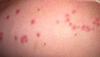
Quick answer: The usual symptoms of bed bug bites are itchy red bumps or welts, often in a cluster or a line on skin that was exposed while you slept. Marks usually show up within a day or two, but the first time you're bitten they can take up to two weeks. Most bites fade in about a week, though itching can last up to two. About 1 in 4 to 1 in 3 people have no visible reaction at all.1,2,3,4
Key Takeaways
- Bites usually itch, because your immune system reacts to proteins in bed bug saliva. First bites may not itch at all.2,5
- Timing varies widely. People who've been bitten many times can react within minutes; a first reaction can take a week or more.1,2,5
- Most bites heal in 1 to 2 weeks without treatment, but new bites keep coming until the bed bugs are gone.6,7,2
- No reaction doesn't mean no bed bugs. Older adults are especially likely not to react.3,8
- Bed bugs aren't known to spread disease. The real risks are infection from scratching, lost sleep and anxiety, and, rarely, severe allergy or anemia.1,2,9
- Bites alone can't prove bed bugs. They look like other insect bites, so confirm with signs of the bugs themselves.1,2
Woke up with itchy bumps and wondering if bed bugs are to blame? This guide covers what bed bug bite symptoms feel like, when they appear, how they change from day to day and how long they last. It also covers the less common reactions, and the signs that mean you should see a doctor. For close-up photos of what the bites look like, including on darker skin, see our bed bug bites guide.
In this guide
- Symptoms at a glance
- When symptoms appear
- Stages of bed bug bites
- Do bed bug bites itch?
- How long bites last
- Mild to severe reactions
- Why some people don't react
- Infection, anemia and other complications
- Effects on sleep and mental health
- When to see a doctor
- Relief for itchy bites
- Are they really bed bug bites?
- FAQ
Bed Bug Bite Symptoms at a Glance
| Symptom | How common | What to do |
|---|---|---|
| No visible reaction | About 1 in 4 to 1 in 3 people | Look for signs of bed bugs if you suspect them2,3 |
| Small itchy red bumps, often in clusters or lines | The most common reaction | Wash, don't scratch, use an anti-itch cream if needed1,10,11 |
| Raised welts (wheals), about 1 to 2 inches across | Common in people bitten before | Same as above; an oral antihistamine may help2,12 |
| Blisters | Less common | See a doctor or dermatologist13,6 |
| Signs of infection (pus, spreading redness, fever) | Possible; usually from scratching | See a doctor; you may need antibiotics2,4 |
| Trouble breathing, wheezing, or swelling of the face or throat (often with hives all over) | Rare | Call 9112,12,4 |
| Poor sleep, anxiety | Common during an infestation | Get the infestation treated; talk to a doctor if it lingers1,9 |
When Do Bed Bug Bite Symptoms Appear?
You usually won't feel the bite. Bed bugs inject saliva that keeps blood from clotting, and health agencies say it also numbs the skin, so most people sleep right through it.1,12
When marks appear depends mostly on how many times you've been bitten before:2,5
- Typical: marks often show up within a day or two. The CDC says they can take 1 to several days, and in some people up to 14 days.1,2
- First time you're bitten: often no reaction, or a delayed one. In one controlled study, first reactions took as long as 10 to 11 days.5,2,3
- Bitten many times before: the delay shrinks. In the same study, it fell from about 10 days to seconds after repeated bites.5,14
That delay is why bites can show up days after a hotel stay or a night on a friend's couch, and why two people bitten in the same bed may not react the same way.1,2,3
Stages of Bed Bug Bites
Not everyone goes through every stage, and timing varies from person to person. Here's the typical course for someone who reacts.2,15,4
| Stage | What you may see or feel | Typical timing |
|---|---|---|
| 1. The bite | Nothing, or a tiny dot where the bug fed | During sleep14,7 |
| 2. Early reaction | Small, flat red spots; in people bitten before, an itchy raised welt | Minutes to days later2,15 |
| 3. Peak reaction | Itchy red bumps or welts, sometimes with a dark red center; blisters in some people | Over the next few days2,12,15 |
| 4. Healing | Redness fades first, then swelling, then itch | Redness about 3 days, swelling about a week, itch up to 2 weeks4 |
| 5. After healing | A faint mark; on darker skin, brown or dark spots that can last weeks or months | Weeks to months2,10 |


Do Bed Bug Bites Itch?
Yes, for most people who react. Itching is the main complaint, and it can be intense enough to keep you awake.12,6,1
The itch is your immune system responding to bed bug saliva, which contains dozens of proteins that help the bug feed. Some of them can trigger an allergic-type reaction.2,15 You become sensitized over time: in one study, 18 of 19 volunteers eventually reacted, most only after repeat bites.5 That's why first bites may not itch at all, while later bites can itch sooner and harder.5,14
Scratching makes things worse. It can break the skin and let bacteria in, and the itch-scratch cycle cuts into sleep.1,2
How Long Do Bed Bug Bites Last?
Most bed bug bites fade in about a week, and nearly all clear within two weeks without treatment.7,6,14 Itching often outlasts the redness.4 On darker skin, bites can leave brown marks that may take weeks or months to fade.10,2
If bites seem to last for weeks, you're probably getting new ones. Bites keep appearing as long as the bed bugs are there, and new bites can make older ones flare up again. Reactions usually clear within 1 to 2 weeks after the infestation is gone.2,15
Call a doctor if bites aren't getting better after a week or aren't gone after two.4
Bed Bug Bite Reactions, From Mild to Severe
- No reaction: roughly 1 in 4 to 1 in 3 people show nothing, according to surveys and pooled studies. Estimates vary a lot from study to study.2,16,3
- Red bumps: the most common reaction, usually 2 to 5 mm (about 1/8 inch) and sometimes larger.10,14
- Welts (wheals): raised, itchy welts, classically about 1 to 2 inches across. Much larger patches have been reported, but they're probably several bites merging or skin damaged by scratching.2
- Blisters: almost 2 in 10 patients in published case reports had blisters. Blisters are a reason to see a dermatologist.13,6,11
- Whole-body reactions (rare): hives all over, asthma attacks, swelling of the face or throat and, very rarely, anaphylaxis, a life-threatening allergic reaction.2,14,17 Fever and feeling unwell have been reported with large numbers of bites.2


For pictures of bites on different skin tones and how they compare with mosquito, flea and spider bites, see what bed bug bites look like. For a widespread rash, see our guide to bed bug rash and treatment.
Why Some People Don't React to Bed Bug Bites
Reacting depends on your immune system, not on whether you were bitten. Some people never develop a reaction: one researcher fed bed bugs on his arm nine times over six months and saw nothing more than tiny puncture marks.18 How strongly people react varies a lot from person to person.2,3
Older adults are less likely to react. In one survey, 42% of people over 65 reported no reaction, compared with 26% of those aged 11 to 65. The researchers pointed to a weaker immune response with age and medicines such as corticosteroids.3,7
That isn't always good news. Without itchy bites, an infestation can grow unnoticed. Severe anemia from bed bugs has been reported in older people with few or no bite marks.8,19 If you care for an older relative, look for signs of bed bugs in their bed and chair, not just bites.
Waking up with new bites?
Get a free, no-obligation quote from a local bed bug exterminator.
Call 1-877-673-2704Free quote · No obligation · We may earn a referral fee when you call.
Infection, Anemia and Other Complications
Skin infection
Scratching can lead to skin infections such as impetigo and cellulitis.2,14,10 Some redness and warmth in the first day is a normal bite reaction. See a doctor within a day if painful, spreading redness starts after the first day, if the redness keeps growing after two days, or if the bite drains pus.4,6,12 Get care right away for spreading redness or a red streak with fever, or if you feel very sick. You may need an antibiotic.4,12,6
Anemia
In rare cases, a heavy infestation that goes on for months drains enough blood to cause severe iron-deficiency anemia, sometimes needing a blood transfusion.20,21,8 Published cases involve middle-aged and older adults, often people who live alone or depend on others for care.13,20,8 Unusual tiredness in someone living with a heavy infestation is a reason to see a doctor. Get care right away for chest pain.20,21
Do bed bugs spread disease?
No disease is known to be spread by bed bug bites. More than 40 germs have been found in bed bugs, but there's no clear evidence that bed bugs pass any of them to people.1,22,2
Effects on Sleep and Mental Health
Bed bugs can take a toll on sleep and peace of mind. The CDC lists insomnia and anxiety among their effects.1 In a Montreal study, tenants with bed bugs had about five times the odds of anxiety symptoms and poor sleep compared with those without. The study was small, with 91 tenants.9 A larger 2017 Montreal survey of 5,000 tenants found a weaker link (see our bed bug statistics). People describe nightmares, being constantly on guard for bugs and avoiding friends.23,14
The research is limited; most of it is small studies and individual reports.24 But if worry or sleeplessness continues after the bed bugs are gone, talk to your doctor.2
When to See a Doctor for Bed Bug Bites
Call 911 for trouble breathing or swallowing, swelling of the tongue, lips or throat, wheezing, fainting or a racing or irregular heartbeat. Hives spreading over the body along with any of these signs is an emergency.12,4,2
See a doctor soon if you have:6,11,12,4
- Many bites, or blisters
- Hives, or red, swollen skin around the bites
- Signs of infection: pus, or redness or pain that keeps spreading. Go right away if you also have a fever or a red streak.
- Itching that keeps you from sleeping or isn't helped by pharmacy products
- Bites that aren't better after a week or gone after two
- Unusual tiredness or weakness during a heavy infestation20,8
Tell the doctor you suspect bed bugs. Bites can look like many other skin problems.6,2
Relief for Itchy Bed Bug Bites
Most bed bug bites don't need medical treatment and heal on their own.1,25 To ease the itch:11,12,26,27
- Wash the bites with soap and water.
- Hold a cool, damp cloth on them.
- Try an over-the-counter hydrocortisone cream or calamine lotion.
- Ask a pharmacist about an oral antihistamine, and follow the label.
- Try not to scratch, and keep nails short.
Children under 10 should get a doctor's advice before using hydrocortisone cream, and babies under 1 shouldn't have an antihistamine unless a doctor says so.26,4 For more on creams, prescription options and what doesn't work, see our guide to treating bed bug rash and bites.
Are They Really Bed Bug Bites?
Bed bug bites look a lot like mosquito and flea bites, so symptoms alone can't confirm bed bugs. Finding the bugs or their signs is the only sure way.1,2 Check mattress seams, the bed frame and headboard for live bugs, shed skins and small dark spots. Our guide to the signs of bed bugs shows what to look for.
No sign of bugs anywhere? Other causes, from skin conditions to mites, can feel like bites. See why you may itch in bed when there are no bugs. If you do find bed bugs, the symptoms won't stop until they're gone; see how to get rid of bed bugs.
What the Research Shows
- Reactions are learned. In a controlled study, 18 of 19 volunteers eventually reacted to bites, and the delay before a reaction fell from about 10 days to seconds with repeated bites.5
- Older adults react less. A survey of 474 people found 42% of those over 65 had no reaction, compared with 26% of those 11 to 65.3
- The mental toll is real. Tenants exposed to bed bugs had about five times the odds of anxiety and sleep problems in a 2012 study.9 A larger 2017 survey found a weaker link.
Bed Bug Bite Symptoms: Frequently Asked Questions
Do bed bug bites itch right away?
Usually not. Most people don't feel the bite, and the itch starts when the skin reacts, often a day or two later. People who have been bitten many times can start itching within minutes.1,5
How long do bed bug bites last?
About a week for most people, and up to two weeks for the itch to fade completely. If bites keep appearing, the bed bugs are still there.7,4,2
What are the stages of bed bug bites?
A painless bite, then small red spots, then itchy bumps or welts that peak over a few days, then healing over 1 to 2 weeks as redness, swelling and itch fade.2,4
Can you have bed bugs and no bites?
Yes. You can be bitten and get no marks. About 1 in 4 to 1 in 3 people show no reaction, and older adults are even less likely to react.2,3
Can bed bug bites make you sick?
They aren't known to spread disease. Rarely, they cause a severe allergic reaction, and very heavy infestations can cause anemia. Infection from scratching is the more common problem.1,2,20
References
- U.S. Centers for Disease Control and Prevention. About Bed Bugs. CDC, reviewed 2024. www.cdc.gov
- Doggett SL, Dwyer DE, Peñas PF, Russell RC. Bed Bugs: Clinical Relevance and Control Options. Clinical Microbiology Reviews 25(1):164–192, 2012. pmc.ncbi.nlm.nih.gov
- Potter MF, Haynes KF. The Sensitivity Spectrum: Human Reactions to Bed Bug Bites. PCT (Pest Control Technology), 2010. pctonline.com
- Seattle Children's Hospital, Schmitt Pediatric Guidelines. Bed Bug Bite. Seattle Children's, reviewed 2025. www.seattlechildrens.org
- Reinhardt K, Kempke D, Naylor RA, Siva-Jothy MT. Sensitivity to bites by the bedbug, Cimex lectularius. Medical and Veterinary Entomology 23(2):163–166, 2009. www.qxmd.com
- American Academy of Dermatology. Bedbugs: Signs and symptoms. AAD, 2026. www.aad.org
- Dinulos JGH. Bedbugs. MSD Manual Professional Version (Merck Manual), 2025. msdmanuals.com
- Imai D, Takizawa A, Kubota N, Watanabe T, Ozawa T. Severe iron deficiency anaemia caused by bed bug parasitisation without a rash. European Journal of Case Reports in Internal Medicine 12(11), 2025. www.ejcrim.com
- Susser SR, Perron S, Fournier M, Jacques L, Denis G, Tessier F, Roberge P. Mental health effects from urban bed bug infestation (Cimex lectularius L.): a cross-sectional study. BMJ Open 2(5):e000838, 2012. bmjopen.bmj.com
- Patterson I, Sharma M. Bed bugs. DermNet, 2023. dermnetnz.org
- American Academy of Dermatology. Bedbugs: Diagnosis and treatment. AAD, 2026. www.aad.org
- Cleveland Clinic. Bed Bugs: Bites, Identification, Prevention. Cleveland Clinic, reviewed 2022. my.clevelandclinic.org
- Porras-Villamil JF, DeVries ZC. Clinical manifestations of bed bug bites: A systematic review of case reports. PLOS One, 2026. journals.plos.org
- Studdiford JS, Conniff KM, Trayes KP, Tully AS. Bedbug Infestation. American Family Physician 86(7):653–658, 2012. www.aafp.org
- Altmeyer P. Cimicose. Altmeyers Encyclopedia, Dermatology, updated 2025. www.altmeyers.org
- Potter MF. Bed Bugs (ENTFACT-636). University of Kentucky Entomology, rev. 2026. entomology.mgcafe.uky.edu
- Doggett SL, Pathology West. Study: Bites Can Induce Potentially Deadly Systemic Reactions. PCT Online, reprinted from Austral Entomology, 2016. www.pctonline.com
- Goddard J, de Shazo R. Multiple Feeding by the Common Bed Bug, Cimex lectularius, without Sensitization. Midsouth Entomologist 2(2), 2009. scholarsjunction.msstate.edu
- Sabou M, Gallo Imperiale D, Andrès E, et al. Bed bugs reproductive life cycle in the clothes of a patient suffering from Alzheimer's disease results in iron deficiency anemia. Parasite 20:16, 2013. www.parasite-journal.org
- Pritchard MJ, Hwang SW. Severe anemia from bedbugs. CMAJ 181(5):287, 2009. www.cmaj.ca
- Kessler SE, Chan S, Martin G. Don't Let the Bedbugs Bite: An Unusual Presentation of Bedbug Infestation Resulting in Life-Threatening Anemia. Cutis 105(6):E24–E26, 2020. mdedge.com
- U.S. Environmental Protection Agency. Introduction to Bed Bugs. EPA, updated 2026. www.epa.gov
- Goddard J, de Shazo R. Psychological Effects of Bed Bug Attacks (Cimex lectularius L.). American Journal of Medicine 125(1):101–103, 2012. em-consulte.com
- Ashcroft R, Seko Y, Chan LF, Dere J, Kim J, McKenzie K. The mental health impact of bed bug infestations: a scoping review. International Journal of Public Health 60:827–837, 2015. link.springer.com
- Goddard J, deShazo R. Bed bugs (Cimex lectularius) and clinical consequences of their bites. JAMA 301(13):1358–1366, 2009; summarized in a ScienceDaily news release, 2009. sciencedaily.com
- NHS. Bedbugs. nhs.uk, reviewed 2026. www.nhs.uk
- Restivo J, LeWine HE. Bed bug bites: How to identify them, get relief, and prevent future bites. Harvard Health Publishing, 2024. www.health.harvard.edu