Bed bug photos can be helpful in identifying the insects in your home. Bed bugs change in appearance based on where they are in their life cycle. They range from pin sized white eggs to small light brown nymphs to full grown bed bugs. Pictures are also shown of what bed bug remains and other signs look like on surfaces such as a mattress. Our images collection includes pictures of bed bug bites.
life cycle
Bed bugs start as eggs and then move through a life cycle from nymph (just born bed bugs) to adult. An average bed bug lives for 10 months.
It takes bed bugs 4 months to develop into an adult. They must feed on a human host to move through their 5 life stages.
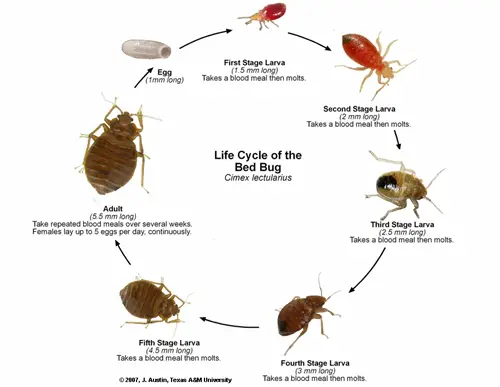 Bed Bugs at Different Stages in Their Life Cycle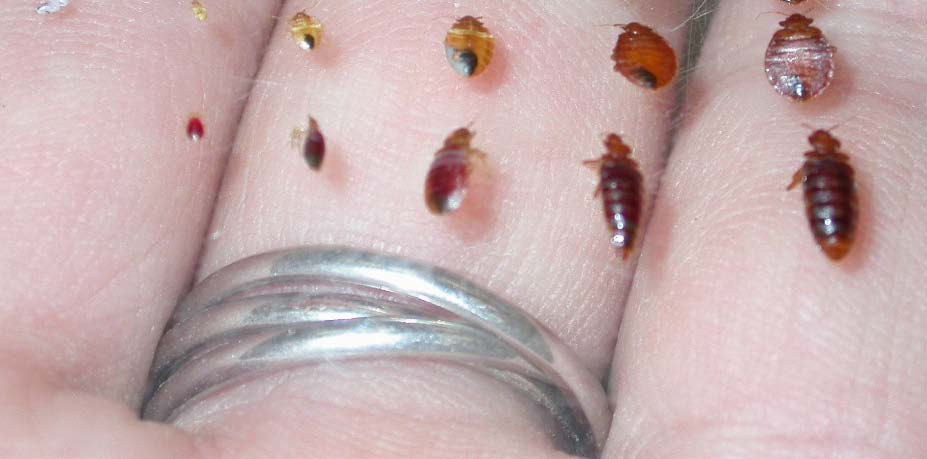
If you are having trouble identifying bed bugs, then you can send a sample to Cornell University for a $25 fee.
bed bug eggs
Bed bug eggs are the size of a pin head or 1/25th of an inch. The oval shaped eggs are usually in small clusters and are attached to the surface with a cement like substance. Since they are stuck to the surface, methods of bed bug removal such as vacuuming are not effective. When killing bed bugs, it is important to use an approach that can penetrate the shell. Some bedbug sprays such as Sterifab, Phantom and Bedlam are effective against eggs. A popular non chemical approach is to use a hand steamer, which super heats the eggs to the required 113 degrees (F) to kill the egg.
In 4 to 12 days the eggs will hatch. A nymph or just hatched bedbug will look for a blood meal within 24 hours after hatching. A female may lay 200-500 bedbug eggs in her life.
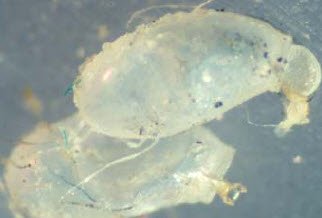 Enlarged Image of Bed Bug Eggs
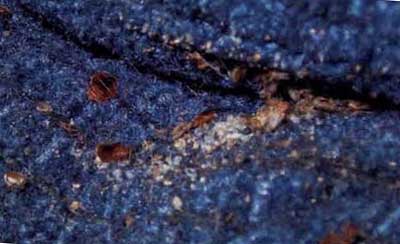 Bed Bug Eggs in the Seam of a Couch
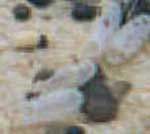 Closeup Image of Bed Bug Eggs
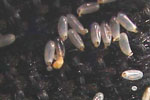 Recently Hatched Eggs
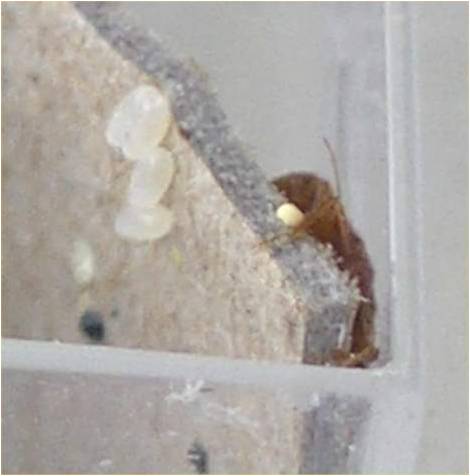 Eggs on Surface
bed bugs as a nymph
Nymphs are light brown and approximately 5/100 of an inch in length. If not recently fed the nymph may be almost invisible to the naked eye. Bed bug nymphs pass through 5 instars or bed bug developmental stage as indicated above in the life cycle chart. They can live for 3 to 4 months without feeding.
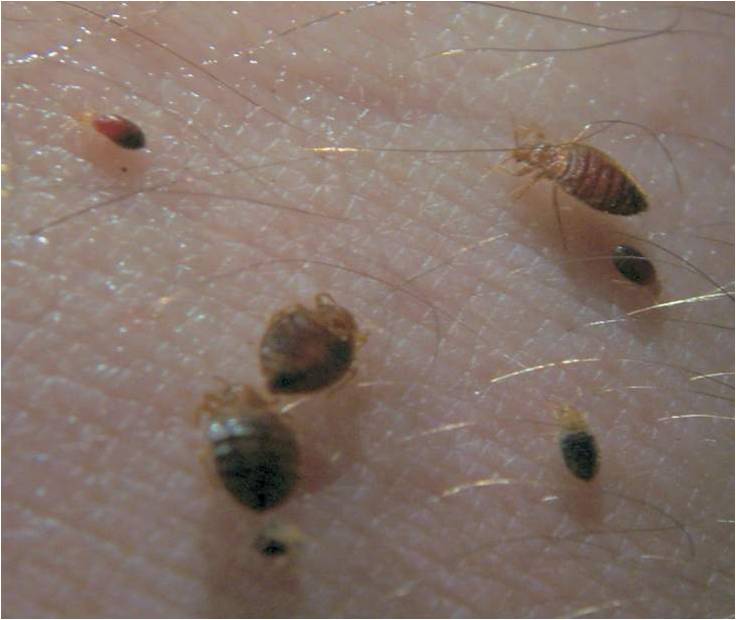 Picture of Adult and Nymph Bed Bugs
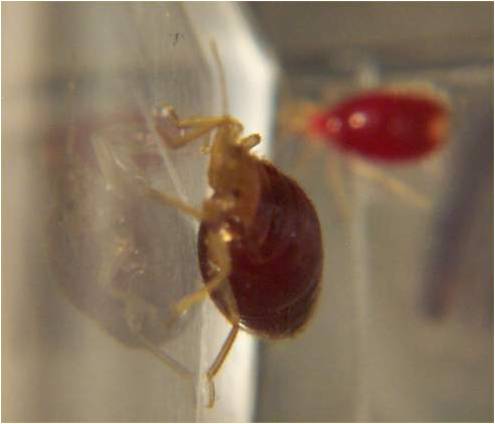 Bed Bug Nymph After Blood Meal
 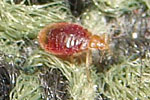 Nymph Shortly After Being Fed
Images of a bed bug as an adult
An adult bed bug will change in appearance before and after feeding. Before feeding they are brownish in color and take on a dull red when full as depicted below. Adult bed bugs are approximately 3/16 inches long. They are oval and flat, other characteristics include:
- 3 segment beak
- 4 segment antennae
- vestigial wings(they can't fly)
- thin fine hairs that are gold colored on the body
- the female abdomen is more rounded
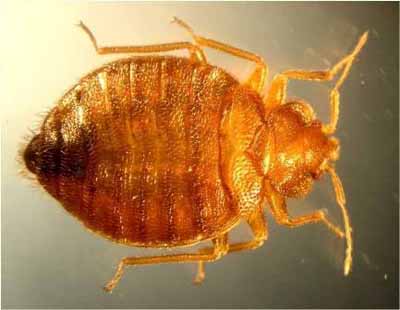 Adult Male Bed Bug
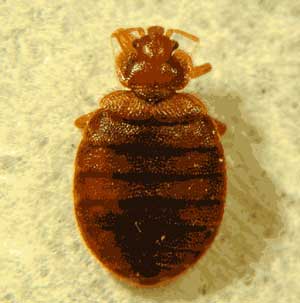 Top View of Adult Bed Bug
 From a side view bedbugs are flat.
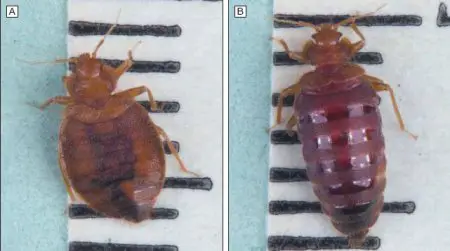 Adults Before and After Feeding
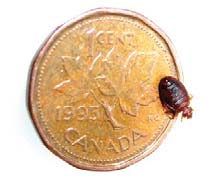 Bed Bug Picture on Canadian Penny for Size Reference
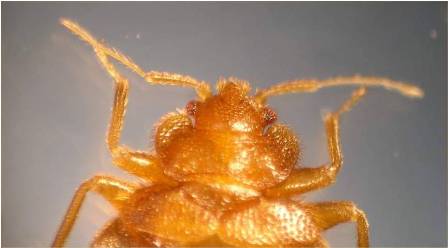 Dorsal View of Adult Bed Bug
A bed bug has a very thin profile, making it easier for them to hide in tight locations. When searching for bed bugs look in every crack, under furniture drawers, around the bed frame and under any mattress tags. Most bedbugs are usually found inside the box spring as this provides many convenient hiding places. See our guide to killing bedbugs for step by step instructions.
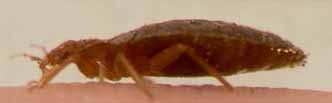 (Source: University of Florida)
Bed Bug Feeding on Human Skin (Bite Photo)
A bed bug will feed on human skin 1x every 2 weeks. Feeding take approximately 10 minutes and may consist of several bites.
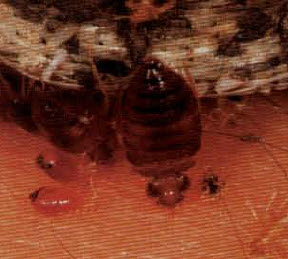 Picture of Adult Bed Bugs and Nymphs (just born) Feeding on Skin
Source: PCT October 2005
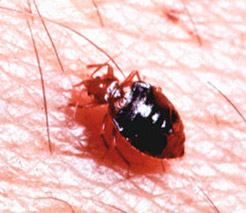 Adult Bed Bug On Skin
image of bed bug infested mattress and furniture
For smaller infestations 4 - 200 bedbugs, they tend to stay near the host. Since human hosts are bitten on a mattress when sleeping, this is where to spot the first signs of bed bugs. You will see bed bug feces, shell and blood marks on the bed.
You can spot bed bugs with the naked eye, with most found around the bed (approx. 50%+). Bed bugs leave behind dark spots on the mattress which is a sign that they are hiding nearby.
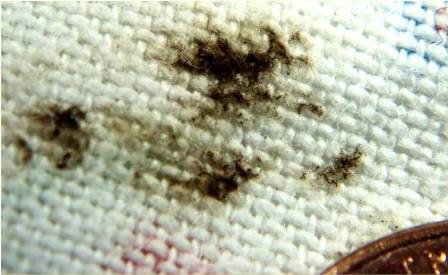 Bed Bug Stains on Mattress
Be sure to do a bed bugs furniture inspection to ensure that you have treated all surfaces. When using a bed bug spray such as Sterifab, be sure to test in a small area to avoid discoloring.
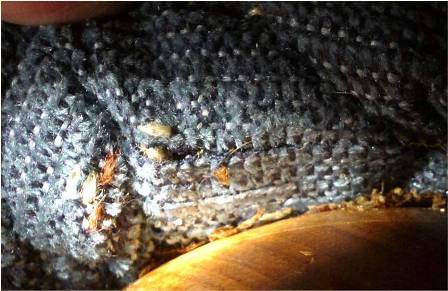 Bed Bugs Found on Chair
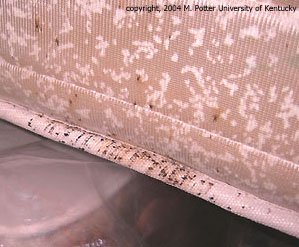 Bed Bug Fecal Stains on Mattress
Source: University of Kentucky
Bite Images
Every person reacts differently to bed bug bites. Redness that appears after a bite is due to an allergic reaction. While some people may develop small red bumps, others may get a large hive. Most redness will go away in 4 to 7 days. If they are itchy, there are products made to help with bed bug related skin itch such as Emu Joy's Anti Itch Treatment for Bed Bug Bites.
Bites tend to appear in patterns and are usually seen on exposed areas of the body such as the legs, arms and neck. It is unusual to see them on the bottom of the feet. In this case, the problem is probably scabies.
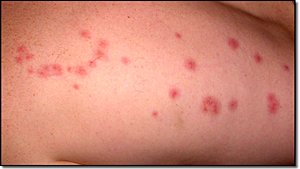 Bites on Arm
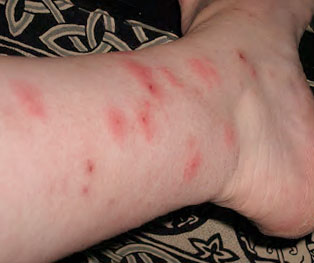 Bed Bug Bites on Foot
faq
what bugs are mistaken for bed bugs?
Insects often mistaken for bed bugs are fleas, cockroach nymphs booklice, and carpet beetles. The only way to tell for sure is to hire an exterminator or send a sample for evaluation to a lab or cooperative extension such as Cornell University.
How to identify bed bugs
Bed bugs are often confused with other pests such as bat bugs. To be sure you have a bed bug problem, you can send a specimen to a local government agency that specializes in bed bugs (see our Local Bed Bugs Information Directory) or to the Harvard School of Public Health (small fee).
More information can be found on our guide on how to identify bed bugs.
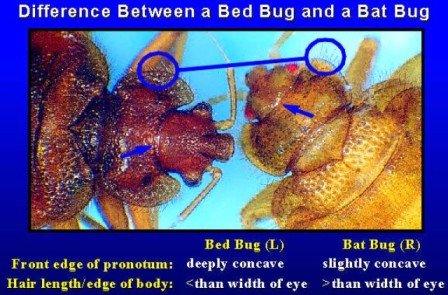 Source: Bed Bugs - Importance, Biology, and Control Strategies; Armed Forces Pest Management Board
Can You see bed bugs with the naked eye?
Yes, you can see bed bugs with the naked eye. Eggs and baby bed bugs are small, so it would be helpful to use a magnifying glass and flashlight. An adult is 3/16" of an inch.
what do bedbugs look like on a mattress?
On mattress you should see a combination of bed bugs, fecal stains and empty egg shells. Here is an example of adults bed bugs and fecal stains on a mattress.
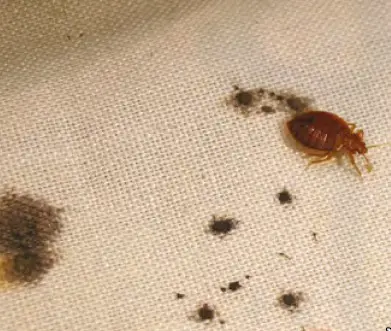 Bed Bugs and Signs of Bed Bugs on a Mattress
Treatment
If you do have bed bugs, we always recommend using a professional since these are very hard insects to find and kill. We suggest requesting a quote by calling eLocal at (877) 673-2704 or requesting a free quote in your area by using HomeAdvisor via this online form.
If an infestation is small and confined to one room, you can try a lower cost do it yourself method first. You will need multiple products that are best purchased in a kit from bed bug supply. You can also see our guide for treatment of bed bugs.
what you need to get rid of bed bugs
Several products are needed to get rid of bed bugs. This includes:
- BedBug Spray: Buy a mattress safe product. Also check regarding pet and child safety if this is a concern. A good choice is Sterifab.
- Dust to Kill Bed Bugs: A natural product call diatomaceous earth will cling to the bed bug. Dust is spread into cracks and other locations after treatment to kill any late hatching bedbugs from eggs that might have been missed during treatment.
- Hand Steamer: After spray treatment, use a hand steamer in cracks and around the mattress and box spring to kill any eggs that might have been missed.
- Mattress Covers for Bed Bugs: Buy zippered covers for both the mattress and box spring. This will trap any bed bugs that were missed during treatment. It is not necessary to throw out a mattress or box spring that is in good condition. Mattress covers for bed bugs must be clearly marked that they are made for the purpose of keeping bed bugs from breaking through the surface or zipper.
These products in addition to vacuuming the room with both the vacuum and brushless crevice tool should treat the average room. Of course, a professional that has bed bug experience may be preferred, although the cost is upwards of $1000. You can buy a kit with most of the above from bed bug supply. Either will do the job and save you money.
It may take 2 to 3 treatments to be sure that all bed bugs are gone. To be sure, consider purchasing Climbup BedBug Interceptors. These are placed under each leg of the bed and will catch bed bugs before they crawl up onto the bed. If the interceptors are empty after two weeks, the infestation is probably gone, since it can take up to 12 days for bed bug eggs to hatch. See the rest of this site for more photos of bed bugs.
Ask a Question or Share Your Bed Bug Experience With Others
Do you have a question or great story about bed bugs? Share it!
What Other Visitors Have Said About Bed Bugs
Click below to see contributions from other visitors to this page...
Bed Bug Hospital Problem 
I was at the hospital with my daughter. I noticed that there was a bug on the bed. I got it off the bed and then looked at my daughter's leg.
There …