How Bed bugs got into your home
Learning how to get rid of bed bugs can be a daunting challenge. This site reviews do it yourself and professional pest control approaches including step by step instructions and required products.
If you can afford it, a professional will save time and aggravation since they already have the needed tools and expertise to know where to look for bugs (see our list of qualified exterminators). In an apartment, be sure to contact the landlord and request that a bed bug expert do an assessment. A do it yourself approach is possible for smaller infestations with a do it yourself kit, but it requires time and hard work.
Bed bugs are carried into a residence on someones clothes that may have been in an infested area or in something they are carrying like a suitcase.
In an apartment, Bed bugs usually are brought into apartments hiding in used furniture or a mattress that is either purchased or carried in from the street. If you live in an apartment, bed bugs don't move far, often between 20 feet to 100 feet in any direction (side walls, up and down). Research shows that there is a 20% chance that they will spread from one apartment to an adjoining apartment. Apartments above and below have a 7% risk of bed bugs spreading.
New furniture can also contain bed bugs. For example, if someone gets a new mattress delivered and it rode in a truck with used mattresses or furniture that was being carried away for disposal, then bedbugs can spread from used to new. So at minimum make sure your new mattress was sealed in plastic (and ask for an early delivery to lower your risk, since there is less used furniture on the truck early in the day.)
Bed bugs have nothing to do with clutter or cleanliness. While clutter can impede treatment, since it gives bed bugs more places to hide, you cannot attract bedbugs with clutter or dirt. The biggest treatment problem in many apartments is resident clutter which may keep a treatment from reaching the pests.
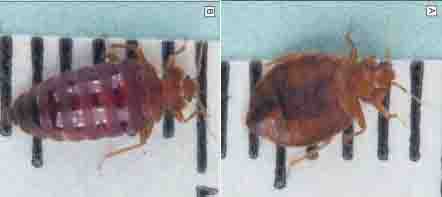 Bed Bug Picture Adult Before and After Feeding
bed bug inspection
It is recommended that a homeowner or renter rely on an expert to do the bed bug inspection when you want to get rid of bed bugs. This could be a licensed pest control professional or even a local government agency. If your city has a 311 information line, try calling to inquire. For example, cities like Baltimore will do a free inspection if you own or rent a single family home. If you live in an apartment, call the landlord. The 311 line or the Department of Health could let you know your rights if your landlord refuses to cooperate. They also can provide brochures on how to get rid of bed bugs.
Make sure that whoever does your inspection does bed bugs only or has a strong expertise in bed bug infestations. Bed bugs are very flat in shape, with the trick being to know where they hide. For example, bed bugs often hide inside electrical appliances (think clock radio etc.), along the baseboards, behind pictures, inside the box spring etc. You should be present during the inspection. If you live in an apartment, you and the landlord should be present to move items and to help with the inspection (e.g; under drawers).
New York City and the State of Maine require landlords to disclose an apartments bed bug history over the past 12 months.
Steps for doing a bed bug inspection to get rid of bed bugs is listed below.
cost to get rid of bed bugs
Hiring a professional is an expensive, but effective way to get rid of bed bugs, so be sure to get several quotes. Thermal remediation or heat treatment will run anywhere from $2,000 to $6,000, while chemical processes can run anywhere from $1,300 to $5,000.
Given the high cost, it makes sense to get quotes from several companies. A good source for a Bed Bug pest control expert recommendations is our own list which can be accessed here.
It also pays to call a member of a well known network such as Home Advisor. You can also call eLocal, a company that screens local exterminators at (877) 673-2704. These companies make sure that they pest control experts are licensed and insured.
Look for companies that state that they are an "integrated pest management service" meaning that they have multiple chemical and non-chemical approaches to get rid of bed bugs. Ask for a written guarantee and if they will repair any cracks they find in the walls. Also ask for a written inspection report. Bed bug experts are also a good source of information on how to get rid of bed bugs.
Inspections range from free to $500 for a Bed Bug sniffing dog. Dogs can detect the raspberry like odor of a bedbug. Some government health departments will examine a bed bug specimen to confirm the problem if you bring it into their offices. You can also send a specimen to the Cornell Insect Diagnostic Laboratory for a small $25 fee.
By way of comparison, do it yourself bed bug kits such as the Naturasil Bug Patrol Value Kit (you need multiple products) cost under $200.
what to do if you are not sure you have bed bugs
The first step in protecting yourself against bed bugs and to get rid of bed bugs is to confirm the problem and the extent of the infestation. This approach will also help to immediate confirm the problem for any inspector. Confirmation is important since several other types of insects look like bed bugs.
A do it yourself approach is to buy a set of 4 climbup interceptors for each leg of the bed (pictured below). If you have bed bugs, they will climb-up the outside of these bowls and then fall in. Place some talcum powder into the bowls, which will stick to the bedbugs and kill them. Looking at the count in the bowls will help indicate the extent of the problem.
You can also bring a captured insect to your local cooperative extension or call in a local expert for confirmation and a quote (consider an expert from the Home Advisor network - toll free 877.233.1145). You can also get confirmation by sending a sample to Cornell University Diagnostic Laboratory (charges a small fee).
 Bed Bug Sniffing Dogs Can Find A Bed Bug Infestation by Looking for Their Unique Scent
inspection Instructions
During the inspection and before any treatment to get rid of bed bugs do not move anything around to keep any bed bugs from spreading through the room. The rule of thumb is to bag and throw out what you can (disposables such as magazines) and to bag any clothes in a sealed bin or tie wrapped garbage bag and then wash in hot water followed by 30 minutes in the dryer (see detailed steps below)
Pest control experts often have large heat chambers on trucks that they use to super heat as many items as possible to the 120 degrees required to kill the insects with heat. If you want to do this yourself, buy a portable PackTite heater that can also be used to super heat any luggage or other items brought into the home after a trip.
Alternatives for do it your self approaches are described at each step below. If you can't find spray products recommended below, look for sprays where the main ingredient is pyrethroid and make sure the label states that it is mattress safe. Also check labels regarding safety for children (if you have them) and pets. Ask the same of any professional that you hire.
In general, vacuum any room as the first step to get rid of bed bugs. A vacuum will do a good job of picking up some, but not all bed bugs. Use the crevice tool around the edge of the room, windows etc. When emptying the vacuum bag, do it in the room being treated, seal in a plastic bag and tape the bag closed. Dispose outside the house.
In some cities such as New York, companies are springing up that specialize in preparing rooms for bed bug treatment. They will know all about bed bugs and have advice that is specific to your area for how to get rid of bed bugs.
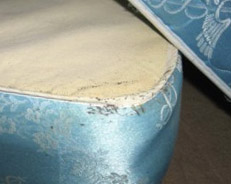 Bed Bug Stains on Mattress
Treatment Preparation
- Set up a Clean Zone: Identify an out of the way area where you can move items that have been inspected. Consider using a bathroom if is connected to the room since it's easy to spot any dropped bedbugs on the tile or floor. If not, use the hall outside the room being inspected and treated.
- Discard What You Can: If anything can be discarded, do it such as newspapers, magazines etc. Bedbugs can hide between the pages. Bag in plastic. seal with tape and discard. Helpful bags to use are Ziploc double zipper big bags, since they are bed bug proof.
- Start with the Bed Linen: Take all of the bed linens (blankets, ruffles etc. Starting from the bottom of the bed, fold all in half including sheets, padding etc. Place in a plastic bag and seal the bag with heavy tape or use ZipLoc Big Bags which have a self sealer. Bring all to the washing machine or laundry mat and wash in hot water following by 30 minutes minimum in the dryer. 120 degree heat will kill bed bugs and their eggs.
- Bag and Wash Clothes Etc.: Anything that can be washed and dried on high heat settings should be placed in the washing machine. Bag clothes, seal with tape and then move to the machine. Even bag and wash any stuffed animals. If sneakers will tolerate it, place in the dryer for 30 minutes on high heat setting.
- Inspect the Mattress: Look at the mattress and note if you see any fecal spots, reddish brown spots or any bed bugs. Be sure to inspect around the mattress tags, as this is a common hiding place. Look along all seams and around any buttons. Check the top and bottom. Bed bugs will try and wedge themselves into any hiding spot. Studies show that 50%+ of total bedbugs in a room will be in and around the bed and box spring. You do not need to throw out an infested mattress. Instead invest in a mattress cover that will trap any bed bugs not killed with treatment.
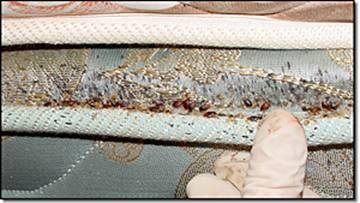 Picture of Bed Bugs in Mattress Seam
Treatment instructions
Products and Bed Bug Sprays Needed
Treatment requires the following products which can be purchased in a single kit.
- Knock Down Spray: To kill bed bugs and eggs on contact. Purchase a mattress safe product that specifically states that it can kill eggs. A good choice is Sterifab.
- Barrier Spray: This spray creates an invisible field that will kill any bed bugs that you miss. A good choice is Phantom.
- Bed Bug Dust (optional): For extra protection, dust also provides a field that will kill bed bugs as the dust clings to the insect.
Instructions
- Remove the
Headboard and Pictures Over the Bed: Bed bugs like to
hide behind bed boards and behind pictures. Inspect the
pictures on the bed. If you spot bedbugs either dispose of
the picture or treat it with a spray. If you use a
professional, and if they have a heat chamber truck, it can be treated
in the truck. If not, dispose of the picture or bag it on the
mattress for future treatment. Treat the headboard, pictures
etc. to kill any bed bugs with a spray (assuming it will not damage the
picture, test it first).
- Flip the
Mattress to the Wall: Flip the mattress and lean it
against the wall. This way you can note any falling bedbugs
and then you can treat the underside of the mattress to get rid of bed
bugs.
Products that are mattress safe include Bedlam
Bed Bugs Spray
, which will
also kill bed bug eggs, Sterifab or Benzarid.
- Inspect and
Treat the Box Spring: More bed bugs usually hide in the
box spring than the mattress. Remove the cheese cloth from
the bottom of the box spring. with a staple remover. Keep it
in the treatment area. Treat the box spring with a spray such as Phantom
Aerosol Spray (kills bed bugs and eggs) or Bedlam,
and then use a natural dust product in the box
spring itself before you seal it back up. These include Temo
Dust, Drione,Diatomaceous
Earth , or Temprid.
All are good choices to get rid of bed bugs.
3. Cover Both the Mattress and Box Spring: After treatment and after any sprays dry, place both the mattress and box spring in a bed bug approved zippered case. If you can't buy two cases due to cost, then just zip the box spring. After encasing the mattress and box spring, move both into the clean area suggested at the beginning of these instructions. Bed bug kits come with a mattress cover or you can buy just the covers such as Protect-A-Bed Bedding Encasements. This particularly brand has been extensively tested and recommended by the head of the Bed Bug lab at Virginia Tech. Although all covers look alike, some covers, if not made properly will allow bed bugs to slip through the zippered teeth.
The purpose of covers is to trap bed bugs and eggs inside the mattress and box spring. It is very easy to miss eggs, so this is an effective way to get rid of bed bugs that hatch from eggs you may have missed. These covers should remain on the mattress and box spring for no less than 1 year ,as bed bugs can live this long without feeding. If holding on to your mattress, this an important step when you want to get rid of bed bugs. - Inspect and
treat the Bed Frame: The frame has cracks where all of
the joints come together. Use any of the spray products
mentioned above to kill any bed bugs and their eggs. To make
sure you get rid of bed bugs, check every hole and crack in the frame.
A recent reader completed a treatment, but failed to fully
find every bed bug hiding on the frame.
- Move End
Tables Etc. into Bed Frame Area: The bed area should be
the place where all other items are inspected or treated.
This concentrates the bed bugs in one area vs. spreading them
throughout the room. Inspect furniture thoroughly.
Pull out any drawers and turn them over. If
treating end tables, do it within the bed frame area.
- Electronics:
Small items can be hiding places for bed bugs such as the inside of
small electric devices. You can either bag these times in the
bed frame area for disposal or use what is called a PackTite
Portable Bed Bug Killing Heater Unit,
which will super heat the items to 120 degrees to kill any bed bugs and
their eggs. These units are expensive, making it more
economical to throw out an item vs. buying a $300 heating unit.
Professional pest control experts use a heat chamber or a chamber that
is fumigated with an insecticide called Licane.
There are no good treatment for books and electronics beyond the PacTite chamber. The best approach to get rid of bed bugs on these items it to throw them out (in a taped sealed plastic bag of course). - Treat the
Baseboards: Bed bugs like to hide in any crack, including
the space between the floor and the wall. Carpet provides
additional places to hide. To treat these areas and to get
rid of bed bugs, use a dust
product or spray (eg; Phantom or Bed Bug Patrol mentioned above) into the
cracks. You can also use a hand steamer and/or vacuum crevice
tool to suck up any bed bugs. Another product that can be
used is called Gentrol.
- Check the
Walls: Look for wall cracks where bed bugs may hide.
Look behind wall electrical and cable plates. Look
at areas with chipped or peeling paint or peeling wall paper.
Steam these areas or use a spray to treat.
- Check
Ceilings:
If you have a drop ceiling, which is a ceiling made up of foam
rectangles, you need to check and treat this area as well to
get rid of bed bugs. Remove and inspect each tile and the ceiling.
- Clean and
Steam Carpet: The vacuum can be a helpful tool for picking
up bed bugs. The problem is that it will not pick up bedbug
eggs, which are glued to each surface with a cement like substance.
Only heat is the sure way to kill them. Sprays such
as Phantom or Bedlam will have some effect. For carpets steam
clean them. Also steam clean upholstery. To be sure
that you are killing all the eggs, consider adding a disinfectant such
as PuraCleenRx
to the cleaner fluid. Test in an area of the carpet
before use to avoid staining.
Pay special attention to the areas where the carpet meets the wall. Spray into these areas with one of the products mentioned above such as Benzarid or the sprays. You can also use a hand steamer to get rid of bed bugs in these tight areas.
After going through all of these steps, you have a good chance of success to get rid of bed bugs. It is very easy to miss the pin sized bed bug eggs, so don't be surprised if you see some bed bugs return.
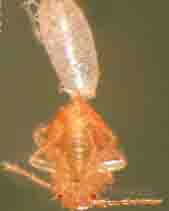 Bed Bug Hatching from Egg (Source: UNL Dept of Entomology)
Treatment may need to be repeated 2 to 3 times, which is why it is a good idea to get a treatment guarantee from any professional you hire. Assume that you will need to apply 3 treatments in 2 week intervals in order to get rid of bed bugs in your home. If you need to treat more than one room, consider hiring a dog to sniff out all of the bed bugs in the area.
Approaches such as the use of pyrethroid "bombs" purchased in a local hardware store are not effective as the insecticide does not always reach into the cracks where bed bugs are hiding. Bed bugs often disappear for 2 to 3 weeks and the reappear, particularly as the eggs hatch.
make sure they are gone
An inexpensive way to determine if bed bugs are gone is to place a Bed Bug Interceptor called climbup under each leg of the bed. Bed Bugs will climb up the side and get trapped inside the bowl. An empty bowl means the problem is solved.
How to Get rid of bedbugs in an apartment
If you see bed bug in your apartment, call the landlord and insist on a home inspection by a qualified experienced professional. If you are not satisfied, send the landlord a request for inspection in a dated letter. We also suggest that you call the local health department to understand the legal requirements in your area. We list many local bed bug resources here.
When buildings are treated they require the cooperation of all residents. For example, if residents have clutter, in apartment treatments are often ineffective since insecticides can't reach every bed bug. Each apartment should be treated using the instructions listed above. If this is not possible, or if residents will not allow multiple treatments, then an entire building may need to be evacuated and fumigated. Note that not all residents will understand written instructions or English instructions on how to get rid of bed bugs.
If an apartment is cluttered, the best approach is to remove all electronics, clutter etc, and place the items in a container truck that has a heat unit designed to kill bed bugs. A fumigation container that uses a product like Vikane will also work.
Apartments can also be professionally fumigated. A pest control company will seal an apartment unit with tape and then fumigate. If there is a significant amount of clutter in the apartments, it may not work.
An apartment building with 1200 unites will cost approximately $100,000 for a treatment. Some buildings will charge residents $500 - $800 to be treated. Note that bed bug treatment fees act as a deterrent, with residents sometimes not reporting the problem.
Some colleges use a pesticide free approach using the "Temp-Air" system, which super heats a building to 132 degrees so that all crevices at least reach the required 120 degrees. The Temp Air fans push heat throughout the building using what is termed "heat fumigation". These units are rented from the company and local rental companies. Both bed bugs and eggs are successfully killed using this chemical free process to get rid of bed bugs. In some cities it is difficult to find companies that use bed bug heat treatment.
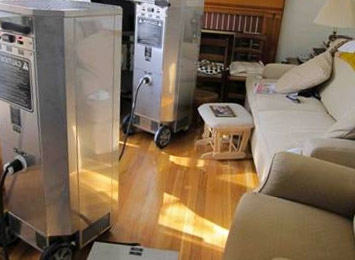 One aproach is to use large heaters in sealed rooms to create the temperature needed to kill bed bugs
brochures
Review these brochures for more information on how to get rid of bed bugs.
questions and answers
Ask a Question or Share Your Bed Bug Experience With Others
Do you have a question or great story about bed bugs? Share it!
What Other Visitors Have Said About Bed Bugs
Click below to see contributions from other visitors to this page...
Bedbug Nightmare in Virginia 
We moved into a seasonal rental trailer at the Riverside Campground, Lanexa, Va. in May. It is infested with bedbugs. We caught and identified them by …
Baltimore Bed Bugs Glen Manor Apartments
We live in Baltimore Maryland in an apartment complex called GlenManor in essex maryland to be exact. Please be advised these apartments are infested …
Small infestation
Hi, I just determined that I have bed bugs from a series of bites on my arms and identifying one crawling past my head back behind the bed after finishing …
Freezing or Heat to Get Rid of Bed Bugs in Car Not rated yet
I have a friend that has bedbugs in her home. She frequently needs rides in our car. Last time when she got out, I found a bedbug in her hair. She also …

Can Bedbugs Breed on a Chair Not rated yet
Reader Question
Do bedbugs breed in cloth chairs?
Editor Response to Bedbug Breeding
Hi Karensa,
Yes, bed bugs can breed in cloth chairs. …
Did My Bed Bug Already Lay Eggs? Not rated yet
Hi I have recently found a bed bug and was wondering if we caught the bed creature when he arrived or if he would have already laid eggs throughout the …
faq
I bought bed bug traps and at the bottom fo the package it says it is for monitoring purposes only. I would like to know what that means.
Traps are used to indicate if you have or still have a bed bug problem after treatment. If the traps stay empty for two weeks it means the infestation has been removed from your home. The traps to not capture enough bed bugs to eliminate them on their own. To do that you need to treat the infested room with the products found in a bed bug kit.
references
Mayo
Clinic
Virginia
Tech Dodson School of Entomology (Dr. Dini Miller)
U.S.
Environmental Protection Agency
How To Get Rid Of Bed Bugs Naturally