Welcome to our guide to information on bedbugs. Here you will learn how to prevent, inspect, and treat a bed bug infestation. This page and site shows the pictures you need to determine if you have a bed bug problem and then provides help on getting rid of the bed bugs quickly.
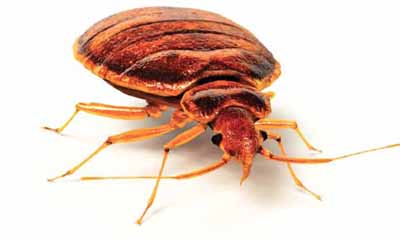 Magnified Bed Bug Picture
What are Bed Bugs?
Bed bugs (Cimex lectularius (Cimicidae)) are small parasites that primarily feed on human blood to live. They will feed on the blood of other warm blooded mammals such as pets, but prefer humans. Some varieties of bedbug have adapted to live on birds in their nests and on bats.
There are two types of bed bugs (out of 100 blood feeding species), that specifically feed on humans. One is found in the warmer temperatures of the tropics while the other has adapted well to cooler climates. Cimex lectularius L. is the most common found in most countries, with the tropical bed bug called C. hemipterus Fabr.
Bed bugs feed at night, just before dawn, they avoid light,
and are attracted to the
carbon dioxide, heat, pheromones and possibly other signals given off
when we breathe at night. They
range in size from a white egg that is the size of a pin head to 1/4
inch in length when an adult. After a blood meal they will
grow by 1/3.
Bed bugs can live approximately 316 days and DO NOT spread disease.
Temperatures that Kill Bed bugs
The latest information on bedbugs shows that they are killed at between 111 ºF/44ºC and 113ºF/45ºC. Between 55ºF/13ºC and 59 ºF/15 ºC, adults often become inactive, but they can adapt and have been reported to be active at 45ºF/7ºC. The idea temperature for bedbugs is 86ºF/30ºC, egg to adult development can occur in 21 days; at 65º/18ºC, 120 days are needed.
how to confirm a bed bug infestation
To confirm you have bed bugs look for two or more signs. There are several ways to identify bed bugs:
- Look for fecal stains, signs or an actual insect hiding or eggs attached to a mattress or on furniture (see pictures below)
- Bites on the lower arms or lower legs (bed bugs rarely bite the face, bottoms of the feet or under clothing)
- Capture a bed bug mail a sample to Cornell Diagnostic Laboratory
- Check with an exterminator or local university insect expert
 Picture Bed Bug Eggs on Upholstery/Fabric
Bed Bugs Infographic:
Information on BedBugs and How they Feed
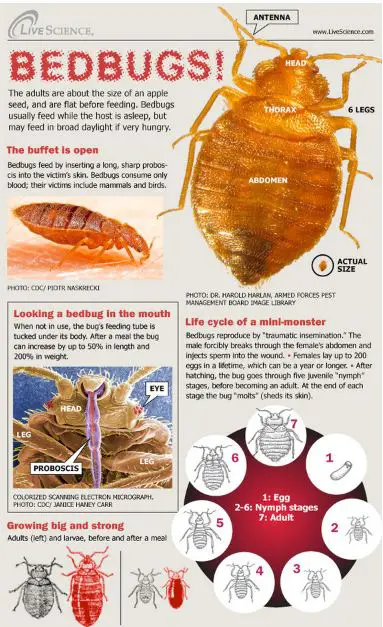 Bed Bugs Infographic
Credit: Live Science
history
Recorded information on bedbugs dates back over 3,500 years. Around 1950 bedbugs were thought to be eradicated. The pesticide DDT was very effective at eliminating the bugs (as well as other insects.). The decline in the bed bug population was thought to be due to improvements in the way people lived such as personal hygiene and the pesticide DDT.
Due to concern with the use of DDT, it was banned as an insecticide, this combined with a developing resistance to DDT in bedbugs, caused infestations to increase in number. A recent study by the University of Kentucky confirms the DDT resistance.
appearance
Bedbugs metamorphose through 6 stages (5 nymph stages and then onto 1 adult stage) and live an average of 10 months (adults can survive up to year without feeding). They will seek to feed within each stage and cannot move to the next stage without feeding. Each feeding session lasts 10 to 15 minutes. They must feed to pass from stage to stage after being hatched from an egg.
They grow into adulthood in
approximately 4 months depending on the temperature. At 86F it takes
21 days to become an adult. At 65F it takes 120
days.
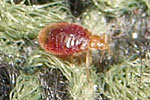 Picture of Bed Bug Nymph After Feeding
An adult bed bug has a thin/flat profile when not full of blood. The insect has wings, but they are vestigial, meaning they are not used. Bedbugs cannot fly, the wings are actually reduced front wing pads (no hind wings). Adult coloration actually varies from yellow/orange brown to a bit more reddish if blood is within the bed bug.
Nymphs (young bed bugs) also appear flat when not full of blood. Immature insects never have wings even if the adult does have them.
Of course, body size
changes from flat and more or less round to football shaped to plump
after feeding. Nymphs are pale white to straw and vary red to
brown if full of a recent blood meal or digesting one, so the body also
can vary from flat to plump.
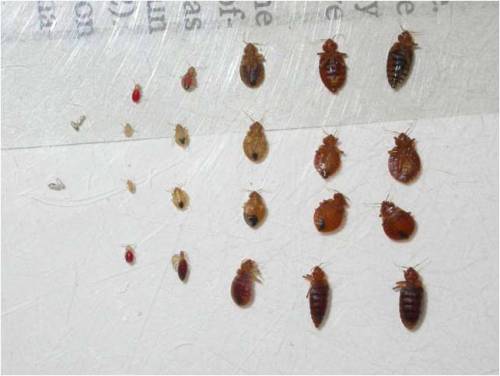 Information on bedbugs - Pictures of Bed Bug Life Statges from Nymph (baby bed bug) to Adult
Photo Credit: Vermont Dept. of Health
The number of eggs laid by a female can vary from 50-500 although these are extremes. Adult Females lay a few eggs per day although sometimes she may lay none. Immature bed bugs (nymphs) never lay eggs.
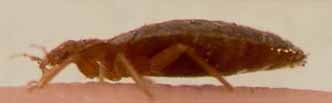 Bed Bug Photo - Bedbug Feeding on Skin
Photo Credit: Unversity of Florida
Amount of Time Bedbugs Can Live Without Food
The amount of time a bed bug can live is actually temperature dependent. Cooler temperatures allow a bed bug to live longer. A bed bug that has not fed will not be able to live long compared to one that has. Living as long as a year is possible at the right temperature.
Bed bugs leave behind stains (pale to brown fecal stains) on mattresses, furniture, walls and on bedding.. They may also leave blood stains on the bed. These are not always dark and sometimes are straw colored to light tan in addition to dark brown.
When you travel and are inspecting a strange room for a bedbug infestation, checking under the sheets for mattress stains is one of the fastest way to tell if there might be a problem. Just lift the sheets off one corner of the bed and inspect the mattress.
Insects mistaken for bed bugs
There are several species of insects that are often confused with bed bugs, which is why contacting a professional for information on bedbugs is important. Insects mistaken for bedbugs include:
- Bat bugs (has longer hairs than bed bugs)
- Poultry bug (also called Mexican Chicken Bug - has longer beak and legs, found near where birds nest or roost)
- Roaches
- Stink bugs
- Wheel bugs
- Fleas
- Ants
- Beetles
- Ear wigs
- Masked hunter (feeds on bed bugs and can indicate that there is a bed bug infestation).
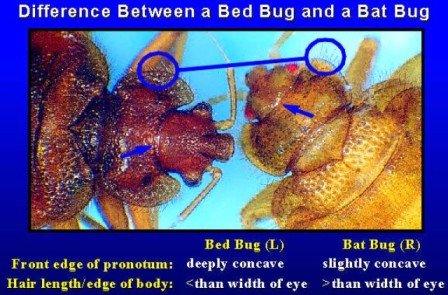 Picture of Bed Bug Compared to Bat Bug
Photo Credit: Unversity of Florida
bed bugs and disease
Information on bedbugs to date shows that bed bugs do not spread disease. This is not to say that they do not cause other problems such as infection from scratched skin reactions or asthma in those that are highly allergic to the bedbug bites.
However, a recent study to expand the available information on bedbugs has shown that bed bugs can carry the MRSA and VRE bacteria (known as USA 300 and Enterococcus faeium respectively), an antibiotic resistant pathogen. Three Vancouver hospital patients were tested that suggest that the insects may be able to transmit this disease. MRSA spreads through contact between an infected individual and another. Cases are usually contracted in the hospital, that enter the skin through broken skin. Read more in the MSNBC report.
what causes a bedbug infestation?
Bed bugs are not caused by a lack of cleanliness. General bedbug causes specific to apartments and single family homes are listed below:
- Traveler picks up bed bugs in luggage or other bags such as a backpack when staying in a hotel or cruise ship
- Visitor in home who picked up bed bugs during their travels
- Bringing used furniture or a mattress into the home
- Rented furniture that has not been inspected
- Used electronics that has bed bugs hiding inside
- Furniture or a mattress brought into a home that was carried on the same truck as used furniture or mattress
- Items brought into home from a self storage facility
- Bed bugs infested one apartment, which then spread to others (in general, bed bugs can travel 100 ft. in any direction on their own, they do not travel long distances).
- Bed bugs brought home by office workers or school children on brief cases or book bags
- Infested library books
 Picture of Bed Bug Fecal Matter on Mattress
Odor
Dogs are used to detect the unique odor given off by the bugs that we as humans don't really pick up on. Bed bugs give off an alarm pheromone that smells a lot like coriander/cilantro with some citronella and has sometimes been called raspberry-like.
Information on bedbugs from the Canadian Dept of Agriculture noted that coriander and cilantro smelled like bed bugs. Sometimes an infested room has a musty odor but this could be from the fecal droppings since it is blood that you could be smelling. There can be dead insects in the room and these also have an odor.
bites
Bed bug bites on the skin are a sure source of bed bugs information that indicate you have a problem. Most people show no reaction to the bedbug bite. Others, that develop red swollen patches or marks, are having a hypersensitive allergic reaction to the saliva that the bedbug leaves behind. Individuals that react to the bites, subsequent reactions can be more severe or smaller, depending on the sensitivity of the individual.
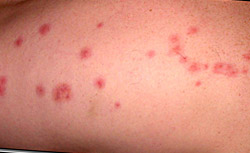 Picture of BedBug Bites on Arm
Bed bug bites are clear at the center, where the two tubes located on the head of the bedbug puncture the skin. Red raised swelling or bites occur around the center (referred to as papules).
Bites usually appear on areas which are exposed during sleep such as the arms, legs, shoulders and neck. It is rare for bedbugs to bite the face. If bites are only on the bottoms of the feet, the problem is most likely scabies.
If symptoms appear within 1 hour to 1 day from the time the person is bitten, then the symptoms should last 2 to 4 days. The most common symptom of bedbugs in addition to redness is skin itch. Symptoms that appear in 1 to 14 days after being bitten will last slightly longer, 2 to 14 days. If the bites are scratched, there is a risk of infection. See a Doctor if the bites aren't healing or you notice other symptoms such as puss coming out of the wound.
feeding and Host animals
Bed bugs will feed on many animals, but prefer humans. They will also feed on:
- rabbits
- chickens
- pigeons
- mice
- cats
- dogs
- birds
- guinea pigs
- gerbils
- ferrets
- hamsters
It is believed that bed bugs will switch from human to pet hosts in the same home as an infestation grows.
mattresses and bed bugs
Bed bugs on a mattress can be spotted with the naked eye and are usually found hidden in tight thin seams and under any labels. They also leave behind remnants such as fecal matter and blood stains.
There is no need to throw out a mattress that is in good condition. Even the best mattresses can develop a bed bug problem. More bed bugs are often found in the box spring than the mattress, so both need to be inspected and if necessary treated.
Mattress covers are used to trap any bedbugs that have not been killed during treatment. They can also keep bedbugs from hiding in the mattress. Covers do not prevent infestations, they just keep the insects out of the mattress and box spring.
Bed bugs have been collected from all kinds of surfaces including hard smooth surfaces and from metal and plastic surfaces. They've been found in recessed screw holes in these types of materials materials. They are more apt to frequent rougher surfaces.
If you have a wood frame bed with slats, remove the slats, inspect and then treat the surfaces if necessary. Note that bed bugs can hide on bed springs.
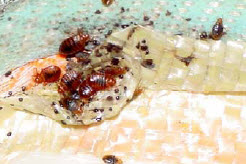 Picture of Bed Bug Infestation on Bottom of Box Spring
Photo Credit: Westmead Hospital
Distance Bed Bugs Move
Bed bugs are usually found within 5 feet of a bed. They can move up to 20 feet. They like to stay as close to the mattress as possible. Bed bugs can cannot detect hosts that more than 5 feet away. New information on bedbugs shows that there is a 20% chance that bed bugs will move from one apartment to an adjoining apartment, and a 7% chance that they will move to an apartment that is above or below the infested room.
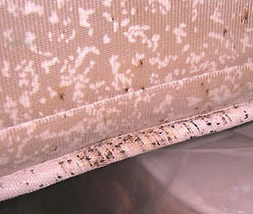 Pictures of Bed Bugs Stains on Mattress
Photo Credit: University of Kentucky
where to find bed bugs
Recent information on bedbugs and studies show that 85% - 90% of bed bugs will be found in the mattress and foundation/box springs or within 15-feet of the bed. Bed bugs shed their skins, which is a definite sign as well as blood spots on sheets. The blood is found in groups.
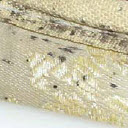 Picture Bed Bug Spots on Mattress
Photo Credit: Westmead Hospital
Start with an inspection of the bed - mattress, box spring and then the frame, including seams, near the buttons and under labels. Bed bugs are more likely to be found around the box spring then the mattress. The picture below provides excellent information on bedbugs hiding places.
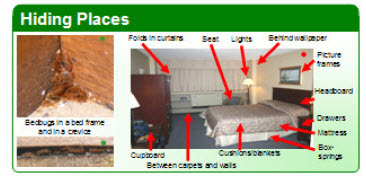 Information on Bed Bugs Hiding Places
Photo Credit: irac.org
List of Hiding Places
- Floor Cracks
- Underneath carpets
- Cracks in and between walls
- Under baseboard molding
- Behind cable and electrical plates
- Inside vents
- Beds (85% - 90% of bedbugs found near/on mattress)
- Mattress seams
- Around mattress buttons and stitching
- Inside the box spring and corner protectors
- Inside pillows
- Cracks in the bed frame
- Around head boards
- Under dust ruffles
- Pet Bedding
- Furniture
- - Drawer Tracks
- - In small cracks and seams
- - Around couch and seat cushions
- Clothes and sneakers
- Toys
- Books and Magazines
- Behind Pictures
- Around window frames
- Inside appliances such as computers and clock radios
how to treat bed bugs
Prepare
Purchase the products you need to treat an infested room. Buy either an insecticide based or organic bed bug pest control kit . This will save considerable amounts of money for anyone wanting to use a do it yourself approach. Kits are also a good source of information on bedbugs.
The bed bug kit available from Naturasil/Bed Bug Patrol is a good choice if you prefer organic natural products. However, we prefer insecticide based products that have been independently verified to not have any bed bug resistance (many products do not work due to developing resistance). These can also be purchased as part of an insecticide based bed bug kit.
Purchase a kit that contains the following products. Each has been independently tested against insecticide resistant bed bugs and have proven to be effective:
Sterifab:
This is a highly effective alcohol based pump spray that contains a
synthetic
pyrethroid called phenothrin . It is mattress safe and will
kill bed bug and bed
bug eggs. Studies show no bedbug resistance to the product.
It does not have a long lasting (called residual
effect) so it is used in conjunction with other methods. If
you can only afford one product, make it this one.
If you prefer an aerosol, then Bedlam is an equally effective substitute. It combines multiple insecticides in a water base.
Phantom:
(uses the insecticide chlorfenapyr) This is a residual spray that will
provide several weeks of protection.
It is primarily for cracks, crevices and furniture.
Always test to ensure that it does not stain. It is
slower acting (up to 7 days) which is why it is used in combination
with a knock down spray.
You can download the supporting University of Kentucky study here
(PDF).
Bag all clothes and any items that
be washed or placed into a dryer. Do not place in another room. Do not
carry through other rooms unless bagged.
Tip:
When carrying items to a washing machine that may contain bed bugs,
you do not want to drop them throughout the house. One tip is
to use a plastic bin with a snap tight lid or buy ZipLoc
Double Zipper Big Bags. These bags are inexpensive
and can even be used to protect from bed bugs clothes when
traveling.
- Bag and remove any items that are on the floor and in closets.
- Keep any pets out of the room being treated.
- Every inch of a bed bug infested room should be inspected. Start with the bed, folding the linens on the bed surface and bagging in a bed bug safe plastic bin or Ziploc zippered bag.
Tip: Set a designated safe area just outside the room being treated. After items are treated or bagged/put into a plastic container, they can be placed into the safe area to provide access to other items in the room. For example, after the mattress is treated, move into the safe area so you have access to the box spring.
Wash Everything
- Wash all clothes, linens in hot water. Dry for at least 20 minutes in dryer at 120F degrees (hottest setting on home dryers is fine).
- Use hot clothes dryer on toys, sneakers for 10 minutes.
- Bag after washing.
- Do not return clothes to closets and drawers until you are sure the infestation is gone. We suggest storing in bed bug proof plastic containers or Ziploc Big Bags.

Treatment: Step by Step Instructions
- Inspect and treat the mattress with a bed bug mattress safe
knock down spray such as Sterifab.
Follow the manufacturers instructions. Be sure to
treat along seams and under any labels. A knock down spray
kills bed bugs and bed bug eggs on contact, but does not provide
lasting (called residual) bed bug protection.
Tip: Be sure to look for bed bugs and their eggs. The eggs are little white dots that usually are attached to rough surfaces with a cement like substance. A vacuum cleaner cannot pick them up, so be sure to use a bed bug spray on the eggs. - Treat the entire mattress on top of the box spring or bed frame. When complete, move to a designated "safe area" such as hallway just outside the room. The safe area is a location you are going to move treated items.
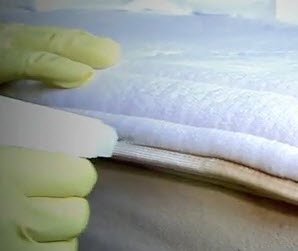 Picture of Bed Bug Treatment with Mattress Safe Spray
TIP: First, if you have one, use a hand steamer on all areas of mattress.
Follow by using a knock down spray such as Sterifab to treat
all Seams, Tufts Around Buttons and Labels.
- Treat the box spring next. Use the Sterifab.
Be sure to peel back or remove the fabric from the bottom of
the box spring. More bed bugs are likely to be in the box
spring than in the mattress itself.
- After treatment, move the box spring into the "safe
area".
- Treat the mattress frame. Be sure to loosen and
treat inside any joints or cracks in the frame. Do the same
with the headboard. In addition to the Sterifab, a good
cracks and crevice spray that has a residual or longer lasting effect
is Phantom.
Phantom is what is known as a residual spray. Studies show
that there is no bed bug resistance to the product and bed bugs cannot
detect its presence, so they freely walk through the areas that were
sprayed.
- Continue by moving bed stand drawers and times into the bed frame area for treatment. Inspect in, sides and below each drawer. Be sure to test spray products to make sure that they will not stain your furniture.
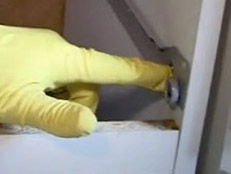 Picture Treating Furniture Tracks and Inside of End Table
Tip: Be sure to treat the inside of the furniture. It is preferable to first use a knock down spray such as Sterifab followed by a residual spray such as Phantom. Be sure to check the label for more information on bedbugs treatment.
- Note that bed bugs can hide inside electronics. The only
way to treat inside these items is by purchasing a Packtite
heat box that using high temperatures to kill all bed bugs and eggs.
You can also store them in a sealed plastic container for 14
months to ensure that all bed bugs inside have been starved and killed.
- If you have carpets, consider using a disinfectant mixed
into a carpet cleaning solutions such as PuracleenRX
to kill any eggs. Be sure to test solution on carpet to ensure that the
disinfectant will not discolor or stain the carpet.
- After the mattress and box spring dry from being sprayed, use zippered covers to trap any bed bugs you missed and to trap any late hatching eggs.
Organic or Mechanical BedBug Products
What follows is some more detail on approaches to killing bed bugs that do not involve insecticides. As indicated above, we recommend using a professional exterminator, however, here are natural/organic bedbug products that can be effectively used in combination to safely kill bedbugs.
These are two excellent sources for individual organic bedbug products, bed bug sprays, dust, zippered covers, and bed bug traps.. They are also a source for information on bedbugs.
- All
Stop (Spray, Dust, Steamer, Covers, Anti bed bug bite and
itch)
- Bed Bug Patrol (Benzarid, Bug Patrol, Fossil Dust, Steamers). this company also sells an economical kit that contains a spray, fossil dust, hand steamer and mattress covers; all essential products for killing bedbugs.
Sprays
Use a bed bug spray in all cracks and seams such as Bug Patrol. Organic sprays will kill bedbugs on contact or shortly thereafter.
Read our overview of different bedbug spray products, including those that contain insecticides and others such as Bug Patrol, which is a natural product. Be sure to follow the information on bedbugs and how to kill bed bugs found on the label.
Steam
Use a steamer to kill eggs in cracks and the bugs themselves. Steam can be used along the seams of a mattress, although make sure it dries with the window open to avoid mold.
Dust
Dust It is very easy to miss a bed bug egg. Sprinkle natural fossil or desiccant dust. in cracks to kill bed bugs after they hatch (also known as diatomaceous earth). If renovating a house, spread dust in the walls using an exterminator.
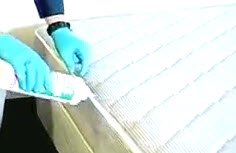 Bed Bug Mattress Dust Treatment
Tip: After treatment with a spray, Bed Bug Dust Can be applied to cracks and tufts of the mattress to provide long term protection from bed bugs. Shown here is JTEaton which comes in a easy to use bottle.
Bed and Box Spring Covers
After mattress and box spring dries after spraying, use a zippered cover to protect against bedbugs. You can get one as part of the kit mentioned above or from Bug Patrol. Low cost covers can be purchased from WalMart called MicronOne or premium covers from Allerzip.
Bed Leg Interceptors
Climbup Interceptors are small inexpensive bowls that are placed under each leg of the bed. The bed bugs climb up the side and get trapped inside the bowl. This is an easy way to determine if bed bugs are still in the room, and the extent of a bed bug problem.
Freezing and Heat
According to Dr. Michael Potter, temperatures below 0°F (-18 C) for one to two weeks are generally believed to be needed to reliably kill all bed bug life stages. This is confirmed by Dr. Louis Sorkin, Entomologist at the American Museum of Natural History, who through his own experiments had bed bugs in a freezer at -29dF (-34 C) for 4 hours and some 1st life stage instars lived. However, at 5 days they died.
Professionals that use carbon dioxide spray at significantly lower temperatures can kill bed bugs and eggs on contact (at least-26 F degrees (-32 degrees Celsius).
Rooms that are super heated to 120 degrees for an extended period of time (at minimum 7 minutes) will kill bed bugs and their eggs. This is an approach (called thermal remediation) that can only be used by professionals and given the higher price, is used for bigger infestations where bed bugs have deeply penetrated walls and floors. The advantage is that no chemicals are used and it is 100% effective.
Using a hand steamer is another form of heat treatment.
Exterminator Services
It could take several treatments before the bed bugs are removed from your home or apartment. We suggest contacting several exterminators to compare methods, costs and to get more information on bedbugs. For example, some charge for an in home inspection or use of a bed bug sniffing dog (a highly effective approach).
We suggest starting with:
- Start with a national membership group such as Home Advisor (1.877.233.1145). They pre-screen members and certify that they are both insured and licensed. The network will provide up to 3 free quotes.
- Also, you can search our database
of qualified local bedbug exterminators. Just enter
your zip code.
Please keep in mind that if the bed bugs are not treated correctly or if sprays that kill eggs aren't used, missed insects will begin to multiply and the problem will return. Don't use a pest control company unless they have extensive experience treating bed bugs.
Bedbug exterminators can provide invaluable information on bedbugs. Ask each bed bug pest control company if they have first hand experience with these types of infestations and if they have specialized equipment to do the job (e.g; heat chambers, bed bug sniffing dogs etc.). Specifically ask what chemical and non-chemical approaches are used and potential toxicity levels for children and pets..
A pest control expert could also provide additional valuable information on bedbugs. You could then compare the cost of hiring a professional pest control expert vs. doing it yourself.
The use of a bed bug sniffing dog costs from $300 - $500. The treatment itself could cost from $400 to $900 or more depending on the extent of the problem and equipment needed. it could take 2 workers all day to treat a home or apartment.
Brochures
Each of these free brochures are filled with information on bed bugs.
questions and Answers
Ask a Question or Share Your Bed Bug Experience With Others
Do you have a question or great story about bed bugs? Share it!
What Other Visitors Have Said About Bed Bugs
Click below to see contributions from other visitors to this page...
Did Helping a Friend Move Expose Me to Bed Bugs? Not rated yet
Would I have gotten bitten by bed bugs, or carried them on my clothes while helping someone move into an apartment and staying the night there? I have …
How to Tell if Bed Bugs are Gone Not rated yet
Ok so I recently found out that I have bed bugs BUT I only found about 3 of them and when cleaning my room and bed noticed that it still looked clean without …
A tiny bit more about Bed Bugs Not rated yet
I wrote a lot on BB's. One thing though. They find you through the carbon dioxide you exhale...just the same way as mosquito's find you. Other postings …
references
PCT
News
Insecticide
Resistant BedBugs: Implications for the Industry
Alvaro Romero, Michael F. Potter, Kenneth F. Haynes
BedBugger.com