- Home
- How to Kill Bed Bugs
How to Get Rid of Bed Bugs
" Pesticides, especially bedbugs can be very difficult to treat. Methods include both organic, chemical(be careful when using chemical products around humans) and mechanical treatments. Mechanical methods include vacuuming, traps, steam heat, freezing and the use of a washing machine. Chemical methods include sprays and dust. Organic methods include natural powders. All three are needed to thoroughly treat an infestation."
Bed bugs are small pesticides that live near their host. They puncture the skin of the host in order to feed. The skin reaction to a bed bug bite is an allergic reaction. It is estimated that 70% of people show no skin reaction after being bitten.
Even if you don't have a reaction to the first time you are bitten, it is possible to have a reaction the next time you are bitten. Reactions can occur within an hour to as long as 14 days later.
It is difficult to kill bedbugs since they are hard to spot. They can be seen with the naked eye when you are able to coax them out of their hiding places, which are usually thin cracks and crevices.
Treatment requires a combination of methods in order to effectively knock down or reduce the bedbug population and then to apply products that provider longer lasting protection. The key is to be thorough and to make sure that you treat the entire infested area.
Removing bed bugs from an area usually takes three applications. If you are planning to remove the bedbugs yourself, you will need a combination of non-chemical and chemical approaches since steps like cleaning a room and vacuuming will reduce but not eliminate the population. The most economical way to obtain the required bedbug products in through the purchase of a bed bug kit.
table of contents
Products required to remove an infestaiton
| Product
Type | Product
Recommendation |
| Mattress
Safe Knock Down Spray | Sterifab
(best all purpose insecticide based bed bug spray), Bug
Patrol if you prefer an organic spray |
| Aerosol
spray with long term residual effect | Phantom
or Bedlam |
| Dust | Fossil
Dust (also called bed bug dust or diatomaceous earth) |
| Vacuum | Any
brand vacuum that comes with a crevice tool |
| Hand
Steamer | Hand Steamers
from any brand - preferably a professional grade steamer(one with multiple holes) |
| Bed
Furniture/Bed Frame/Box Springs Trap | Climbup
Interceptor - 1 for each leg of the bed |
| Mattress
and Box Spring Zippered Covers | Box Springs and Mattress Covers - It is important although not required to purchase zippered covers for your mattress/box springs and bed frames. After treating an infestation you can ensure their purgatory by keeping zippered covers on, this way it prevents bed bugs from entering and leaving the mattress seams and it surroundings if there are any. |
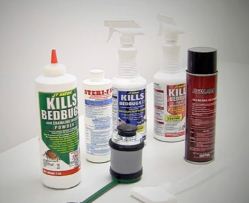 Kit including all the required products to effectively eliminate bed bugs. Available for purchase here
where to look for an infestaion
Start your search in the bedroom since up to 90% of the bed bugs are usually found within 10 feet of the bed. Approximately 50% of bedbugs will hide in and around the bed including the mattress, box spring and bed frame. When looking for food, they can crawl over floors, on walls, and across ceilings for up to 100 feet. For this reason be sure to check adjacent rooms.
Bedroom
bed parts
- Mattress and Frame: check along the cracks and seams of the mattress. Separate the mattress and box spring and be sure to turn over each. Remove any blankets etc. for washing in hot water.
- Around Room Edges
- Bed Frame - Check the crack between the headboard and the bed frame (note that bed bugs prefer wood frames and do not like hard surfaces such as metal frames).
around/near the bed
- Behind the clock radio and inside electronics
- Carpet seams and edges
- Behind pictures
- Behind cable and electrical wall plates
- Inside books, papers and, magazines located near the bed
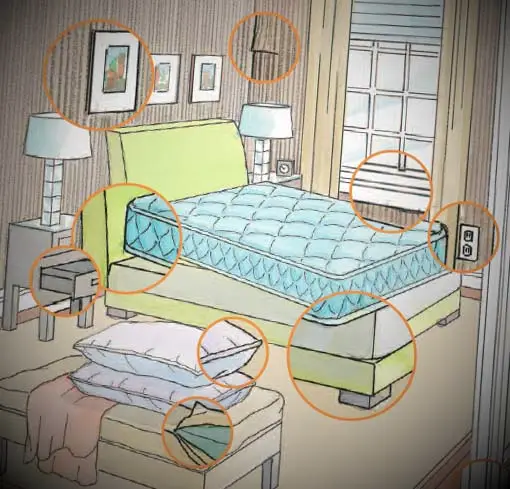 Bedroom Hiding Places
General Areas
- Floors: look for cracks in flooring, underneath your carpets, under molding or baseboards.
- On Walls: If you have plaster, look in any cracks in the wall. Check for wallpaper that is not firmly glued to the wall. Check around anything attached to the wall such as shelves, mirrors and pictures. Remove all of these if you can to clean behind them.
- Outlets: Check behind electrical outlets that are not firmly mounted. Check behind any wiring that is on the floor or that runs along walls.
where to look near furniture to remove bed bugs
- Check under and around the bottom of any furniture.
- Check behind the furniture.
- Inside drawers and if you can pull out each drawer and then remove them from the room.
- Inspect other furniture beside your bed.
- They live on sofas or chairs, they can also live in carpet, usually along the baseboard.
If you find them in one location, go ahead and inspect your entire house. If you miss a spot when treating them, the infestation will return.
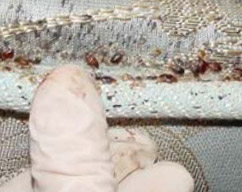 Infested Mattress
other places to check around your home
- Clothes: Wash and bag clothes in the room to be sure the bugs aren't hiding. Particularly check laundry bags and any items that are on the floor. Wash clothes in water that is at minimum 120 degrees. As an alternative place clothes and other items in the dryer for 20 minutes with the setting at medium.
| - Books/Magazines: Check the pages of any printed materials. Bed bugs can hide between pages.
- Electronics: If there are cracks in your phone or radio, look inside to make sure that bugs haven't entered. Same for computers that have the fan grates in the back. The only way to kill bed bugs in electronics is to hire a professional that uses a dry ice spray or use heat from a hair dryer or a portable heat chamber such as PackTite.
eliminating bed bugs
Getting Rid of Bed Bugs in 4 Easy Steps
How to remove bedbugs using sprays and other tools
Preparation for Eliminating a Bed Bug Infestation
Follow these tips before you begin to treat a bed bug infestation.
- Do not remove anything from the room to be treated unless bagged or in a snap-tight container.
- Loosen the edge of carpet at the perimeter to inspect for bed bugs
- Remove and inspect all items from the walls including pictures and lights if mounted on the wall. Keep the items in the infested room.
- Loosen all switch plates such as electric, cable etc.
- Remove all linens, clothes and blankets and bag/seal in a bag or bin before they leave the room.
- Remove all items from adjacent closets. Bag and clean in a washing machine or dry clean.
- Remove all items from the floor
- Dispose of clutter such as newspapers and magazine in a sealed plastic bag
Bed bugs are also difficult to spot because they are active at night. You can try and pinpoint a location where a bed bug is hiding by looking for stains or remains from shedding skin (molting). The bedbugs also have a distinct sweet smell, which is why dogs are sometimes used to locate areas where they are hiding.
Step by Step Instructions
The following steps will take you through how to get rid of bedbugs section by section. The key to treatment is to be thorough and to use the right products(recommended in the table above).
Killing Bedbugs on Clothes
Killing bed bugs on clothing is as simple as washing them. Washing clothes, blankets and other machine washables will help to kill bed bugs and their eggs. Wash everything you can in hot water followed by 20 minutes in the dryer. When carrying clothes, to avoid dropping bed bugs on the way to the washing machine, carry in a plastic bin or Big Ziploc Bags. These Ziploc bags are also a great way to protect items from becoming infested.
how to remove bed bugs in mattresses and box springs
Removing bed bugs from mattresses may be one of the most difficult areas clear out an infestation. Follow the steps below for the best and easiest process to doing so.
First remove all sheets and bedding and place in sealed Ziploc bags. Afterwards vacuum the mattress and box spring thoroughly. To kill the maximum number of bed bugs and eggs, if you own a hand steamer, go over each seam/button as heat from the steam will kill bed bugs. If you don't have steamer or vacuum, hold a hair dryer on low air/high heat setting for 30 seconds over each part of the mattress.
When treating a mattress and box spring, a spray is a highly recommended way for eliminating bed bugs (use gloves and some type of eye protection for safety). If you prefer organic products, use a spray designed for use on surfaces that go near the skin such as the Bed Bug Patrol spray. This is a knock down bed bug product that kills on contact. It should be used in conjunction with products that provide lasting protection.
In terms of safe insecticides, Sterifab is frequently recommended by experts for removing bedbugs. In fact if you can only afford one product, buy Sterifab. Sterifab is a what is known as a contact or knock down killer (60% isopropyl alcohol plus a synthetic pyrethroid). This means that it kills close to 100% of bed bugs on contact. However, if you miss any bed bug hiding places, which is easy, it doesn't have an effect. The use of Sterifab will "knock down" the size of the bed bug population. Any bed bugs missed can be killed by a spray that creates an invisible barrier that has a longer term or residual effect. Any late hatching bed bugs are killed when passing through dried spray. Popular choices for a residual sprays are Phantom and Bedlam.
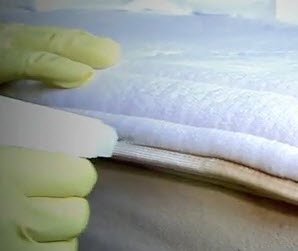 Treating Mattress with Safe Spray to Eliminate Bed Bugs
Lightly spray cracks and crevices/seams around the mattress. A common hiding place for bed bugs is under any mattress labels, you can also use Sterifab as a convenient method for removing bed bugs in any cracks and crevices in the room, such as along the baseboard.
Peel back the fabric on the bottom and also treat the inside of the box spring. If you have some, place some bed bug dust (fossil dust) inside the box spring.
Note, only do this if the mattress and box spring are in good condition and do not have holes. If the mattress is old and torn, or was purchased used, you are better off throwing it out. When disposing of the mattress wrap it in plastic wrap to avoid dropping bed bugs and spreading the infestation to other areas in your home. Mark it as infested so that someone else doesn't pick it up. Many town sanitation departments have a free mattress pick up service.
Once treated, move the mattress out of the room to a "safe" area such as a hallway so that you can access the box spring.
After treatment (after spray dries), seal the mattress and box spring in a zippered cover. This is the easiest way for killing bed bugs or late hatching nymphs (baby bed bugs) that you might have missed.
eliminating bed bugs on/in and around the bed frame and other furniture
Empty drawers on the treated box spring (assuming you carried the mattress out of the room after treatment). Place content of drawers into plastic bins with snap tight lids. Inspect all items for bed bugs. Wash what you can in the washing machine. Dispose of any items that are of no value to limit the number of hiding places. Bed bugs can live for about a year without feeding, so if you store items in bins, leave them there if you can.
Inspect all furniture, bottoms and side of drawers, picture frames, and the bed frame for bed bugs. Treat all cracks with a strong insecticide spray. For this purpose a good option is Phantom or Bedlam. When treating furniture test out of the way areas to see if sprays will stain. Steam can also be used, but test this as well.
removing bed bugs from carpets
First vacuum any carpets. Use a crevice tool to vacuum around the edges of the carpet. Steam clean any carpets. For added protection, add a strong disinfectant to the carpet cleaner. Be sure to test to ensure that disinfectant doesn't discolor the carpet.
How to Kill Bed Bugs in Wall Cracks, Wall Paper, and along Floor Baseboard Molding
When an infestation gets larger, the bed bugs will spread out and look for other hiding areas. Seal any cracks and crevices in floors and along baseboards to reduce the number of places that they can hide.
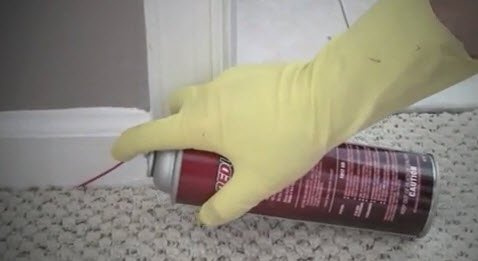 Use a residual spray (Bedlam shown here) around the baseboard. These sprays will kill any bed bugs that cross through the treated area for several weeks.
After spraying, place bed bug dust (also called diatomaceous earth or fossil dust) in a thin layer in all cracks and crevices. Seal what you can to minimize number of hiding places.
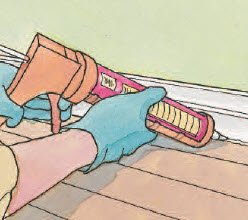 Seal cracks along floor and baseboard to eliminate bed bug hiding locations
Lastly use Climbup Interceptors. These are inexpensive bed bug traps that go under each bed leg. When the traps remain empty after 3 weeks, you no longer have bed bugs.
hiring an pest control expert to help remove bedbugs
The easiest and safest option to removing infestations are hiring an exterminator, although their services can be quite pricy. To easily find a local expert visit Home Advisor. You can also check our database of bed bug exterminators. A pest control expert experience in killing bed bugs will discuss with you one or more approaches to treating the problem. They often have access to high quality equipment that can get the job done relatively quick.
Professionals have specialized equipment, particularly for larger, multi-room or apartment infestations. For example, a pest control company when faced with the challenge of getting rid of bed bugs may have equipment that can super heat a room to a temperature of about 120 degrees for a sustained period of time which is deadly to these pests.
When using a commercial treatment process, most products contain these following chemicals: permethrins, pyrethroids and/or pyrethrin's. These ingredients are quite effective, although there are reports of some bed bugs showing resistance, this hasn't been a big problem to date (insecticide based products recommended earlier have been shown to kill insecticide resistant bedbugs). Follow the directions on the manufacturers label.
As mentioned, don't be surprised if you home requires several treatments. Also check rooms that are directly adjacent, above and below the room where the bed bugs have been found. They don't move very far, but can infest other rooms as an infestation grows.
Common Treatment Methods Used by Exterminators
Portable Heaters: Bed bugs are killed at 113º F. One effective and chemical free approach to killing bed bugs is to super heat a room to a temperature of 113º F or higher.
Freezing with Dry Ice Spray: Bed bugs are killed at freezing temperatures as well. A system using frozen carbon dioxide or dry ice, is sprayed into cracks and crevices to kill bed bugs on contact. The technology has an added advantage of being able to be sprayed into electrical appliances and wall outlets, clearing out these areas.
Dogs: Bed bugs give off a scent that dogs can be trained to detect. This is a highly accurate way of inspection and finding the source of the infestation. The only downside is the cost of home inspections that use a dog. If you suspect a problem, but aren't sure, a firm that uses sniffing dogs can be an effective way to find any signs or direct evidence of an infestation.
Fumigation: Used a last resort, a building can be fumigated with chemical pesticides to remove bed bugs. This approach is effective, but expensive.
In addition to these approaches, exterminators use many of the chemical and non-chemical approaches found on this page.
what to do After Your clear out your infestation
As you clean things, place them in sealed Ziploc Bags for protection. After vacuuming, remove the vacuum bag, seal in a plastic bag and remove it from the house. As an extra precaution you can freeze objects used to get rid of bed bugs such as the vacuum bag for several days to make sure the insects are dead before bringing them outside. The sprays mentioned will kill bed bugs fast. Just make sure that you have found them all.
Conclusive Information on eliminating bed bugs
As mentioned, an infestation can be extremely difficult and tedious to remove. Even with all of the best recommended treatment products, it is still extremely difficult to completely eliminate an infestation, reason being is if there is even one single bed bug left alive, it can reproduce and before you know it another infestation will be in your hands. It is important when doing searching for bed bugs you do a full house inspection and thoroughly check all areas. If affordable your best option is to hire an exterminator, due to them having access to professional training and equipment, they can successfully clear out an infestation in a short amount of time, although depending on the size the treatment may require many visits.
Ask a Question or Share Your Bed Bug Experience With Others
Do you have a question or great story about bed bugs? Share it!
What Other Visitors Have Said About Bed Bugs
Click below to see contributions from other visitors to this page...