Overview
Treating bed bugs is a multi-step process using several types of products and methods. If you are thorough when following the step by step instructions below when applying the different bed bug treatments available, then it should take care of the problem. If the infestation is severe or if a room has many cracks and hiding places, then a professional should be called in.
Treatment involves not only killing adult bugs, but also killing hard to spot eggs. Both need to be treated in order to keep the insects from re-emerging after the initial treatment.
There are three general phases you will move through to treat bed bugs. It is essential that all three are followed.
- Inspect and find the bed bugs and where they are hiding in a room.
- Treat bed bugs in the room by vacuuming, the use of two types of bed bug sprays (knock down spray to kill on contact, second spray for lasting protection), bed bug dust and as a precaution steam (use of steam is optional).
- Prevent bed bugs from returning by sealing cracks in the wall and floor, and by applying bed bug dust.
Before treating, prepare the room as indicated in the following bed bug video. Note that even professionals often need to apply 2 to 3 treatments before an infestation is completely gone. Our advice is to use a professional if you can afford it (or at least get a quote from a reputable company like Home Advisor) particularly if bed bugs have gotten into the walls or are in multiple rooms.
Steps to treat bed bugs
- Buy a Bed Bug Treatment Kit or Individual Products
Kits are the most economical way to get the information and all of the products that you need. Good choices to explore are affordably offered by Bed Bug Supply.
Kits contain the following essential products.
Bed Bug Sprays: Purchase a non-toxic spray which will kill the bed bugs and eggs on contact. Make sure the one you buy is non-toxic and mattress safe, since you may be using it on surfaces that come in contact with your body and pets.
If you would only like to purchase one spray, consider Sterifab, which will kill both bed bugs and the bed bug eggs. The product is also mattress safe. A second spray such as Phantom is often used after applying Sterifab to create an invisible area that will kill any bed bugs that cross through the sprayed area. Note that Phantom is not mattress safe.
Bed Bug Dust: Dust is used to kill bed bugs that you may have missed with the spray or that have hatched from eggs that you have missed. It is a natural product that will cling to late hatching bedbugs.
Steamer: A bed bug steamer is an effective way to kill bed bug eggs. In fact many professional pest control experts use heat to kill bed bugs and eggs. Steam can also enter cracks in floors and under molding that is hard to reach with other products.
Mattress and Box Spring Covers: Zippered covers will trap any bed bugs that remain after treatment inside the mattress and box spring. This is particularly important for the box spring as there area more places to hide. If a mattress is ripped it will need to be covered in a zippered case or disposed of.
Optional Products:
Treat bed bugs on Carpet and Other Surfaces: A strong disinfectant used in a carpet cleaner will kill eggs. You can also use the disinfectant on a rag to kill the eggs when wiping surfaces. Eggs are small white specks and can be easily missed. The female bed bug has no preference as to where eggs are deposited, so they can be in plain site and in cracks.
Bed bug Itch: Bed bug bites cause an itch in many people. Everyone reacts differently to the bites. While the itch should naturally go away, there are products to soothe the skin and make the itch tolerable such as Aveeno.
Climbup Interceptors can be a helpful way to see how bad an infestation is or if it has gone away. An interceptor is a small bowl which fits under each leg of the bed. Bedbugs climb up the outside of the bowl and fall into a well where they are trapped. Keep the interceptors on the legs at least 2 weeks after treatment, since it takes up to 12 days for all eggs to hatch. No bedbugs in the bowl means that the problem has probably been resolved. - Vacuum
Vacuum all surfaces. Get into hard to reach cracks with the crevice tool that may have come with your vacuum. Do not use a brush attachment since the bugs might get caught and then be released into the area where you store the vacuum.
Be sure not to miss any areas. Use the crevice tool to not only vacuum at the edge of the walls, but around mattress and furniture seams. Vacuum around windows, indentations, door handles, and anywhere else the bugs could hide.
Bed bugs can live in the vacuum bag. Remove it from the vacuum, seal it in plastic and remove from the home. If you leave it out in a garbage can in the heat of the day, that should kill any bed bugs inside.
Vacuuming is a good way to reduce the size of the insect population. - Clean Clothes and Linens
To treat bed bugs on clothes, bag all of your clothes in the problem room and other items such as sneakers and toys. Note: do not move anything from a problem room into a "clean" room unless it is bagged and sealed/tie wrapped. Move clothes, blankets and bed covers to a washing machine and wash on the hottest temperature available. University of Kentucky research shows that bed bugs and bed bug eggs will be killed by a normal hot cycle in a washing machine OR by 5 minutes of heat in a clothes dryer. If you have a full machine of laundry, then heat for 30 minutes in a dryer (heat needs to be at least 175F or 79C). An ordinary clothes dryer will work fine.
If there are other items in the room such as sneakers and toys, if they will withstand heat, put each one in the dryer for 5 minutes and remove. - Remove Clutter
Bed bugs love corrugated surfaces such as cardboard. Remove books, magazines and newspapers; which all make for good hiding places for the bugs. - Spray Around the Room
Spray any bugs that you might see. This will kill them on contact. Spray along mattress seams, into cracks in the floor, around door handles and in the mattress frame. Inspect and spray liberally. Check all areas such as picture frames and as a general rule, look very closely approximately 20 feed from the bed. This is the maximum distance bed bugs will hide from the host (you). Most bed bugs will be around or on the bed. Sprays such as Phantom have a residual quality which will continue to kill bed bugs after treatment.
If you decide to dispose of mattresses (which isn't necessary if you put the mattress and box spring in zippered cases), then wrap in plastic before moving through the house. Any time you remove anything from the infested room can spread the bugs to other areas.
When you treat bed bugs start with the mattress. Be sure to look under the bed label, a common hiding place. When treating the box spring, it is necessary to peel back or remove the fabric that covers the bottom. - Find and Kill the Bed Bug Eggs
Bed bug eggs are small, 1mm in length and are white elongated objects. They have a cement like substance which causes them to stick to surfaces. The cement makes them hard to remove. Females seem to prefer laying eggs on textured surfaces such as furniture or the cardboard of a picture frame. When infestations return after treatment, it is often because the method used to treat bed bugs missed some of the hard to spot eggs.
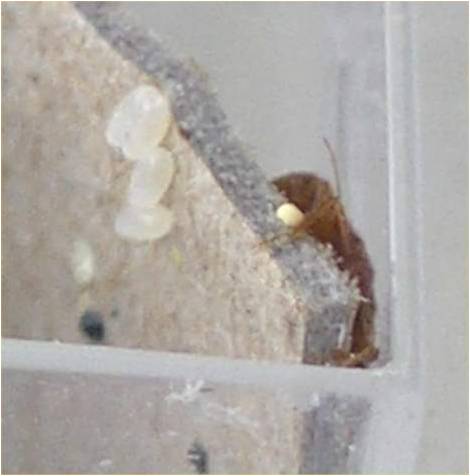 Picture of Bed Bug Eggs (white specs) and Bed Bugs on Couch Seam