Summary
Signs of bed bugs include fecal markings on the bed, bed bug bites, and seeing the bugs themselves. A thorough inspection of all tight spaces in a room are required to identify all of the places bed bug hide. Pictures are provided below so that you can differentiate bed bugs from other common insects.
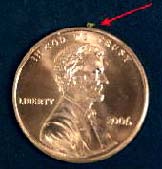 Bed Bug Size Compared to Penny
If you have a suspected bed bug infestation, here are a few things you can do to confirm that you have a bedbug problem. Detailed information for each step is provided on this page.
- Identify bed bugs by capturing and examining a bed bug. Best approach for verification is to show an insect to an exterminator, local cooperative extension or mail a sample insect to the Cornell Diagnostic Laboratory. See pictures below of bed bugs at every life stage (from egg to adult).
- Bed bug bites: based on the location and pattern of the bites, it could indicate the presence of these insects. Bed bugs tend to bite exposed skin areas during sleep. Bites concentrated in other areas (lower legs or chest) indicate other insects or an allergy respectively.
- Check Bed bug hiding places and look for signs of bed bugs on furniture or near mattress seams. Signs include brown fecal stains or blood stains.
Once you identify a bed bug problem, here is what to do.
how to identify bed bugs
Can you see bed bugs?
Bed bugs can be seen with the naked eye. Bed bugs start life in eggs which are small white and pear shaped (bed bug eggs look like sesame seeds). When searching for bed bugs it is helpful to have a flashlight and a magnifying glass.
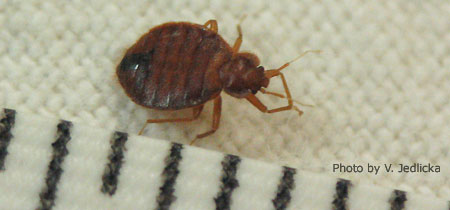 Adult Bed Bug Size
Do Bed bug eggs look like sesame seeds?
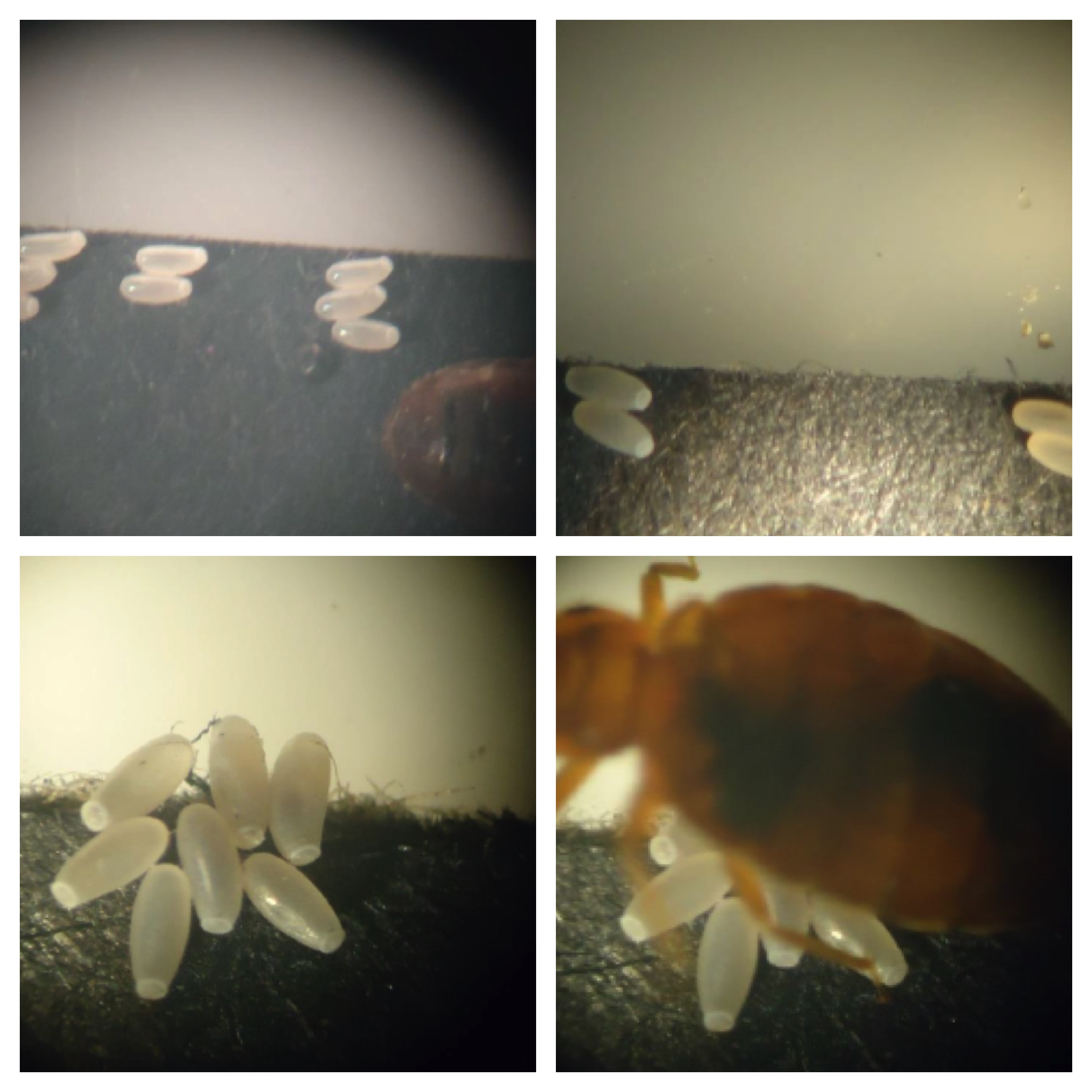 Magnified View of Bed Bug Eggs. They appear like and are about the size of sesame seeds. An egg is smaller than a grain of rice. Eggs are .09" or 2.5mm. (An adult bed bug is .18" or 4.5mm)
Yes, bed bugs eggs look like sesame seeds. If you see something that looks like sesame seeds in bed do not immediately panic. Bed Bug eggs are attached to any surface with a glue like substance. If the "seeds" are not attached to the surface, then look for another cause.
Bed bugs do leave fecal stains, but these would be located near mattress seams, which are the hiding place for the insects.
If the black specs are all over and return quickly, consider other causes such as fleas or Drywood Termites. In either case, call an exterminator (click for our database).
Do bed bugs change in appearance as they age?
Bed bugs move through several life stages, so they will differ in appearance depending on what stage they are in. These stages are basically egg, nymph (baby bed bug), and adult. Said another way, if you have bed bugs, you will notice bugs that look different depending on their stage of development.
Bed bugs are hatched from eggs and then move through 5 stages until reaching adulthood. When born, a baby bed bug is semi-transparent, with a lighter tan appearance. They develop into adults over a 10 week period.
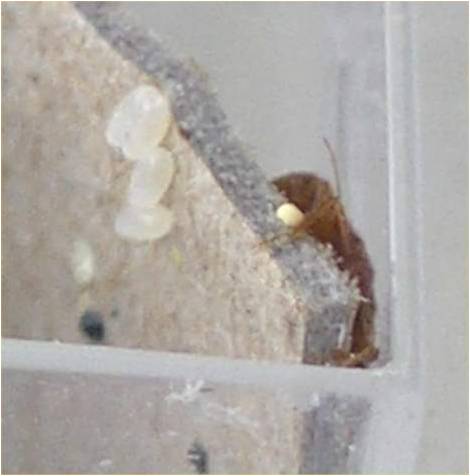 Picture of Bed Bug Eggs (magnified)
Adult bed bugs are brown to reddish-brown in color, have an oval shape, are flattened, and are about 3/16 to 1/5 inches long.
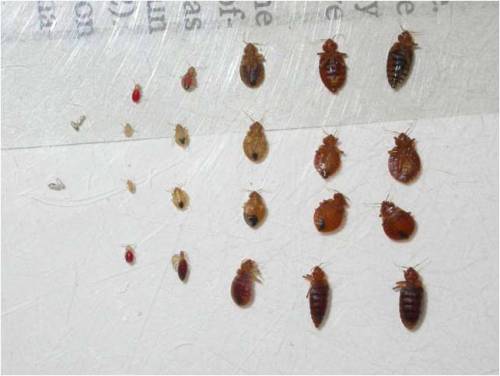 Picture of Bed Bug Life Cycle
Bed bugs also change in appearance before and after feeding.
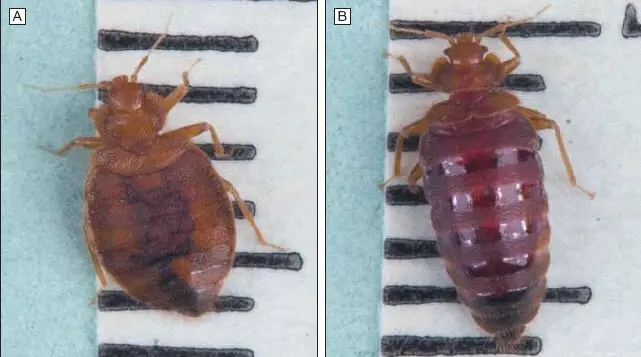 Bed Bugs Before and After Feeding
What other insects are confused with bed bugs?
Bed bugs are often confused with several common household insects including:
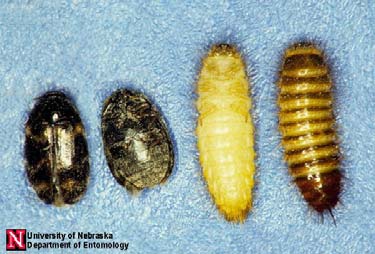
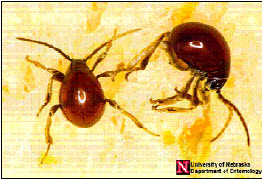 Spider Beetles
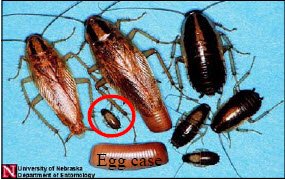 Young Cockroaches
 (nymphs that were just hatched)
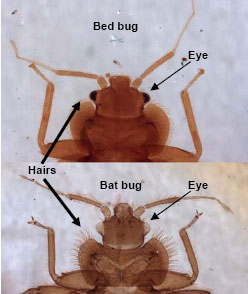 Bat Bugs
Are there services that will identify bed bugs?
There is a service from Cornell University that will confirm the identity of any insects you capture.
Check with your local department of health and/or cooperative extension for free bed bug identification services. These are becoming more common as the infestation grows.
Bed bugs bites
One of the signs of bed bugs are bed bug bites. Most people, estimated to be 70% of the population, do not show any skin reactions to bed bug bites. The bites themselves are actually a skin puncture. Any skin reaction is an allergic reaction, with most people showing no allergic reaction. This is why two people in the same bed can show different skin reactions, ranging from no reaction to small red raised papules, round circular wheals, bed bug skin rash, and in rare cases blistering.
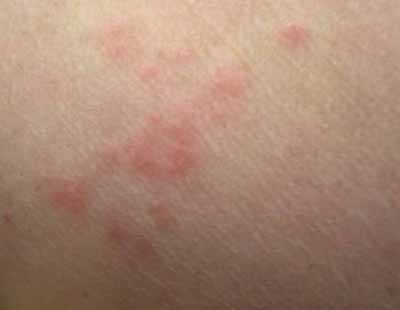 Bed Bug Bites 1 Hour After Being Bitten
Some people show an immediate reaction while others can show a reaction days later.
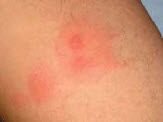 Bed Bug Bites on Arm
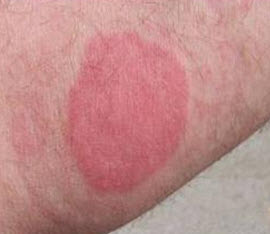 Wheal Reaction
Bed bugs tend to bite areas of the skin that are exposed during sleep. They will also bite under loose fitting clothes. Areas of the body that show signs of bed bugs include the neck, shoulders, bottom part of the arms, hands, and lower legs. It is rare for a bed bug to bite the bottom of the feet (this is probably scabies which is caused by mites).
When patterns appear, it is often due to groups of bed bugs biting the skin, such as a leg that is resting along the seam of a bed.
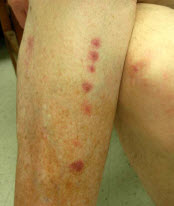 Bed Bug Bites on Leg
Individual or groups of bed bug bites are possible.
Where to look for signs of bed bugs
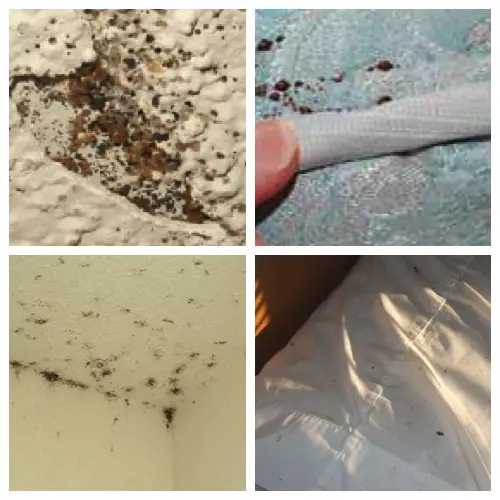 Signs of Bed Bugs From Left to Right (Fecal Stains on Wall, Mattress, Wall, Pillow)
Bed bugs leave behind visible signs. For example, they leave behind markings on a mattress such as brown feces spotting, blood stains, molted skin or eggs. Look for markings in a 10 to 20 foot radius around sleeping and sitting areas. Bed bugs usually will not travel beyond 20 feet. Write down each location where you believe bed bugs are hiding so you can inform your exterminator where to treat the room.
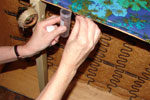 Looking for Signs of Bed Bugs in Boxspring Seam
Where do bed bugs hide?
They are very thin and are excellent at hiding in cracks and crevices that are about the width of a credit card. If you see them during the day, which is rare, it is because the hiding place was disturbed.
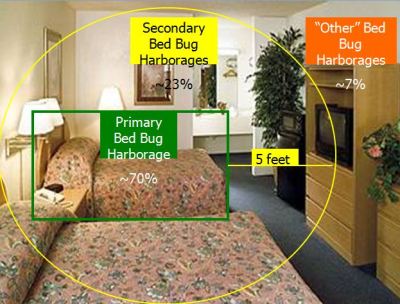 Bed Bug Hiding Places
Bed bugs usually hide during the day and come out at night. If you see bugs on the wall during the day, it is probably not a bed bug. Bed bugs do not fly and do not leap.
Most bed bugs will be around the bed. Be sure to look for signs of bed bugs:
- underneath mattress buttons
- along mattress reams and tufts
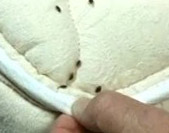 Bed Bugs on Mattress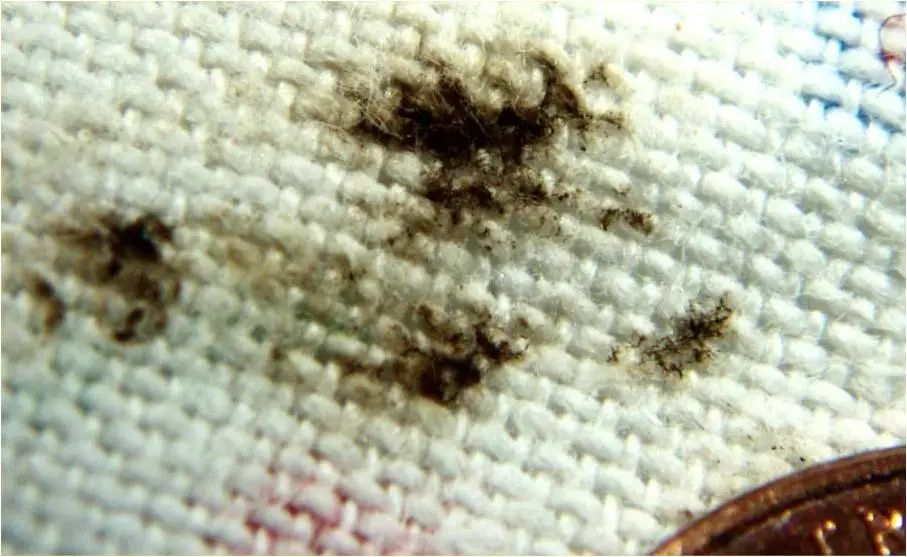
- inside boxspring coils
- in cracks on wood bed posts
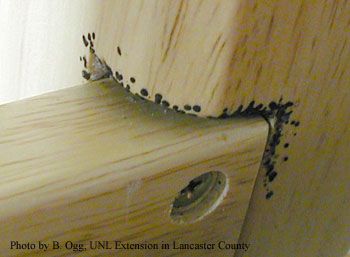
- inside hollow bed legs or posts
- in furniture upholstery
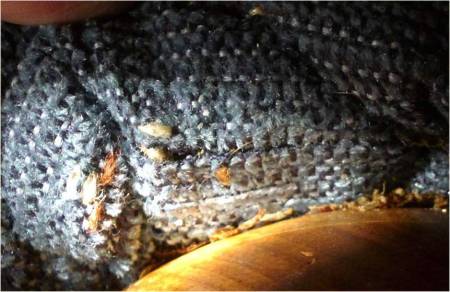
- look in all cracks and crevices near the bed such as windows, door frames, and around electrical and cable outlets (use a flashlight). Use a putty knife or other thin object to see if you can dislodge any of the bugs.
- remove furniture drawers and check underneath the drawer, inside the drawer tracks, in cracks at the back and the actual back. Look in and around screw holes.
One hint is to take a hair dryer (high heat setting, low heat) and blow air on seam for 30 seconds at foot of mattress. Bed bugs will react to the heat and try to escape. Be prepared with a rag or vacuum hose to scoop up the insects or kill the bedbugs. You can also use a wire brush to reach the bed bugs. They are excellent at hiding deep into objects.
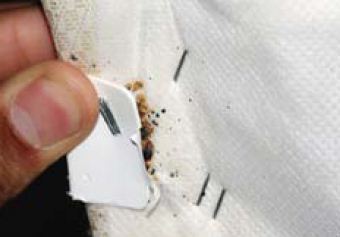 Bed Bugs Hiding Inside Corner of Boxspring
what to do when you see signs of bed bugs
Bed Bug Home Owner Advice:
If you are a home owner, the best first step is to call in a bed bugs exterminator with solid references, that is also licensed and insured. The Home Advisor Network is a good place to start as they offer 4 free quotes and they pre-screen members of the network. You can also call 1.877.673.2704 to find an exterminator near you.
Treatment can cost between $1,000 and $2,000 (more for heat treatment) for a typical home, so it pays to get more than 1 quote. Another good source for local experienced bed bug exterminators is our exterminator database.
Questions to Ask When Hiring a Bed Bug Pest Control Expert:
Ask the bed bugs exterminator the following questions:
- Experience that specific person sent has in treating bed bugs
- References
- Chemical and non-chemical bed bug treatment used (vacuuming, steam, insecticides, natural products, heat, freezing spray)
- Pet and child safety
- Guarantees provided and for how long
- Availability of a bed bug sniffing dog (very accurate, but can cost several hundred dollars for the inspection)
- Confirm that they are licensed in your state or region
Also ask the bed bug exterminator you choose to show you the actual signs of bed bugs to avoid any scams or scrupulous firms.
Can You Treat Signs of Bed Bugs Yourself?
While a bed bug pest control expert is preferred, you can treat a bed bug infestation yourself with the right combination of products. The best way to do this, and to get the required knowledge is to purchase either an insecticide based bed bug kit (preferred), or an all natural bed bug kit if you do not like to use chemicals in the home. Insecticide based products undergo more independent testing and are deemed by this site to be more effective.
Bed Bugs Apartment Tenant Advice for Signs of Bed Bugs:
Treating bed bugs in an apartment is a more complicated proposition. It is very hard to determine if bed bugs were carried into an apartment by the tenant or if they came in through the walls from apartments that are next to, over or below the apartment where you live.
It is also complicated because bed bugs are not covered by most landlord tenant agreements and by local landlord tenant law. Because of this, many landlords either refuse to coordinate and pay for treatment. Some landlords even will attempt to evict a tenant on the grounds that the tenant brought the bed bugs into a building.
For bed bug treatment to be successful all adjoining apartments need to be inspected for signs of bed bugs. Studies show a 20% chance that bed bugs can spread to an apartment next door, and a 7% chance that they will spread to an apartment above or below the bed bug infested apartment. For this reason, a tenant should contact the building management for treatment.
Like single family homes, it is preferable that the landlord or managing agent bring in an experienced bed bugs exterminator. Bed bug dogs are also helpful for determining if bed bugs have entered the walls.
If a landlord refuses treatment, you can organize tenants, and offer to pay 50% of the cost, You can also apply pressure by 1) checking on the law at your state or city attorney generals office regarding bed bugs and landlord/tenant law, 2) contact the local media, they love bed bug stories, 3) contact local politicians for help and 4) contact your local health department.
How Can You Get Bed Bug Protection in an Apartment
If there are signs of bed bugs in your building, you can get some protection by:
- Sealing with caulk any openings under baseboards that can allow bed bugs to pass through the wall
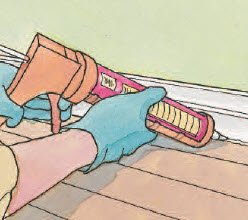 Caulk Any Openings Where Bed Bugs Can Hide
- Applying bed bugs dust (also called fossil dust) under the baseboard in tufts of the mattress and box spring
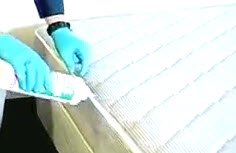 Bed Bug Powder (also called Fossil Dust) Applied to Mattress Seams Can Provide Some Level of Natural Protection Against Bed Bugs
- Spray a bed bug residual spray such as Phantom (NY residents use Bedlam) under the baseboard. This will provide several weeks of protection.
- Do not bring any rented or used furniture or mattresses into the apartment.
- Inspect any luggage brought into the apartment by travelers.
- Ask the managing agent to issue a written policy to all tenants indicating what to do in cases where there are signs of bed bugs. Tenants should not be afraid to report the issue.
- Reduce clutter. This gives bed bugs more places to hide and can hinder bed bug treatment.
brochures
These free brochure provides additional information on bedbug sprays.
Questions and answers
Ask a Question or Share Your Bed Bug Experience With Others
Do you have a question or great story about bed bugs? Share it!