This page may contain affiliate links to products we recommend, researched and love. If you decide to make a purchase after clicking one of these links, I'll earn some coffee money which we promise to drink while writing more helpful content like this. We do not recommend any product we wouldn't use ourselves.
Summary
Bed bugs treatment can be done either by a professional or as a do-it-yourself project if the infestation is small and not inside any walls. We recommend seriously considering an exterminator since even professionals find these insects difficult to eliminate.
Bed bugs can hide in spaces the width of a credit card, making the insects difficult to find and kill. The downside of a professional exterminator is the high cost which could be $1000 or more plus an on-site inspection fee.
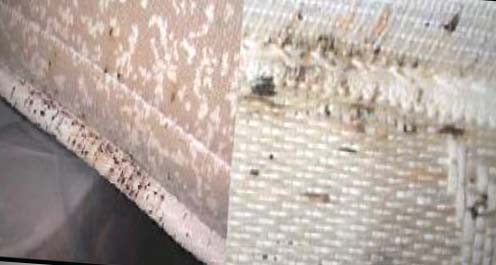
Bed Bugs Hiding in Bed Frame Cracks
Killing bed bugs yourself requires several types of products that are best purchased in a kit. If an infestation is small or in one area, some homeowners go the self treatment route first, and then if bed bugs return or if they are unsuccessful, they hire a professional.
Regardless of what you choose as the best bed but treatment option, expect to apply 2 to 3 treatments before the problem is gone. Advice is provided below on the available bed bug treatment such as hiring a bed bug pest control expert and on how to kill bed bugs yourself.
Signs of Bed Bugs on Mattress
Bed Bug treatment Overview
Bed bug infestations are becoming more common across the United States and most of the world. If your home or apartment has a bed beg infestation, treat the problem as soon as possible. Bed bugs can rapidly multiply, causing a more difficult and costly problem to eradicate.
We always recommend hiring a professional, although do-it-yourself approaches do work with readily available chemical and non-chemical methods. Both are described below.
bed bug treatment cost
Bed bug treatment can cost hundreds to thousands of dollars depending on the method used. A home treatment do it yourself kit will cost $85 for 1 to 2 rooms. A professional exterminator will cost about $400 per room. Bed bug heat treatment will cost $1,000 to $4,000 depending on the number of rooms treated.
Selecting a bed bug exterminator
Using a bed bug pest control professional is the preferred bed bugs treatment method. A survey of exterminators reported that bed bugs are one of the most difficult insects to kill. It can take the better part of a day to do a thorough job. Follow these tips to find the right exterminator
Costs for bed bug extermination can be as high as $1,000 or more per treatment, with many companies charging for both an in-home inspection and bed bug treatment itself. Because of this, and to save money, we suggest getting a quote from several companies. Use the following resources to find companies:
Tip: Get quotes and suggestions on treatment methods from several experienced companies
Use These Resources To Get A Free Quote From an Experienced Exterminator:
Call or visit the Home Advisor Network (phone 1.877.233.1145): This is a national network of local pest control companies where each company is pre-screened by the network before being allowed to join. They offer three free quotes and enforce standards among members of the network .
Find a company that has experience and can provide references. Make sure that the exterminator being sent to your home has bed bug experience.
Tip: Ask About The Treatment Plan
Be sure to ask any exterminator about their experience, guarantees, and the types of bedbug treatment products that will be used. The guarantee is important since more than one treatment is often required.
The primary treatment methods used by professionals include:
Freezing sprays: Kills on contact by freezing the bed bugs.
Bed Bug Heat Treatment (hot air in a sealed home or thermal remediation): Heat treatment can cost up to $4,000 for an entire home. Rooms tare super heated for at least 7 minutes to 114 F degrees, the temperature needed to kill bed bugs and bed bug eggs. Fans are used to distribute heat and heat sensors make sure that heat is evenly distributed. Some firms may have a heat room on a truck, where possessions such as clothes can be placed.
Insecticide sprays
Organic sprays (we prefer chemical based insecticide sprays)
Vacuuming
Steam
Other professional bed bug treatment options include:
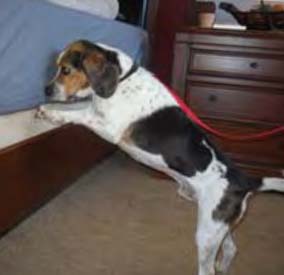
Bed bug sniffing dog: Bed bugs give off an odor similar to raspberries. Dogs are trained to sniff this smell and locate bed bugs. This method is considered to be 98% accurate
Fumigation- As a last resort a home can be tented and fumigated for at least 12 hours. The entire home needs to be fumigated or else bed bugs will move from the treated area to untreated areas.
Also ask about the implications for pets, children, etc. (do they need to be out of the house, toxicity).
It is a good idea to get a bed bug inspection plan and pricing in writing.
Trained Dogs Are an Excellent Way to Confirm and Find a Bed Bug Infestation
Tip: For apartments and rented homes, check with your landlord or building management company
If you live in an apartment or rent a home, check with your landlord or building management company. Most localities require prompt action on the part of the building owner. This is a particularly important in an apartment since there is a chance that a bed bug infestation spreads from an adjoining apartment that is above that is above, below, or next to yours.
Tenants or apartment owners are often reluctant to admit to a landlord, management company or co-op board that they have bed bugs out of fear or embarrassment. Once they call, it is also unclear in many municipalities who is responsible for bed bugs treatment.
While most local government building codes call for a building manager to keep an apartment habitable and free from vermin, the codes or laws don't alway address bed bugs.
If you have a bed bugs apartmentproblem, first check with your local government to and ask who regulates apartments or rental units in your area. Then specifically inquire about your rights such as the right to treatment, whether or not timeliness for inspection and treatment are defined in the law, and if it is clear who pays for treatment.
If local laws do not mandate landlord or building management treatment and responsibility for payment, it may make sense to negotiate with a landlord, such as splitting the cost of bed bugs treatment 50/50. Your local department of health can be helpful in getting a managing agent to act. Contacting the media as a last resort may also speeds things up.
It is important that all units near the infested apartment are inspected and possibly treated. If this does not occur, after treatment the bed bugs are likely to return. Studies show that there is a 20% chance that they will spread to an adjacent apartment and a 7% chance that they will spread to an apartment above or below the infested unit.
Tip: When you request treatment from a managing agent or landlord, send a registered dated letter requesting an inspection within 30 days. This acts as a legal record of the request.
DIY Bed Bug treatment at home
Hiring a professional bed bug exterminator can be expensive. For this reason, many home owners and apartment renters decide to treat the problem themselves (note renters should contact their landlord/management company first). If you catch a bed bug problem early, this can be a viable approach to bed bugs treatment.
For DIY bed bug treatment to be effective, multiple products should be used. What follows are step by step instructions and the bed bug control products that are required to do a thorough job.
Step 1: Make sure the bugs you spot are bed bugs
The insects you see in your home may resemble bed bugs, but could actually be something else. One way to tell is the appearance of the insect and if there are any symptoms of bed bug bites on your body. Bites tend to be on areas exposed during sleep such as the bottoms of the legs and arms. If bites are located under areas covered during sleep, the odds are you do not have a bed bug infestation.
A bed bug bite or red bump on the skin is actually an allergic reaction. Bed bugs do not spread disease to humans, but the bed bug bite can be extremely itchy. They do naturally go away in a few days.
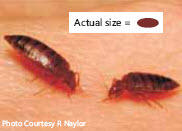
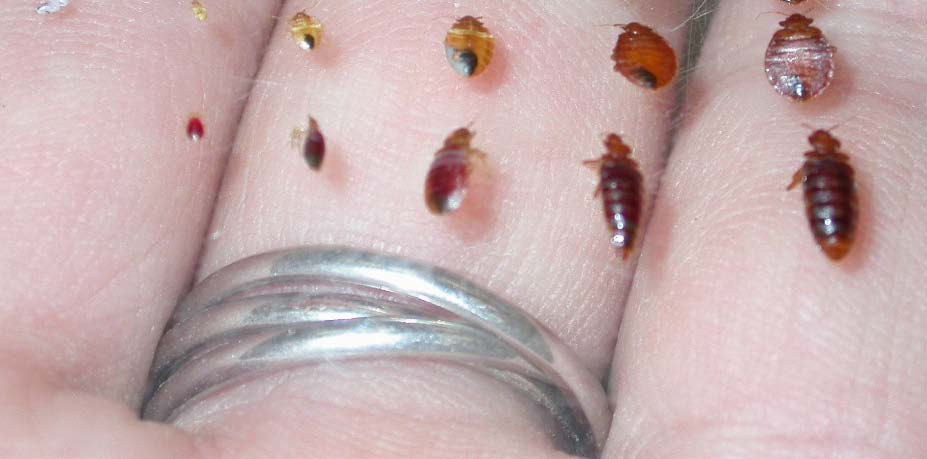
Magnified Photo of Bed Bugs. They Can Be Seen With The Naked Eye.
You can mail a sample bug to the Cornell University Diagnostic Laboratory. For $25 (U.S.) They have a team that will examine your specimen and let you know if the insect in question is a bed bug. Most local cooperative extension offices and some health service offices will do the evaluation for free (all ahead)
You can also show an insect to an exterminator.
Signs of Bed Bugs
How to know if a mattress has bed bugs
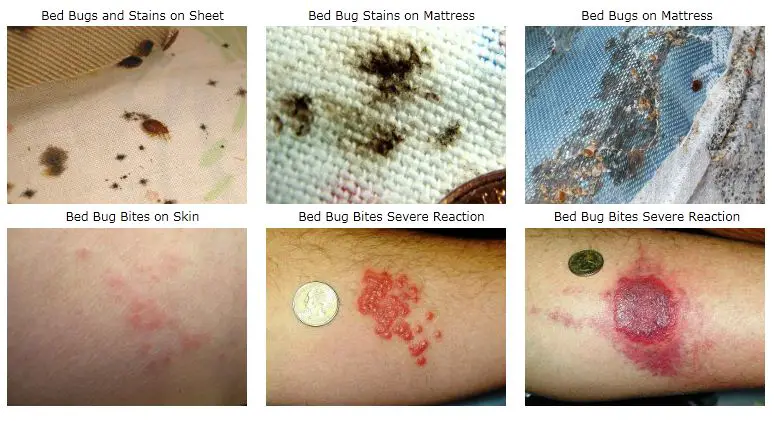
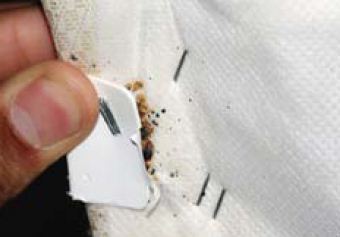
Other bed bug signs include fecal marks on the mattress (see above), spotting live insects with the naked eye and bed bug bites on the arms and legs. Note that bed bug bites vary between individuals based on how allergic or sensitive the individual is to the bites. Most people show now bed bug bite skin reaction. Two people sleeping in the same bed can have no reaction or different reactions depending on their sensitivity.
Bed bugs change in appearance at each stage of their life cycle. They also change in size before and after each blood meal.
Bed bug life cycle
They need to feed on a human host to move from one stage to another.
Treating bed bug bites
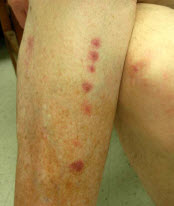
Bed bug bites are usually seen in clusters or neat rows on the skin. It is possible to see individual bites. In most cases, bites are only on skin areas exposed during sleep. To minimize the number of bites, wear tight fitting clothes to bed such as socks.
Everyone reacts differently to the bites with some people having no allergic reaction (the majority of people) with others getting large red bumps and in severe cases, blistering.
To stop the itch, try using an over the counter anti-itch product such as Aveeno or you can purchase a product made specifically to stop bed bug itch such as those offered by All Stop.
Bed bugs treatment for bites is not necessary as they will naturally clear in several days and are not dangerous. Human allergic reactions tend to vary each time a person is bitten.
Photo of Bed Bug Bites on Arm
Step 2: Purchase the correct bed bug treatment products
Purchasing the right products for bed bug treatment can be confusing. Our recommendations of the best bed bug products are as follows:
Bed Bug Sprays: Sterifab for the mattress and Phantom or Bedlam spray for cracks and crevices. All three products are tested against insecticide resistant insects.
Products are most economically purchased in a bed bug kit.
Mattress safe spray
A mattress safe spray is essential for killing any bed bugs that are hiding in and around the mattress. These sprays come in insecticide and organic formulations. Both types kill bed bugs on contact with the difference being that insecticide sprays kill bed bugs and their eggs. Organic methods require one spray to kill bed bugs on contact, and another spray to kill the eggs. We suggest the following sprays:
Insecticide Based: Sterifab. Sterifab is a disinfectant that kills bed bugs and bed bug eggs. It dries in 15 minute and leaves behind no residual. It is recommended for mattresses, box springs and furniture, cracks and crevices etc.
Organic Bed Bug Treatment: Bug Patrol (purchase Bed Bug Fossil Dust and Benzarid from same company). Use in combination with a disinfectant that kills bed bugs such as Benzarid to provide a 1-2 punch. Diatomaceous earth also used as a bed bug dust after spray treatment is organic.
mattress and box spring covers
It is helpful to put treated mattresses and box springs into mattress covers for bed bugs. The reason for this is that if any eggs are missed during treatment, late hatching nymphs (baby bed bugs) will be trapped and die. It is important to buy covers for both the mattress and box spring. You can purchase
hand steamer
Bed bugs and their eggs are killed at 114F. A multi hole hand steamercan provide the DYI bed bug heat treatment needed to kill the insects and their eggs.
bed bug dust and duster
Dust to kill bed bugs is a natural product called diatomaceous earth. or fossil dust. It is very easy to miss the small white pin head sized bed bug eggs when treating a room. The eggs are attached to each surface with a cement type substance which prevents them from being vacuumed up. When these nymphs hatch from the eggs, the dust attaches to their body, which kills them. As a last step it is always a good idea to place a very thin layer of dust in cracks and in the box spring.
Only a thin layer of dust should be applied with an applicator brush. Consider wearing a dust mask to keep from inhaling dust. Also, if you have pets or children, dust products may be ingested and therefore are not a good idea.
Vacuum cleaner with crevice attachment
Bed bugs can be vacuumed up via the crevice tool that comes with most vacuum cleaners. Use a brushless attachment to avoid getting bed bugs caught in the brush, which could then be dropped off in other areas of the room or home. Note that this form of bed bug treatment does not vacuum up bed bug eggs, only bed bugs that have hatched.
other products
Bed Bug Traps: Inexpensive bed bug traps such as Climbup Interceptors can be placed under each bed leg. They will prevent most bed bugs from crawling up onto the bed. Empty traps indicate that your bed bugs treatment was successfu
Plastic Bin with Cover or Double Zipper Bags: When items are removed from the room, such as clothes, it will be helpful to have a bed bug proof container to move them in. One low cost option is to purchase double zipper Ziploc Big Bags.
Disinfectant Cleaner for Carpets: Carpeted surfaces should at a minimum be steam cleaned. For added protection, add a disinfectant such as PuraCleenRx to the cleaning solution to ensure that all bed bugs and eggs are killed. Test the disinfectant on the carpet to avoid staining.
PackTite Heater (optional): A PackTite heater is designed to heat any object to the point where bed bugs and their eggs can no longer survive. It is large enough to treat luggage after a trip. It is the only way to treat electronics such as clock radios etc. that may have bed bugs hiding inside. Check the owners manual of the item to make sure it can withstand the heat before treating. You can even put clothes in the packtite to ensure that they are bed bug free.
Step 3: Prepare the room for treatment
Inspect the room
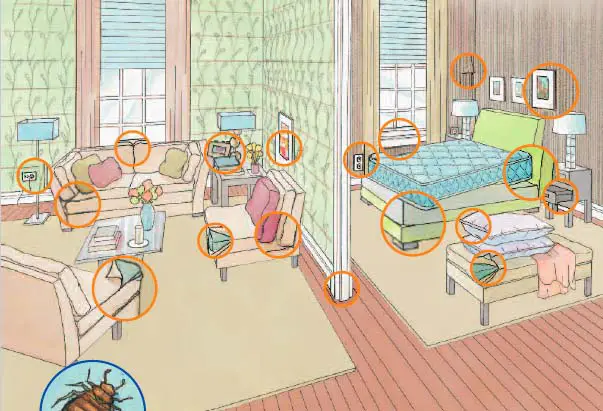
Use a flashlight and magnifying glass to locate where bed bugs are hiding in a room. The majority of bed bugs in a room will be 5 to 10 feet from the bed or other infested area/furniture. You can see adult bed bugs with the naked eye. Bed bug eggs are the size of a pin head and may be difficult to see, but can be killed by following the directions below.
Bed Bug Hiding Places
Define a safe area
Establish a "safe" area outside of the treatment area to store items as they are treated and removed. The idea is to limit the areas where bed bug treatment takes place as a way of avoiding the spread of the bed bug infestation. Then clear the treatment area by moving items to the safe zone so that additional items can be brought into the area. We recommend that the bed bug treatment area be the bed, as studies show that most bed bugs in a room will be in and around the bed.
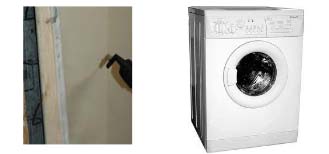
Bed bugs die at temperatures that are over 113F. Use a washing machine and/or a dryer for clothing, drapes and linens. Pressurized steam spray or a hand steamer can be used by professionals for crevices, cracks and surfaces.
Step 4: Bag and wash all linens
Place any clothes and linens that can be washed into sealable plastic bags or a plastic bin with a snap tight lid. A good choice is to use Ziploc Double Zipper Big Bags since they are bed bug proof. Empty any nearby closets and wash or dry clean what you can.
Transport these items to the washing machine. Wash in hot water followed by at least 20 minutes in the dryer on high heat. This will kill all bed bugs and bed bugs eggs. Do not bring clothes back to the room until the bed bugs treatment in the room is complete.
As an alternative, freezing for 8 or more days (5 should be enough, 8 to be safe) will also kill bed bugs, which is perfect if you have a large freezer or for items that cannot be washed.
You can also buy a Pack Tite, which is a portable heat chamber. Items are placed into the chamber, heated to the needed temperature, and then are 100% bed bug free. This method can save time and is 100% chemical free.
Step 5: Throw out clutter
Bed bugs can easily hide in magazines, newspapers, and books. Inspect and throw out any disposable items. Remove any hiding place such as objects that are under the bed. They can also hide inside electronics, particularly items near the bed such as the bottoms of lamps and inside clock radios. Dispose of cheap items and inspect more expensive items.
Step 6: Vacuum the entire room
If you can, loosen carpet around the perimeter of the room. If you can't, don't worry, sprays should be able to penetrate the area. Bed bugs like to hide along the joint where carpet meets the wall. Use the vacuum attachment to remove bed bugs. Do not use a brush attachment to avoid bed bugs and eggs getting caught in the attachment and then falling off.
If you spot any bed bug eggs, pick them up with the sticky side of tape such as duct tape. Vacuuming will not pick them up as they are cemented into place by the female bed bug. Most bed bug sprays will kill the eggs.
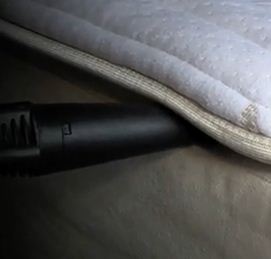
Vacuum all areas thoroughly. Use the crevice attachment to vacuum along the seams on the bed frame, box spring, and mattress. Dispose of the vacuum bag when done in a sealed plastic bag and then place outside the home. If needed, loosen the bed frame to expose any joints to see if bed bugs are hiding.
Step 7: Treat the mattress
As long as a mattress is in good condition and is not torn, it is not necessary to throw out a mattress as part of your bed bug treatment plan.
vacuum the mattress and steam the seams
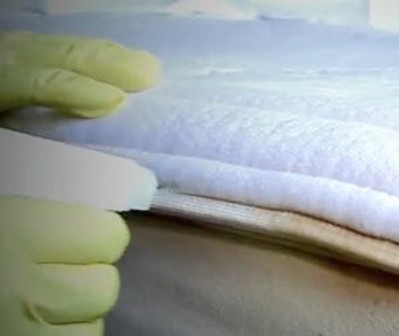
Use the crevice tool on the vacuum cleaner to vacuum any bed bugs that you may spot. A credit card pulled through tight seams might dislodge some bed bugs.
You can also use a hand steamer for an added level of protection, as steam will kill both bed bugs and eggs. Hold the steamer in each location for 10 seconds. Steam will kill bed bugs and eggs.
Applying steam to a mattress
use a mattress safe bed bug spray
Use a mattress safe spray such as Sterifab (insecticide) or Bug Patrol (organic). Be sure to follow the manufacturer's directions. In general, only apply a thin layer of spray. Spray into cracks, onto any visible bugs and around the seams of the mattress, box spring, and bed frame. Spray around the edge of the room, window sill if near the bed, and behind pictures and the headboard. Be sure to treat under labels, a common bed bug hiding place.
Treatment for mattresses involves applying a thin layer of spray along all possible hiding places such as mattress seams. Wear gloves to protect the hands from insecticides.
When done with the contact spray, treat the seams only with a residual spray such as Bedlam or Phantom (check the manufacturers label for mattress safety first)
Apply organic bed bug dust to all seams after the spray products have dried. This will provide additional residual protection.
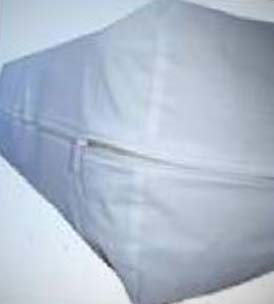
Once the treatment is complete, move the mattress to your safe area. Be sure to allow it to dry. Keeping the windows open will help the drying process and ventilate the room during treatment. When dry, place the mattress in a zippered bed bug mattress cover to trap any insects you might have missed.
A Bed Bugs Mattress Cover Will Trap Any Insects and Eggs That Were Not Killed During Treatment
Step 8: Treat the night table and items inside
Treating items in the night table
Now that the mattress has been moved to the safe area, use the remaining box spring as a table to treat items in drawers. The goal is to examine, inspect, and treat items in a small area of the room to avoid spreading any bed bugs.
Inspect and treat or place items into a plastic bin with a snap lid, or sealable plastic bag such as Ziploc Big Bags. Items should be inspected closely. Those that are bed bug free should be placed into the container. Others should be washed in hot water followed by 20 to 30 minutes in the dryer or placed into the freezer for 8 days. As an alternative, place items into a PackTite portable heat chamber for heat treatment.
Dispose of what you can. As items are treated, place into sealed containers and remove to the safe area outside the treatment areas.
treating the night table
Remove the drawers and inspect them. Treat the seams of drawers and around the furniture. Test sprays to ensure that they don't stain surfaces. Use Sterifab, Phantom, or Bedlam.
Step 9: Treat the box spring
Often bed bugs are hiding in the box spring, since there are more places to hide. Treat the sides and top of the box spring as indicated above for the mattress. Then turn the box spring over and either remove or peel back the fabric that covers the bottom. Treat the fabric and the inside. Only use a spray product approved for this purpose such as Sterifab or Phantom.
Once treated, for extra protection steam all seams and areas of the box spring. After treatment, move the box spring to the safe area and when dry, enclose in a zippered box spring cover.
Bed bugs hiding on box spring
Step 10: Treat the bed frame
Follow the same steps for the headboard and bed frame. Remove or loosen from the wall to be sure you are getting all bed bugs. Loosen all frame joints and treat. Also treat any hollow areas such as frame legs.
Bed bug hiding in crack behind headboard frame
Step 11: Treat the carpet
If you have carpet, this should be treated in case any bed bugs or bed bug eggs are hiding in the fabric. To treat carpet, use a steamer or carpet steam cleaner. Add a bed bug disinfectant such as PuraCleenRx to the cleaner to ensure a thorough job (test first on carpet color for staining.) Use a spray product along the edges of the room. Pay extra attention to areas where the carpet meets the walls, as this is a convenient hiding place for the bed bugs.
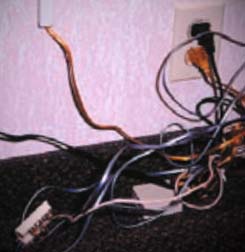
Step 12: Treat around any outlets
Inspect Around Electrical Outlets
Unscrew any electrical plate covers or cable covers and inspect. Use a bed bug dust product around electrical outlets (liquid or sprays can be dangerous).
Step 13: Return all items to the room and use a bed bug trap
It is helpful to place inexpensive bed bug traps such as Climbup Interceptors under each bed leg. When the traps stay empty for 2 to 3 weeks, you know that the bed bug treatment has been successful. Fewer bed bugs in the trap will also indicate that you are making progress.
Note that it can take 2 to 3 bed bugs treatment sessions to completely eliminate the problem.
Cautions
Be sure to avoid over application of any sprays during bed bugs treatment. Only use mattress safe products on any surface that comes in contact with people or pets. Wash any bedding that may have been treated or in a room that has been treated. If you experience any symptoms after treatment such as nausea, vomiting, respiratory pain, or dizziness seek medical help as you may have had a reaction to products used.
Always follow manufacturers directions or instructions that come with a purchased bed bug removal kit.
Guide for property owners on selecting a bed bug control provider.
Written by: Mike Merchant and Wizzle Brown
Available in a free
Ebook
Questions and answers
Ask a Question or Share Your Bed Bug Experience With Others
Do you have a question or great story about bed bugs? Share it!
What Other Visitors Have Said About Bed Bugs
Click below to see contributions from other visitors to this page...
Bed Bugs in Leather Furniture Not rated yet Can bed bugs live in leather furniture? I often sleep in the living room (I have a leather recliner and sofa) and lately have been getting mosquito like …
This site accepts advertising and other forms of compensation for products mentioned.
Such compensation does not influence the information or recommendations made.
We always give our honest opinions, findings, beliefs, or experiences.
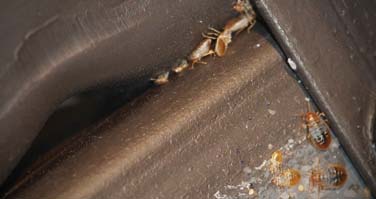 Bed Bugs Hiding in Bed Frame Cracks