Overview
Bed bug bites are an allergic skin reaction caused by fluids excreted when the insect punctures the skin. Most people show no skin reaction. People that do have a reaction get small red pus filled bumps on the skin. In chronic cases it can cause skin swelling, wheals or even blisters. Reactions can be seen within 30 minutes or in rare cases days later. Bed bugs do not transmit disease, so bug bites are more of an unpleasant source of discomfort.
There are certain signs that are commonly associated with a bed bug bite:
- Size: Bites are usually round, red and swollen to a size that is greater than 3/8"
- Appearance: no red spot in the middle of the bite
- Location: bites are usually seen on the neck, shoulders, arms or lower legs
- Pattern: A bite pattern might follow the seam of a mattress where the bugs are hiding and appear as a straight line. They may also be in a triangle pattern (see pictures below).
Typical Bed Bug Bite Skin Reactions
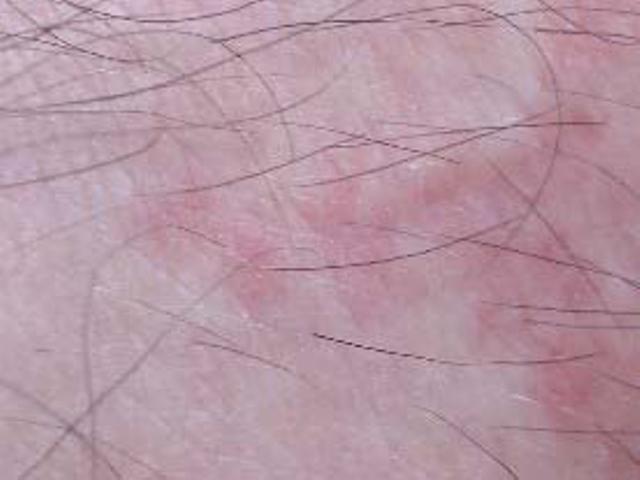 Bed bug bite skin reaction after 30 minutes
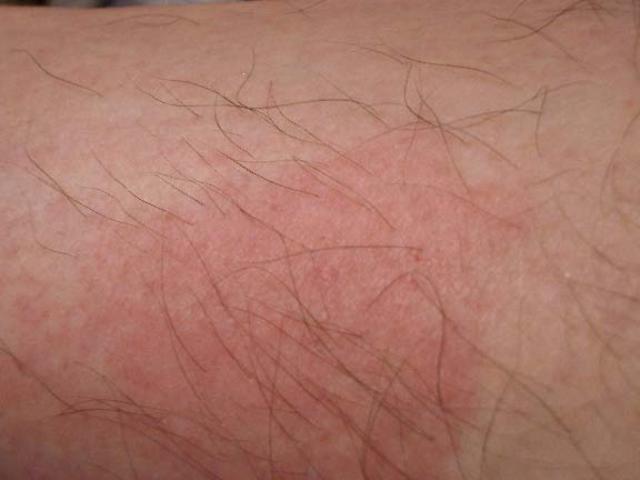 Bed bug bite skin reaction after 48 hours
Do bed bugs bite?
Do bed bugs bite? They actually do not bite the skin. The bed bug head is divided into halves. The lower part of their jaw is called the mandible and the upper jaw is called the maxillae. Both the bed bugs mandible and maxillae are connected together and held by what is called a labium.
The labium is a sheath which has a slit. A stylet moves through the slit which then impales the skin of the human host. It has a canal called the maxillary canal which allows blood to be sucked back to the bed bug. So this isn't technically a bite. A better description is that the skin is impaled with the stylet. The bed bug will attempt to impale the stylet into a skin capillary or small blood vessel.
So do bed bugs bite? No they don't, but most information on bed bugs refers to this as a bite, although technically it isn't.
Bed bug bite stages
Bites are categorized in one of the following five different stages:
- No bed bug bite reaction
- Delayed Reaction
- Delayed and Immediate Reaction
- Immediate reaction only
- No visible reaction
An "immediate" reaction occurs within 24 hours. Bed bugs bite reactions tend to typically go away after 1 to 2 days.
If a bed bug bite reaction is "delayed" then it will not show any symptoms for 1 to 3 days (maximum up to 14 days) after being bitten.
Bed bug bite patterns
Bed bug bite patterns such as three bites in a triangle or 3 bites in a row or line occur when the bed bug is feeding and is then disturbed by movement. After the movement stops the bed bug continues to feed.
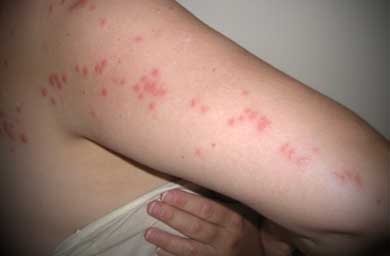 Bites In A Line On Arm That Usually Occur Along A Blood Vessel Near the Skin Surface
Treatment for most people is as simple as treating any itch and letting the body heal itself. Bites should clear on their own in 3 to 5 days. In severe cases the bites cause hives, skin blisters and welts. Reactions can appear days after the bite occurs. Each bite episode can vary with skin reactions worsening each time it happens.
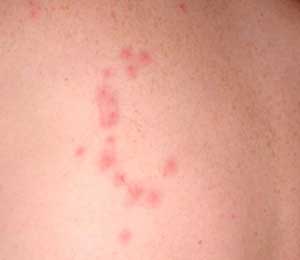 Bed Bug Bites In a Circle Pattern On Back
How many bites a night?
There is no limit to the number of bites you can get each night. If you are sleeping in a bed that is infested, then hundreds of bed bugs could feed on your blood. If there is a small infestation, then expect a smaller number of bites. As you can see from the picture below, this young girl has hundreds of bites.
Hundreds of Bed Bug Bites on Young Girl
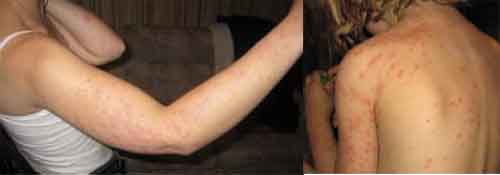 Hundreds of Bed Bug Bites on Back and Arm
A Bed bug bites in order to feed on the blood of a human host. A single bug may bite several times in one place on the body. If the bugs are in a specific hiding place and your body comes in contact with where they are hidden, such as a seam in the bed, then that area that comes in contact with the seam will be filled with bites in a straight line along the seam.
Different people will have a wide range of allergic reactions to the bite. This includes a minimal reaction to something more severe. Over time, the body tends to have a stronger reaction.
Bite patterns and what bites in threes
Single or groups of three bed bug bites in a triangle pattern or 3 bites in a row or line are common. Frequently, you see 3 bites in a triangle which could be caused by one or multiple bed bugs.
Three Bites in a Triangle Bed Bug Bite Pattern
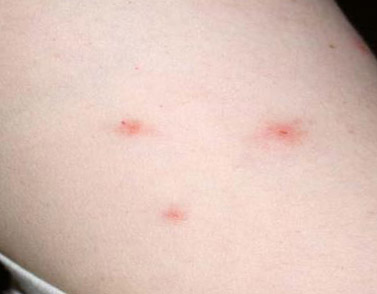 3 Bed Bug Bites in a Triangle Pattern
Spider Bite in a 3 Dot Triangle
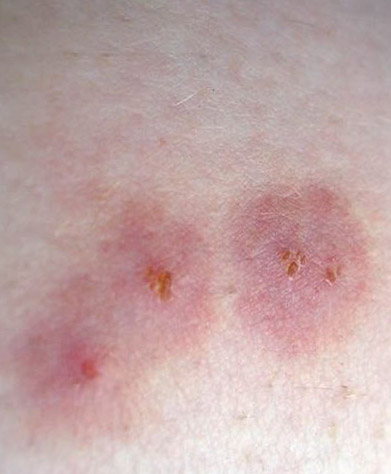 Triangle Spider Bite 3 Dot Triangle
Sometimes spider bites are confused with bed bug bites. In this image of a spider bite, note the two puncture marks in each bite. The bite might be mildly painful (think bee sting). If you have symptoms such as nausea, tremors, or muscle spasms, contact a Doctor since the bite might be from a black widow or Brown Recluse spider.
Note that spider bites are usually not in patterns, with the existence of only one bite on the skin. Bed bug bites are random, but multiple bites often appear in patterns such as a triangle bite mark in the same area.
Bed Bug Circle Bite Pattern on Arm
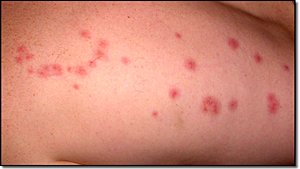 Bed Bug Bites In a Circle and Other Patterns
Bite Wheal Reaction
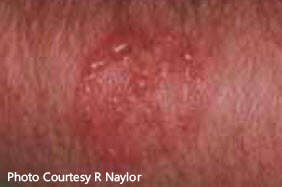 Wheal Shaped Bed Bug Bite Skin Reaction Rash
Where bed bugs like to bite
Bed bugs like to bite bare skin areas. This is why bites are frequently seen on the lower arms and legs. One strategy to avoid being bitten on the legs is to wear socks over the bottom of pajamas.
They will also bite under lose fitting clothing if it is easy to find skin.
They tend to avoid the face and the bottoms of the feet. Bed Bugs do not bite through clothing.
How a bed bug bite feels
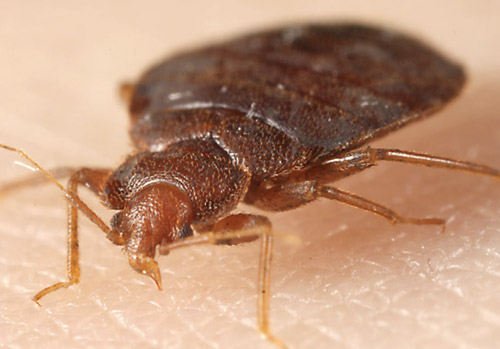 Bed Bug Puncturing Skin (biting) With Stylet
Bed bugs do not actually bite. They puncture the skin. When a bedbug punctures the skin with the stylet or beak, the host will feel a light pinch if anything. When the bug bites, it transfers saliva into the human or animal host.
You are more likely to not feel the actual bite, but feel the "itch" or allergic reaction your body has to the bite.
How does a bed bug bite?
A bed bug has two tubes on its mouth which are inserted into the host. One of the two tubes inserts saliva into the host and the other draws blood. Feeding lasts for approximately 5 minutes. A bed bug prefers to feed on blood every 5 to 10 days, but can last up to a year without feeding.
When do bed bug bites occur?
Bed bugs prefer to bite or feed on a host at night or just before dawn. They avoid sunlight when possible.
What do bed bug bites look like?
Two Bed Bug Bites on Arm
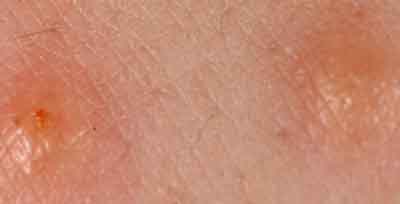 Two Bed Bug Bites on Arm 1 Week After Being Bitten
Bedbug bites can look like the bites of other insects such as mosquitoes, spiders and chiggers and also look like the marks caused by several diseases such as chicken pox.
The bites take on different forms based on the reaction. It could look like a circle or "wheal" or a series of small blisters. There are certain bite characteristics that help you distinguish between bed bug bites and other causes:
- Itch: bed bugs bites usually itch, which is the body's reaction to the saliva from the insect.
- Location: bed bugs usually bite on exposed areas such as the arms, neck and even the shoulders. They do not tend to bite on the bottom of the feed (this can be scabies)
- Pattern: clusters of bites can be in a line or a triangle
- Appearance: the bites are not red at the center, but in a wheal around the bite. The area of the bite can be swollen.
Notice in the picture of bedbug bites and how some bites are in a line, possibly along a vein, and others are random, based on where the bugs may have been hiding in a seam on a mattress. It is possible for different types and patterns of reactions to be found after being bitten.
Symptoms
Bullous Bed Bug Skin Reactions
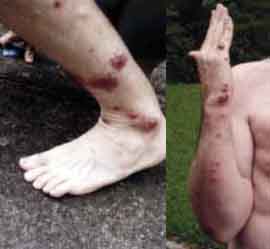
Some, actually most people are not allergic to bedbug bites and will show no skin reaction. Others will have a reaction 1 hour to 2 days later. It is even possible to have the first reaction 2 weeks later.
The usual reaction is skin welts, bumps and in some cases, the skin form blisters that contain puss. Hives can also form that when measured can be up to 8 inches. It is rare for a more severe allergic reaction called anaphylactic shock, where the airway can become constricted and even cause death. Skin itch is also a common reaction.
Diffused Erythema Possible Caused by Scratching Bites
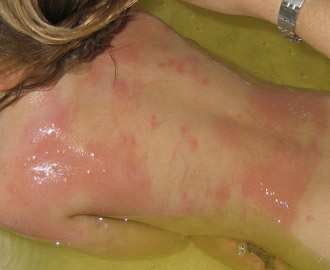 Diffused Erythema Rashes in Severely Bitten Areas Probably Due To Skin Scratching by Patient
How to tell if bites are caused by bed bugs
The bed bug bite looks like the bites of other
insects such as scabies, lice, mosquitoes and fleas. For this reason, a Doctor will not know if a bite is caused by a bed bug just from the appearance. To confirm that bed bugs are a problem, look for other problems such as dark stains on a mattress or an actual insect.
Mosquito bites compared to bed bug bites
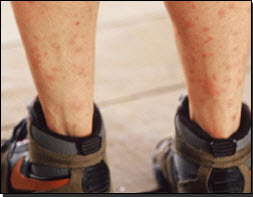 Mosquito Bites
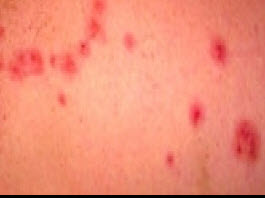 Bed Bug Bites
Bites That Look Like Bed Bug Bites
There are several types of insects that cause bites that are similar to those caused by bed bugs:
- Spiders
- Chiggers
- Scabies Mites
- Mosquitoes
Other Causes of similar skin reactions
Infectious causes:
- Fungal skin infection
- Chicken Pox
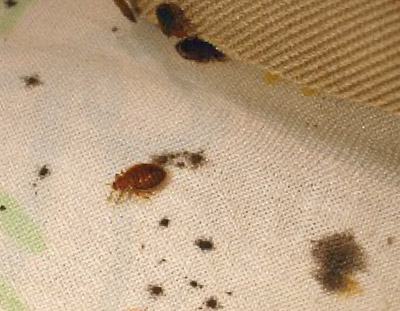 To Confirm Bites are Caused by Bed Bugs Look for Addtional Signs Such as Mattress Fecal Marks
Bite Treatment & how to stop the itch
For most people, bedbug bites do not need to be treated. Itch should go away in 1 to 3 days with the use of an anti-itch cream like cortisone. If the reaction to the bed bugs looks like it is severe then see a Doctor for a corticosteroid or an antihistamine.
Do not scratch the ares bitten in order to avoid infection. You could also try an anti-itch cream like Aveeno or calamine lotion. The key is to use a cream to calm the skin and then treat any infection with antibiotics if necessary. Treat bites as you would the bites of any other insect.
How to identify bed bugs
Review our collect of bed bug photos. You can see bed bugs with the naked eye.
Adults are oval shaped, have pronounced antennae and are bright red after a blood meal, and rusty color before. Nymphs or baby bed bugs are straw colored.
Killing bed bugs in your home or apartment
Bed bug bites will only end when the insects are removed from your
home or apartment. Killing bedbugs is not easy, since they
remain
hidden in cracks until they come out at night.
Hire an Exterminator
The best approach is to call in a bed bug pest control professional, who has the expert knowledge and experience to do an inspection, assess the extent of the bed bug problem and then recommend a treatment plan.
We suggest getting a free quote from a reputable exterminator from Home Advisor, speak to a local expert (call 877-673-2704) or search our exterminator database to find a qualified local bedbug exterminator near you from our list of qualified experts.
Please keep in mind that if the bed bugs are not treated correctly, insects missed will begin to multiply and the problem will return. Don't use a pest control company unless they have extensive experience treating bed bugs.
Make sure the firm you select provides a guarantee since 2 to 3 treatments may be needed. It is easy to miss bedbug eggs that hatch after the initial treatment was completed.
Do It Yourself
For smaller infestations and to do it yourself we recommend purchasing a bed bug kit. Multiple products are needed to remove both the bed bugs and their eggs.
For more information see our guide on getting rid of bed bugs.
Brochures
Each of these free brochures provides additional information on bed bug bite symptoms, patterns and treatment.
Frequently Asked Questions
Q. How do you know if you have been bitten by a bed bug?
It is very difficult to identify bed bug bites. If you have allergies to food or medicine, or reactions to parasitic mites, it can all create similar skin reactions. The key to determining the cause is to find the cause, such as collecting samples with a lint roller in the area where you had the reaction. Have a pest control company examine what you have collected. You can see bed bugs with the naked eye. It is even easier if you use a magnifying glass and a flashlight.
Q. Where do you find bed bug bites?
The most obvious places to find bed bug bites are exposed areas of the body such as the face, arms and legs. The bite might be a large welt or raised all red bump. It might or might not be itchy. People react in different ways.
Q. Do all bed bug bites look the same?
Each person reacts differently to bed bug bites because there are different chemicals in the bed bug bite. Reactions an be to an anesthetic or anticoagulant to the bed bug, or even to the poke from the stylus that punctures the skin.
Q. Do bed bugs bite in a straight line?
It might be coincidental that one to four bed bugs liked a spot and start feeding in a same area. It is rare for a single bed bug to start feeding in one spot and then move to another. If you have more than one bite or lesion, it is likely from more than one insect.
Q. What causes bed bugs to bite in straight lines?
Bed bugs will often stay on blankets or quilts that are against a person. They do not feed on purpose to create lines. The edge of the blanket on you is a straight line, causing the bed bug on the blanket to reach your skin in a straight line. For this reason you will see straight line feeding. This straight line feeding where there are 3 bites or more is commonly referred to as the "breakfast, lunch an dinner" bed bug bite pattern.
Questions and answers
Ask a Question or Share Your Bed Bug Experience With Others
Do you have a question or great story about bed bugs? Share it!
What Other Visitors Have Said About Bed Bugs
Click below to see contributions from other visitors to this page...
Insect Bites Next to Ear. Are These Bed Bug Bites? 
I woke up and had this bites next to my ear. I searched and no bites look like this?... Its swollen and it goes all the way down to the side of my. Neck. …
Are These Bed Bug Bites On My Leg
I was just wondering if I have a bedbug bite. It appears to only be on my right leg, and in rows of 2. It has increased in number everyday. Is it a …
Calamine Lotion for Bed Bug Bites Not rated yet
I have gotten bed bugs and at first, the bites were like small mosquito bites. I bought two mattress kits, one for my mattress and one for my box spring. …
Question about bed bug bites! Not rated yet
I have been breaking out into massive hives over the past month, and have noticed they are most severe in the morning when I wake up or (starting last …
references
Bed Bugs (Climex lectularius) and Clinical Consequences of Their Bites; Goddard, Jerome PhD, DeShazo, Richard MD