"
Bedbug infestations can be spotted with the naked eye by looking for the signs of bed bugs. In the bedroom this includes inspecting the areas surrounding the bed such as mattress and linen for fecal or red stains or by seeing actual insects. They can also be detected by bed bug sniffing dogs or caught in a trap. Bed bugs hide in narrow spaces.
Bed bug bites alone are not confirmation of an infestation. You should look for multiple signs such as the actual insects, bites, red or brown staining, or shedded skins.
To be sure, bed bugs can be mailed to the Cornell Laboratory for evaluation ($25 fee) or they can be shown to an experienced exterminator.
Once an infestation is confirmed it is preferable to hire a professional since even experienced exterminators need to apply up to three treatments. If an infestation is small, you can tackle the job with a bed bug kit that contains the necessary combination of products (two sprays, dust).
If you live in an apartment both your home and adjacent rooms in other apartments will need to be inspected to ensure that the insects are eradicated. Some lease agreements prohibit do-it-yourself treatment.
Using a professional from a reputable network such as Home Advisor (866) 214-8380 is the most reliable way to get rid of bed bugs. Networks ensure that the local exterminator is licensed and has the specific experience needed to kill bed bugs. Even the best exterminator may need to apply treatments on three occasions. For small infestations that are contained in one room, do it yourself kits can be effective using a
multi-product approach."
Where do bed bug Infestations come from in the first place?
Bed bugs need to be either carried into a home by hitchhiking on luggage or clothing, or they crawl from an infested apartment into another room.
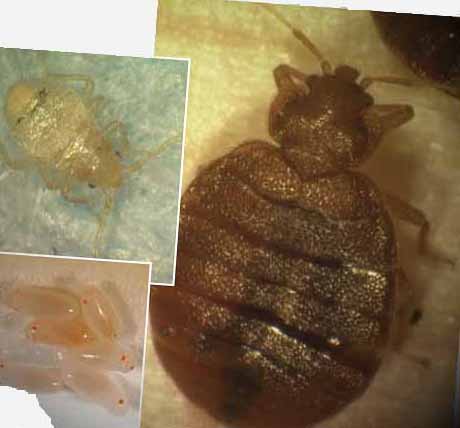 Pictures of Bed Bugs at Each Life Stage - From Egg to Adult
what diseases can you get from bed bugs?
Bed bugs do not cause disease and will not negatively effect your health. If bites appear on the skin they can become infected from scratching.
How Bad is My Bed Bug Infestation?
To determine the size of a bed bug infestation start by examining all areas around the infested bed or small credit card sized cracks in another room where people tend to gather such as a den or family room. Bed bugs will try and hide as close to the human host as possible, usually within 10 feet. They start in the mattress seams, bed frame and then work their way into nearby furniture. You can see bed bugs with a naked eye, so use a flashlight and check all tight crevices.
BedBug Video
Here's a video from National Geographic on bedbug infestations. Once you have reviewed the video, see the information below on steps for removing bedbug infestations.
Bed Video: Bed Bug Infestation Behavior
Video on BedBug Infestations and Lifecycle
Bed bug treatment Cost
Bed bug treatment can cost upwards of $1000 for a home and significantly more for an entire apartment building. Heat remediation treatment (where an entire home is heated to temperatures that kill bed bugs) can cost $4,000. An exterminator will help you lean about chemical, heat, freezing and other solutions.
Do it yourself kits will cost between $50 and $200 and include information needed to help you learn about bed bugs.
Confirming Bedbug Infestations
Bringing in a professional for an inspection and quote is the best way to determine if you have a bed bug infestation. A pest control expert from a network like Home Advisor (866) 214-8380 will inspect the seams of the mattress, furniture and other bedbug hiding places.
Many exterminators use bedbug sniffing dogs, which are very effective for finding bedbugs, particularly for determining if they are in the walls. The downside of using a dog is the higher cost of these types of inspections.
You can find a bed bug pest control expert here. This page also has tips for choosing a professional and questions to ask such as experience, tools used, cost and guarantees. It may take 2 to 3 treatments to eliminate a problem.
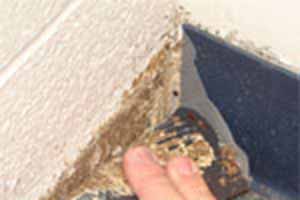 Signs of Bed Bugs Infestation at Baseboard
bedRoom Inspection Tips
Where to Look For Bed Bugs
- Along mattress seams and on any tags
- Behind head boards
- In ceiling/wall junctions
- Along baseboards
- Stuck to personal belongings
- Along baseboards
- Carpet edges
- Electrical outlets
- Curtain seams at the end of the rod
Start by Inspecting the Mattress
Bed bugs leave behind spots on the mattress and linens such as brown or red fecal matter. See the picture below for typical bedbug marks. Be sure to check any time you sleep in a new room such as a hotel, cruise ship or friends house. Peel back any sheets and mattress covers and look along the seams.
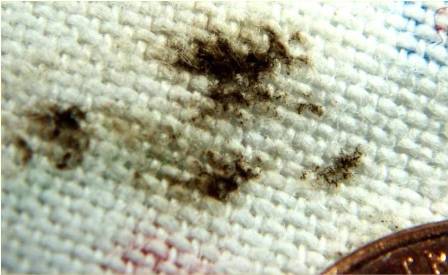 Mattress Stains Indicate the Presence of a BedBug Infestation
Place an Interceptor Under Each Bed Leg to Trap Bed Bugs
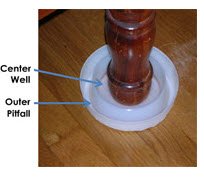 Climbup Interceptors Placed Under Each Bed Leg Can Monitor an Infestation. After Treatment, if the Climbup trap stays Empty, You Have Killed All of the Bed Bugs.
A small bowel called a ClimbUp Interceptor will trap bed bugs as they try and climb up onto the bed. You can tell the extent of the infestation by the number trapped. This is an inexpensive approach for both learning the size of the bed bug problem and to be sure they are gone after the room has been treated.
Bed Bug Bites
Bed bug bites are not a reliable way to know if your home needs to be treated for bedbug infestations. The majority of people do not show any bite reaction. A recent study found senior citizens living in bedbug infested apartments had no bite reactions on their body.
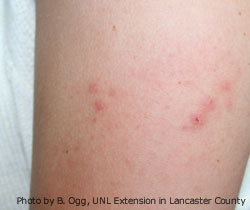 Bed Bug Bite Picture
Bed Bug Odor
Bed bug odor, which is a musty smell, is also not a reliable way for humans to detect the insects as an infestation needs to be large and may not always give off a detectable odor. This is not the case for bed bug sniffing dogs.
Bed Bug Identification by Mail
You can mail a bed bug to certain government offices and universities for evaluation. A popular service that requires a small fee is offered by Cornell University.
What Do Bed Bugs Look Like
An individual can identify bed bugs by several characteristics. Note that they change in appearance depending on where they are in their life cycle and before/after a blood meal:
In general you can identify bed bugs by:
- Body Shape: Oval and extremely flattened
- Length: Bed bugs are up to 6 mm in length as adults and 9mm after feeding
- Mouth parts: The mouth has 2 bristles which form a pipe-in-pipe system and is folded under the head and frontal thorax in a resting position.
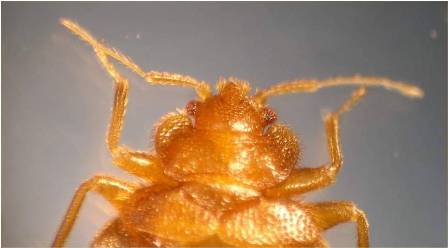 Close Up Picture of a Bed Bug
Pictures of Bed Bugs
Bed bugs pass through 6 life stages (called instars) before becoming an adult. They start in an egg and pass from stage to stage by taking in a blood meal during feeding.
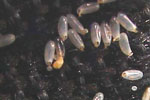 Picture of Bedbug Eggs - Hatched
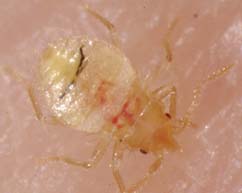 Picture Bed Bug Nymph (baby bed bug)
Adult Bed Bugs before and after feeding:
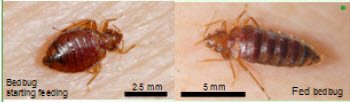 Picture of Bed Bug Adults Before and After Feeding
Insects That Are Similar in Appearance to Bed Bugs
Bed bugs are often confused with other insects. Insects that are similar to bed bugs include:
German cockroaches
When roaches are young they can look like bed bugs. Roaches have eggs which are more rectangular and feces is in the form of pellets. They are brown in color vs. bed bugs than red.
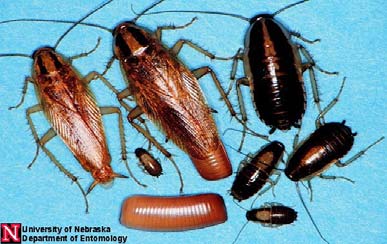 Picture of German Cockroaches Source: University of Nebraska
Carpet and warehouse beetle adults and larvae
These types of insects
feed on bed feathers and human hair. The larvae shed tiny hairs, that
can cause human skin itch.
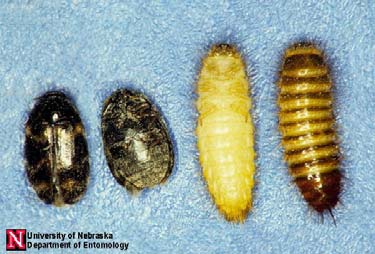 Picture of Carpet and Warehouse Beetles Source: University of Nebraska
Shiny spider beetles
Shiny spider beetles do not bite people. These spiders are often confused with ticks and bed bugs. They eat dried pieces of plants, seeds and dried meat.
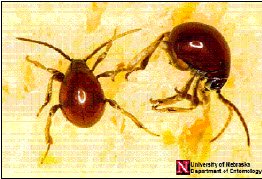 Picture of Spider Beetles Source: University of Nebraska
Bedbug Infestations Treatment
Hiring a Professional
Exterminators will tell you that bed bugs are one of the hardest insects to treat. Professionals use different methods to kill bed bugs such as heat (steam, thermal mediation), freezing sprays, natural dust and chemical insecticides. There are also mechanical methods such as vacuuming.
We suggest hiring a professional from a network that certifies members such as Home Advisor (866) 214-8380. A network will ensure that each member is licensed.
Importantly, ask for a guarantee to ensure that they will come back and apply the 3 treatments you will probably need before the problem is completely gone.
If hiring a professional with experience treating bedbug infestations,
see our list of questions
to ask a bed bug pest control expert.
How To Kill Bed Bugs - Do It Yourself Method
Four Easy Steps for Getting Rid of Bed Bugs
If you have a smaller bedbug infestation, it is possible to take a do it yourself approach to get rid of bed bugs. The key to success is to inspect every inch of the room where the bed bug infestation is taking place. You cannot just purchase a single spray and expect to be successful. Two types of sprays (knock down and residual for longer lasting protection) and a dust are critical components of a treatment plan.
Spray Considerations:
- is the spray natural or a chemical/insecticide. We only recommend insecticide sprays that have been proven effective against insecticide resistant insects (primarily found in Ohio and New Jersey).
- mattress safe
- does the spray kill bed bugs and their eggs
- child/pet safety (after the spray dries)
Purchasing A Bed Bug Kit
Bed Bug Infestation Kit Purchasing Guide
To do the job right, you need to pull together several products. Some are essential and some are optional, but helpful. You can save money by purchasing a group of products in a kit. The choice of organic products or chemical is one of personal taste.
Essential Bed Bug Pest Control Products and Their Use
1. Mattress Safe Bed Bug Spray: A mattress safe spray is important since 50% of bed bugs in a room can be found on or around the bed and box spring. Two good choices are a chemical based spray such as Sterifab or a natural organic spray such as Bug Patrol. Both sprays will also kill bed bug eggs. Sterifab has been successfully tested against insecticide resistant insects.
2. Chemical
Based Bedbug Spray with Residual Action:
There are some new and older bedbug sprays on the market that not only
kill bed bugs and their eggs, but all provide some lasting protection.
We suggest purchasing Phantom
bed bug spray for this purpose as it cannot be detected by bedbugs
after it dries, yet will kill the for several weeks after application.
This
type of spray is good for spraying into cracks and crevices and around
the box spring. The spray may take several days to
have
a full effect since it works by killing bed bugs on contact and by
interrupting the life cycle of the bed bug.
3. Bed Bug Dust: Bed bug dust is a natural product that is also called bed bug powder or diatomaceous earth. Bed bug dust is spread into cracks, walls and even inside a box spring to kill any late hatching bed bug eggs. The dust attaches to the bed bug, creating a hole in their outer layer, killing the insect.
4. Mattress and Box Spring Cover: Zippered bed bug mattress covers trap any late hatching or missed bed bugs inside the mattress and box spring. Mattresses do not have to be thrown out, just covered with a zippered bed bug approved case. Be sure to buy a cover for both the mattress and box spring. Covers do not prevent bed bugs, only trapping insects you might have missed during treatment.
5. Vacuum: A vacuum can suck up live bed bugs from a mattress and along the cracks in a wall. Use the brushless crevice tool to get into hard to reach places.
How to Get Rid of Bed Bugs - Do It Yourself Steps
Assuming you now have the products needed for treating bedbug
infestations, these are the steps for
inspecting a room, and killing bed bugs and bed bug eggs.
- Select a Safe Area: Select an area where you can move the mattress after it has been treated. This can be out in the hallway or an adjoining bathroom.
- Start with the bed linen: The bed area will be the location for all inspections, where possible. Start by folding the bed linen on top of the bed. Bag in a plastic container and lid or a heavy duty plastic bag. A good choice is the Double Zipper Large Ziploc bags, which are bed bug proof. Remove from the room and put into the safe area.
- Remove and
Discard of Clutter: Bed bugs can hide in any newspaper,
books etc. Place items for disposal into a plastic bag for immediate
disposal outside the home. Do all inspections on the bed to keep bed
bugs in one area. Remove pictures, inspect, treat picture
backs with spray product and when dry, bag (dry to avoid mold).
Bed bugs can hide in electronics. The only way to deal with electronics is to either discard or use a Thermal Heat Pack, which will super heat to the required 114 degrees. Do not use liquids near any electrical appliance or outlet.
- Inspect and
Treat the Mattress: Vacuum all mattress seams. Treat the
mattress with a mattress safe spray such as the Sterifab
mentioned above. Follow the manufacturers directions. Spray
along all seams and into any holes in the fabric covering. Be
sure to treat around any mattress labels. Once you treat one
side, hold mattress up on edge and treat the other side and edges.
After treatment, move to safe area (hallway etc.).
- Inspect and
Treat the Box Spring: It is possible that more bed bugs
have found a hiding place in the box spring than along the seams of the
mattress. Vacuum all areas of the box spring. Treat the top and sides
of the box spring with the spray product. Stand the box
spring on edge, within the bed frame, and treat around the bottom
fabric. Remove or peel back the fabric. Spray with
the Phantom spray along seams or the Sterifab. When done, put some bed
bug dust into the bottom of the box spring and replace fabric (not
necessary to replace fabric.
- Inspect and
Treat Nearby Furniture: Move into the bed frame area if
you can. Remove contents from drawers and place into plastic
bags. Use zippered bags for items that can be washed.
Other items should be disposed of, or placed into a heat
chamber for treatment such as the one offered by PackTite. If
this is not an option, consider disposing of the item.
Be sure to remove each drawer and treat the bottom of each. Test the bedbug spray to make sure that it doesn't stain the wood as many are alcohol or water based. Also inspect any furniture for signs of bedbug infestations, particularly if it is upholstered.
Other Helpful Bed Bug Pest Control Products
There are several products can help make sure that there are no more insects in a room being treated for bedbug infestations.
1. Hand Steamer: Use a steamer using the larger head on the steamer. Super heat the mattress seams, around furniture (check to make sure water doesn't stain wood) and along cracks. Bed bugs are killed at 114 degrees Fahrenheit. You can also use a hair dryer on a high heat setting when held in one location for 10 seconds. A steam cleaner bed bugs can be a helpful tool for safely killing bed bugs and their eggs.
A study described by the Australian Code of Conduct for Bed Bug Extermination has shown that steam followed by the use of insecticides provides better long-term control than the use of insecticides alone.
Control cannot be reliably achieved with steam alone. If buying a steamer, it must be able to produce steam at a low flow and high temperature. It is best to use commercial units that employ ‘dry steam’, which allows for quicker drying times.
Note: ‘dry steam’ is a misnomer; items treated will still be damp and a fan or ventilation should be used to dry the room afterwards, otherwise mold growth could occur. Immediately after steam treatment the surface should be recording a temperature of 70 (176F) -80oC. Steam flow rate must be kept to a minimum to avoid blowing bed bugs around the room. Single jet steam nozzles can blow bed bugs away. If such nozzles are used on mattresses then the nozzle should be always pointed. Choices are a low cost high PSI steamer such as this one or a professional grade model such as the Vapamore MR-100.
2. Climbup Interceptors: A climbup interceptor is an inexpensive way to trap bed bugs before they climb up onto a bed. These inexpensive bowls are placed under each bed leg. When a bed bug climbs up the side, they fall into the bowl and are trapped. This is a good way to measure the extent of bedbug infestations and to see if the bed bugs are gone after treatment.
3. Bed Bug Itch Cream or Spray: Besides the red marks left on the skin, bed bug itch is the most problematic symptoms of bed bug bites. When asking how to stop bed bug itch, just buy an insect bite topical ointment in a pharmacy. If bed bugs area constant problem you can buy a product that was specifically made to stop bed bug itch such as All Stop.
4. Portable Heating Unit: Not every item can be washed in hot water such as electronics or items that will be damaged. A ThermalStrike Portable Heating unit will super heat any objects placed inside to the required temperature for killing bed bugs. This is the only way to save items such as electronics and other items you would like to keep that may be infected. Professional exterminators often use larger versions of this method for treating items from bedbug infestations, such as a remote heat chamber or a heat chamber on the back of a truck.
5. Carpet Disinfectant: Carpeting presents its own problems when treating bedbug infestations. It is a hiding place for bed bugs and their eggs (particularly where the edges meet the wall). One approach is to use a carpet cleaner with some strong disinfectant mixed into the cleaner such as PuraCleanRX. Be sure to test in an out of the way area to see if the product will discolor your carpet.
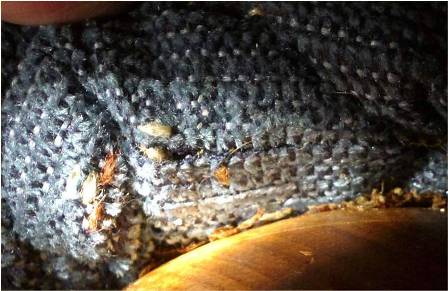 Bed Bugs and BedBug Eggs on Furniture
Treat the
Edges of the Room and all Cracks: Vacuum along all edges
of the room using the brushless crevice tool (bed bugs can get stuck in
the brush kind and then drop in other areas of the home). Treat all
cracks and edges with the bedbug spray. After spraying let
dry. Seal all cracks with wall putty. Inspect all carpet
edges. Use bed bug spray such as Phantom
to treat cracks. After spray drys, spread bed
bug dust into cracks and around edges of room to kill any bed
bugs from late hatching eggs.
Check behind any wall plates (electrical, cable) for bedbug
infestations. Use dust products around electrical outlets if
needed. Sprays are fine around cable. When in
doubt, use dust.
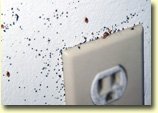 Pictures of Bed Bugs On and Around Electrical Outlet
Steam clean any carpet. Add a disinfectant to the mixture
such as PuraCleenRX to kill any eggs that are hiding in the carpet. Test in an
out of the way area to be sure that mixture doesn't cause carpet
discoloring.
Use the diagram below as a guide to areas that should be inspected for
bedbug infestations.
The bottom line is that every inch of the room should be
inspected and treated if necessary.
After Treatment Tips
- Seal the Mattress and Box spring in Zippered Covers: Zippered covers are not optional as 50% of bed bugs are found on, in and around the box spring. Choose bed bug mattress and box spring covers that are labeled for bed bugs. Bed bugs could escape from covers that are not labeled. Do not put covers on the mattress and box spring until they are dry from any sprays.
- Wash Clothes: Bring any machine washable items in a sealed plastic container or plastic bags to the washing machine. Wash on the hottest setting followed by 20 to 30 minutes in a dryer. Return to room after drying.
- Return Furniture and Mattress: Bring furniture and mattress back to the room. Return any removed items.
It may take 2 to 3 treatments to completely address any bedbug infestations that you encounter. It can take an entire day to properly treat a bed bug problem. If all else fails, hire a bed bug professional.
Bed bug Hiding Places
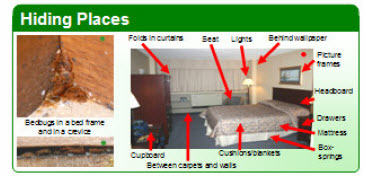 Bed Bug Hiding Places
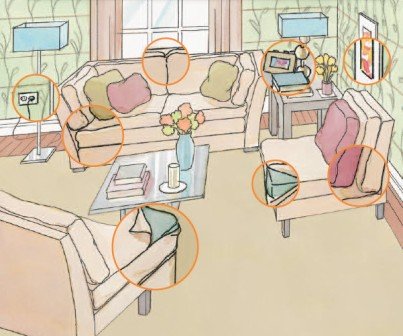 Picture of Bed Bug Hiding Places in Family Room or Den
Preventing BedBug Infestations
The only way for bed bugs to enter a single family home is for the bed bugs to be carried into the home by a family member. Bed bugs only travel 100 feet in any direction of where they hop off the object that carried them into a home.
For apartments with bedbug infestations, bed bugs initially enter the apartment the same way. There is then a 20% chance that they will spread to an adjacent apartment and a 7% chance that they will enter the apartment above or below the room that is infested with bed bugs.
Prevention starts with not bringing bed bugs into the home in the first place. Here are some tips for avoiding bed bugs:
- Used furniture or mattresses are often infested with bedbugs. New furniture and new mattresses can also be infested with bed bugs if they were transported in trucks that are used to take the used furniture and mattresses away!
- Used clothing that was removed from a home with bed bugs could be hiding the insects.
- Furniture and other household goods that came from a bed bug infested self storage facility.
- Bed bugs that were hiding in rented cars or trucks.
- Rented furniture that was not properly inspected.
- Travelers who picked up bed bugs in their luggage on cruise ships, hotels and even public transportation.
- Even used electronics and pictures can have bed bugs hiding inside the device or along cracks in a frame.
brochures
Each of these free brochures provide additional information on how to identify bed bugs in your home or apartment.