"Bed bug rash is an allergic reaction to a bed bug bite. A person's reaction to bed bugs can get progressively worse each time they are bitten. The rash area can also itch.
The rash should resolve itself within a week with no treatment. An over the counter insect itch cream could help to relieve any symptoms."
What is a bed bug rash and what does it look like?
Most people will develop a bed bug rash that consists of small red bump (called pruritic maculopapular or an erythematous lesion), at the area where the bedbug bite occurred. In allergic individuals, each bed bug that feeds on the human host's skin will leave behind a bump or red rash area.
Bed bug rash can vary between people. A minority will show no symptoms when bitten by a bed bug other than a small puncture at the site of the bite.
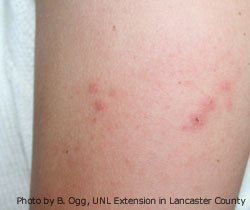 Bed Bug Bites With Swelling
(Source: CT Gov)
The time it takes to develop a reaction to the bed bug bite varies between people. It can range from an hour to 14 days later. The size of the red bumps could vary from 3/8 of an inch to 2 to 3 inches.
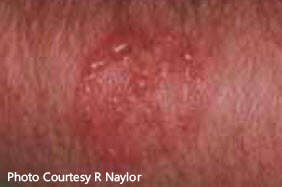 Allergic/Severe Reaction to Bed Bug Bites
Highly allergic or people that are repeatedly bitten may have a more pronounced reaction such as a wheal (welt) and even blisters.
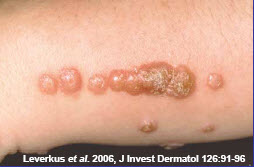 Severe Blister Skin Reaction and Swelling to Bed Bug Bites
In many people, the skin reaction that appears each time they are bitten gets progressively worse.
Bites from a bed bug infestation are most often seen on the head, arms, shoulders and neck. Bite marks can appear on other areas of the body, but are rare on the face and bottoms of the feet. It is not unusual for a straight line pattern to appear, particularly if an arm is resting against a mattress seam where an infestation is hiding.
Bed Bug Rash
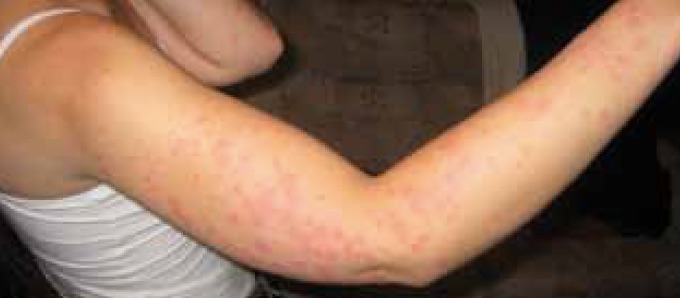 4 Year Old Child's Arm Showing Rash Symptoms (Erythematous) After Being Bitten By Hundreds of Bed Bugs.
Some individuals get a rash which can occur days after a bite. Often the rash area is scratched which causes the area to become infected. Infections could last on the skin for weeks.
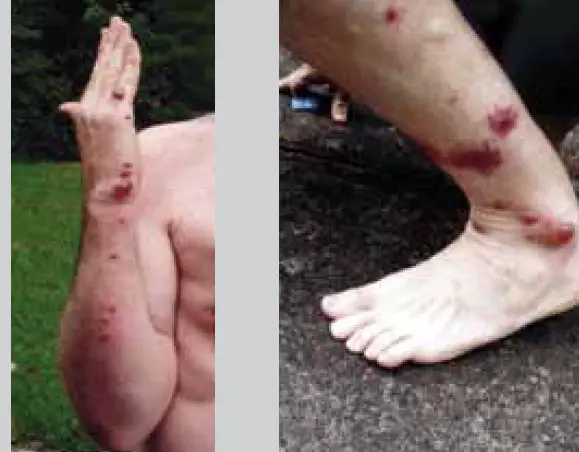 Bullous Bumps Skin Symptoms and Swelling Signs From Bed Bug Bites.
Infection (known as a secondary infection since it was caused by another condition), can result in folliculitis (inflammation where the skin meets each hair), cellulites (bacterial infection just below the skin surface).
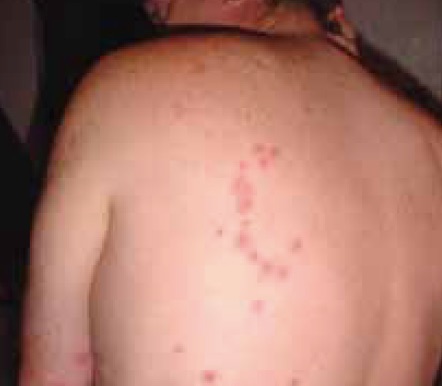 Bed Bug wheal rash pattern on back, a pattern and irritation consistent with multiple bed bug bites.
Other Reactions to Bed Bug Bites
In some cases, humans are at a health risk and can suffer from:
- asthma
- urticaria (elevated patches on skin, swelling)
- In some cases anaphylaxis. (immediate and severe life threatening allergic reaction including constriction of the throat which restricts breathing.)
Bed bugs do not spread disease, but can trigger allergic reactions that result in what is listed above.
Treatments for Bed Bug Rash
Over the counter anti-itch and anti-biotic ointments are usually all that is needed. If rash areas are infected and are not healing on their own, be sure to see a Doctor as an oral anti-biotic or prescription cream may be needed.
An over-the-counter anti-itch cream may also help such as Aveeno. A Doctor will treat chronic reactions with medications such as epinephrine, corticosteroids and antihistamines.
What Else Could it Be?
Bed bug bites are often misdiagnosed. Insects that produce similar symptoms and signs in humans could be from other insects such as:
- Scabies (can be confirmed with a skin scraping)
- Mosquito bites
- Flea bites (small bites or spots on lower legs)
- Food allergy
- Antibiotic reaction
- Chiggers
- Eczema
- Skin infection
- Staphylococcus infections
- Chicken pox
All of the causes mentioned above need to be ruled out before a diagnosis is reached.
The only way to make a diagnosis is to find and identify a bed bug infestation in your home or apartment.
Look for signs of bed bugs such as eggs glued on surfaces, stains on bedding such as a mattress seam (black or blood red marks). Check around furniture located near the bed and cracks in the walls for a bed bug infestation.
references
Goddard, Jerome PDH, deShazo, Richard MD
London Pest Group
Ask a Question or Share Your Bed Bug Experience With Others
Do you have a question or great story about bed bugs? Share it!