"Bed bug extermination is best left in the hands of a professional. However, if an infestation is small, or if you can't afford an exterminator, bed bug control can be established with some hard work and importantly, the right combination of products. Multiple products are needed to kill bed bugs, including a contact spray to knock down or reduce the bed bug population when sprayed directly on the insects, followed by the use of products that provide longer lasting protection by creating an invisible field that an insect might pass through.
While over the counter options for bed bug control are effective against insecticide resistant bed bugs, Professionals have higher options not available to the public such as using dogs to detect bed bugs, and treatment options such as fumigation, insecticides, freezing sprays, and heat treatment (thermal remediation). Most treated areas require multiple applications of insecticide, with the second and third treatment used to kill any bed bugs and bed bug eggs that might have been missed during the first or second application."
bed bug extermination is difficult
Exterminators were recently polled and agree that a bedbug infestation is the most difficult to treat. There are several reasons for this:
- Bed bug populations can hide in spaces as thin as a credit card, and only come out when they need to feed.
- The insects are showing resistance to several commonly used sprays or insecticides. Bed bug spray products referenced below have been independently tested and work against insecticide resistant bed bugs.
- There is no one single insecticide that can be used for treatment, at least two are needed.
- Bed bug problems quickly multiply at room temperatures, with a single female queen is able to lay 500 eggs. They make treatment difficult as they are hard to spot (small pear shaped, white and the size of a poppy seed. Bed bug eggs adhere to surfaces with a glue like substance.
- Multiple bed bug treatments may be needed (often 2 to 3)
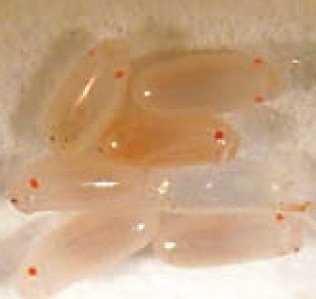 Bed bug eggs are "glued" onto a surface.
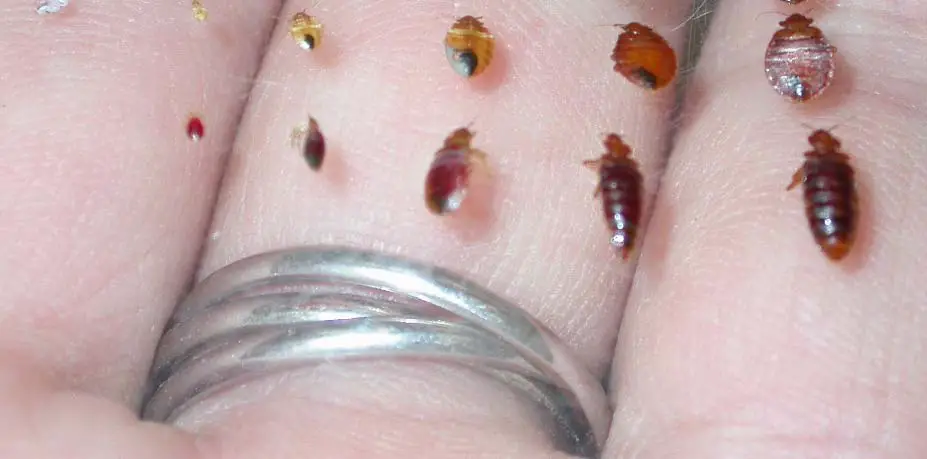 Bed bugs pictures before and after a blood meal. They can be seen with the naked eye with a baby about the size of a pin head or apple seed with adult bed bugs about 3/16" in length. They change in appearance at each life stage and before/after feeding on a host.
extermination Cost
Do It Yourself bed bug treatment
Do it yourself bed bug control requires several types of products. A do it yourself kit is approximately $150 - $200 when purchased online and is the most affordable way to buy the several different types of products needed including a bedbug spray, dust and hand steamer.
Having a bed bug bite or allergic skin reaction alone is not confirmation of an infestation. Be sure to confirm with other signs of a bedbug infestation such as fecal marks on the mattress (black or red blood stains), or by capturing and confirming the presence of the pests.
Professional exterminator
An inspection of a home by a professional can cost clients from $100 - $500 depending on the approach used, plus the cost of treatment which can range from $500 to $1000+. Inspections can include the use of a bed bug sniffing dog (bed bugs give off a unique raspberry like scent) and as mentioned above as well as looking for signs of the pests. An exterminator will discuss chemical (insecticides) and non-chemical (heat, freezing spray) treatment options. We suggest calling eLocal at (877) 673-2704 to find a local extermination firm that will do an initial evaluation at no charge and treat the problem in an effective way using an approach you approve. You can also request a quote by visiting our exterminator search page.
Preparation
Preparation to treat these pests involves getting an infested room ready for treatment. If hiring a professional, check with your exterminator.
These are the general steps:
- Collect all Linens and Seal in Plastic Bags Before Removing From the Infested Room: Place all blankets, towels, sheets, pillow cases and place into a plastic bag or bin that seals with a snap lid. Ziploc Big Bags are perfect for this purpose. Do not remove items from an infested room before they are bagged.
- Wash and Dry Linens: Wash all items in hot water. Dry linens on highest heat setting in the dryer. Throw out bags after emptying and use new bags with the clean linens. Some exterminators will suggest inspecting and washing any clothing in night tables and drawers.
- Reduce Clutter: Clutter provides hiding places for bedbugs It also can prevent pesticides and other treatment methods from reaching the bedbugs. Bag all clutter and dispose outside of the home. Dispose of loose items such as newspapers and magazines. Empty drawers in plastic bins if furniture has been infested. Ask your exterminator about throwing away items such as pillows.
- Vacuum: Vacuum all surfaces. Be sure to use the crevice tool around the baseboards, and around cracks and crevices. Also use the crevice tool around the mattress, box spring and other areas of the room. Note that many bed bug exterminators will do the vacuuming for you. When done, take out the vacuum bag in the room being treated, seal in a plastic bag and dispose.
This should be all that is needed before the treatment effort begins.
Bed bugs sprays and other products required
Homeowners will need a combination of products and methods to effectively kill bed bugs. You can save money by purchasing a bed bug kit.
Products that are absolutely necessary include:
- Knock Down Spray: A knock down spray will kill the pests and their eggs instantly and permanently on contact. It is used to reduce the size of the bed bug population. We suggest the insecticide based pump spray Sterifab or the aerosol Bedlam as both are shown to work against insecticide resistant bedbugs. An organic alternative is Bug Patrol Spray.
- Residual Spray: These sprays provide lasting protection, with most working by interfering with the bed bug life cycle. These types of products can take as long as 7 days to start working. We recommend the aerosol spray Phantom, as it also works on insecticide resistant bed bugs.
Note: do not use bed bug bombs. These will kill some bed bugs and disperse others into the walls. After use they will re-enter hiding places near a human host. - Vacuum with Crevice Tool: Every insect you vacuum up is one less you have to kill with other methods.
- Hand Steamer (optional): High temperatures kill bed bugs and eggs. Steaming infested areas such as a mattress seam is a natural way to remove the insects.
- Plastic Garbage Bags (we prefer a bed bug proof bag such as Ziploc Big Bags)
- Bed Bug Dust: This is a natural product that is applied to cracks and crevices to kill any bed bugs that hatch from eggs that might have been missed. The dust clings to the bed bugs exoskeletons.
- Mattress and Box Spring Covers: Mattress covers for bed bugs and box spring covers are helpful as they trap any bed bugs and eggs that you might have missed. You do not need to throw away your mattress or box spring.
Treatment Methods Used by Exterminators
Exterminators have several treatment options at their disposal for treating a bed bug infestation. Ask your exterminator which methods they prefer to use in your area. These include:
- Vacuuming: You can see bed bugs with the naked eye. A good vacuum can be used to begin to reduce or knock down the bed bug infestations.
- Steam: Heat kills bed bugs at temperatures above 113F. A professional steamer will kill both bed bugs and their eggs.
- Heat Treatments: A technique called thermal remediation uses portable heaters to heat rooms or an entire home to the required temperature. This method is effective, but expensive ($2,000 to $6,000 per treatment). Portable heat chambers or heat rooms are also used to treat items from the home. A vinyl heat chamber called a PackTite can be used to treat electronics, household items and is large enough to treat luggage when returning from a trip.
- Freezing Spray: A carbon dioxide spray (dry ice) is used by many exterminators. If is effective at killing bed bugs and their eggs and can be used on all surfaces such as couches and electronics.
- Bed Bug Pesticide: While many insecticides are showing bed bug resistance, many do not. Two types of products are used, one to kill bed bugs and their eggs on contact, and others to provide longer lasting protection. Most of these are called IGR's (insect growth regulators) which take up to 7 days to work. Knock down products combined with residual IGRs are an effective approach to bed bug treatment.
- Fossil Dust (also called diatomaceous earth or fossil dust): This is a natural product made of ground fossils. The dust is applied in a thin layer and clings to the bed bug, causing death.
- Fumigation: Pesticides such as vikane are effective fumigants. A room or home is sealed, and then fumigated. One company offers portable fumigation chambers for treating household items such as electronics.
- Freezing Temperatures: Freezing temperatures will kill bed bugs. There is some debate as to how long is needed. While 5 days is probably enough, waiting 2 weeks will ensure that all bed bugs and their eggs are killed. The Canada Department of Health suggests 3 days. This will work outdoors or in a freezer.
Do It Yourself BedBug Kits:
One of the most popular and most efficient kits on the market is offered by Bed Bug Supply. Their new kit offers some of the most advanced and professional products to effectively treat your bed bug infestation.
Getting rid of bed bugs is hard work. Kits usually include:
- Bed Bug Sprays (contact and residual)
- Hand Steamer
- Dust Product
Some kits also include an instructional booklet, itch relief for bed bug bites, and bed bug certified mattress encasements.
Step by Step Instructions for Getting Rid of Bed Bugs
The key to getting rid of your bed bug infestation is to know where to look and to be thorough, particularly when working around the bed frame.
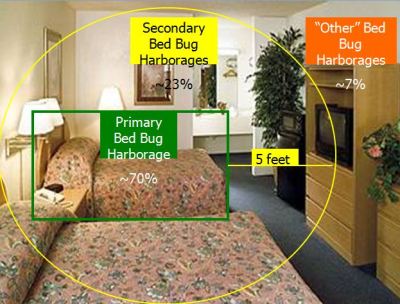 Typical Places Bed Bugs Hide
1. Select a Safe Area: Choose an area just outside of the room that will be treated. This area should be large enough to hold the mattress and other items after they are treated.
2. Wash the Blankets and Linens: Fold the blankets, sheets, bed pads ad pillow cases. Place into a plastic bag or ideally something that seals such as a plastic bin or Ziploc Big Bag. Bring items to washer and wash in hot water followed by 20 to 30 minutes in the dryer.
3. Dispose of Clutter Near the Bed: Dispose of any items such as magazines and newspapers that are near the bed. Other items such as items in drawers should be place in snap lid plastic containers or sealed plastic bags. Every item is suspect for hiding bed bugs. They can be treated:
- In the washing machine and dryer...or
- 30 minutes in the dryer...or
- 5 days in the freezer, or outdoors in freezing temperatures...or
- inside heat treatments such as a Packtite...or
- with the use of bed bug spray
4. Vacuum: The vacuum is a helpful tool for any treatment effort. Vacuum floors, carpet edges, cracks and crevices thoroughly. Use the crevice tool around baseboards and any cracks and crevices. Use brushless vacuum attachments if you have them to avoid bed bugs getting caught in the brush hairs and then being spread to other areas. When done vacuuming, remove vacuum bag in room being treated, seal in a plastic bag and dispose of the bag outside of the home or apartment.
5. Treat the Baseboards: Start by vacuuming along baseboards with the vacuums crevice tool. If you have a hand steamer, start by applying steam to the perimeter of the room. Hold the steamer for a few seconds in each location. When dry,, start with the knock down spray (e.g; Sterifab) along the baseboards. Follow this with the residual spray (e.g; Phantom - Bedlam in New York only). This is a good way to start, as this sets up a perimeter in case any bed bugs are jarred loose during treatment and try and hide.
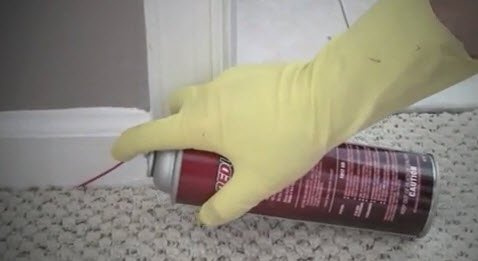 Treat along the Baseboards. An Aerosol Spray such as Bedlam will come with a nozzle attachment that can direct the bedbug insecticide directly into the crack where floor meets the baseboard
6. Treat the Mattress: Start with the vacuum crevice tool. Follow this with the use of a hand steamer to kill any bed bugs using heat. When dry, Use a mattress safe spray such as Sterifab or Bug Patrol to treat the mattress. When done, move mattress to the designated safe area.
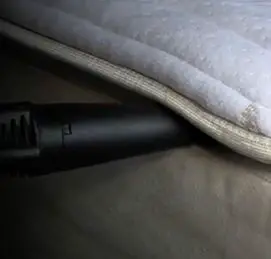 A Hand Steamer is an Effective Method for getting rid of bed bugs (heat) hiding in mattress seams without the use of insecticides. Hold steamer in place for several seconds before moving on to the next area. Steam can be used alone, or in combination with a mattress safe insecticide spray (Sterifab) or organic spray (Bug Patrol).
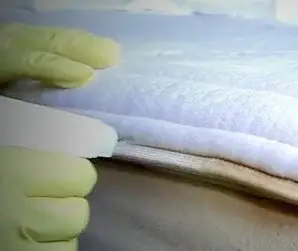 Bed bugs Like to Hide in Thin tight Spaces About the Width of a Credit Card. Be Thorough in Your Treatment Efforts, Treating Around Tufts, Seams and Particularly around any Mattress Labels
7. Treat the Night Tables: Remove drawers from any night tables and place on top of the box spring. Treat the drawers with a knock down spray followed by a residual spray. Do the same to the inside of the night tables. Return drawers after treatment. Be sure to treat any items in drawers that are near the bed. Also treat the bottom and possible inside of any light fixtures that are on the night tables.
Note that electronics such as clock radios, televisions or computers are common hiding places for bed bugs. The only options for electronics are to
- throw them out
- store them away for a year to starve any hiding bed bugs
- buying a PackTite Heat Chamber and then heating the item to the required temperature (check with manufacturer to make sure item can withstand the heat).
- freezing - place items in freezer for 5 days (also check with manufacturer)
- call a local exterminator and see if they either have a heat chamber or fumigation chamber that can treat electronics.
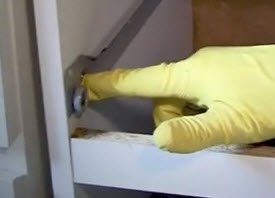 Be sure to treat inside furniture with the bed bug spray, particularly along drawer tracks, a common hiding place for bed bugs. After bed bugs treatment, consider placing bed bug dust into cracks and crevices
8. Treat the Box Spring: It is equally important to treat the box spring as it is to treat the mattress. Start by vacuuming with the crevice tool followed by the use of the hand steamer. Follow this with the use of a knock down spray and residual spray. Turn the box spring on its side, and peel back or remove any cloth covering. Steam/spray the inside of the box spring. Place bed bug dust inside the box spring. When done, move to the safe area.
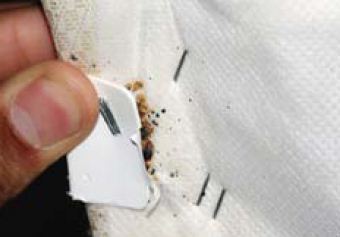 Bed bugs removal in and around the box spring is important. This picture shows bed bugs hiding behind plastic corner guards on a box spring. To kill bed bugs use the bed bug knock down spray.
9. Treat Any Bed Frames, Around Windows and other Cracks/Crevices: Continue your bed bugs treatment efforts with the steam, knock down spray, residual spray sequence. Focus efforts in a 5 foot radius from the bed. Treating the entire room is not a bad idea. Be sure to treat inside the bed frame legs if they are hollow. Also be sure to inspect and treat any picture frames.
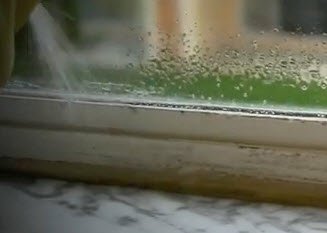 Treat around window frames with steam, knock down and residual sprays.
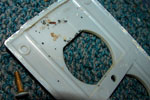 Bed Bug treatment efforts require that you leave no stone unturned. Look behind wall plates such as electrical outlets and cable plates. Use bed bug dust in areas where it is dangerous to use liquids such as electrical plates.
10. Cover the Mattress and Box Spring: After the mattress and box spring dry, place zippered bed bug covers over both. This will trap any bed bugs and eggs you might have missed during the treatment effort. Return the mattress and box spring to the bed frame.
11. Use Bed Bug Dust: Sprinkle a thin layer of bed bug dust in any cracks and crevices. You can place dust inside furniture etc. Use a duster to apply dust or purchase in an applicator bottle like this product from JTEaton.
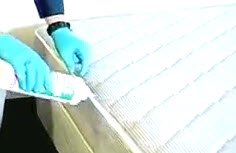 A bedbug dust product can be applied to any cracks or crevices as the last treatment step. Fossil dust is a natural product that kills bedbugs when it clings to the outer area of the insects
12: How to Kill Bed Bugs if you have Carpets: Be sure to vacuum and then steam clean carpets. For added protection, add a disinfectant formulated to kill bed bugs to the cleaning fluid. Test to make sure that you do not stain the carpet with the disinfectant.
Steps to Take After Bed Bug Treatment
- Seal the Mattress, Box Spring and Pillow: Buy mattress and box spring covers that were made to trap bed bugs that were missed during treatment. It might be cheaper to buy a new pillow. It is equally important to buy covers for both the box springs and mattress as both are hiding spots for bed bugs.
- Unpack Anything you Washed and Return to Room: it's safe to return items to the bed. If you would like to be sure that bed bugs are gone, you can buy inexpensive bed bug traps called Climbup Interceptors.
As noted above, bed bug infestation removal usually takes 2 to 3 treatments, since it is very easy to miss bed bug eggs.
Questions to Ask Before Hiring a Professional for BedBug Extermination
Each bedbug exterminator and company uses different methods and has varying levels of experience. Here are some questions to ask:
- Experience with bed bugs?
- Can they provide references?
- Cost for in-home inspection and treatment?
- Do they use bed bug sniffing dogs?
- Do they provide a guarantee, and for how long? (2 or more bedbug treatments are common)
- What are the bed bug treatment methods used?
- Chemicals (insecticides)
- Mechanical (vacuuming, steam)
- Heat (thermal remediation - portable heaters)
- Freezing (carbon dioxide spray)
- What do you need to do to prepare for treatment?
- Pet and child safety of methods?
- Do you have to leave the home and for how long?
Selecting a Bedbug Extermination Company:
Finding a bed bug exterminator can be expensive. In New York City, an apartment bed bug inspection (not treatment!) with the use of a bed bug sniffing dog is $500. Treatment can cost from $500 to $1000 or more depending on the size of the residence. Apartment buildings are a special case, since multiple floors (rooms above and to the side) of the place where the bugs were found may need to be treated. It is not unusual for entire buildings or dormitories to be evacuated for days during treatment.
Here are some guidelines for choosing a bedbug extermination company distributed by the New York City Department of Health.
How to Find a Bed Bug Pest Control Company:
- If in an apartment, ask the property owner or neighbor about companies they may have used. Also ask around your community.
- Use the Internet to search for companies, particularly those that are mentioned in the press. Many companies can be found in our local listings.
- Look for companies that advertise “integrated pest management” services. They’re more likely to inspect and monitor conditions, and they’ll recognize needed improvements.
- Use companies that are registered Department of Environmental Conservation in your State.
- Ask for references. Ask to speak to customers that completed treatment.
- Ask about their membership in recognized national, state and local pest control associations.
- Ask companies how they approach the problem of bed bugs. Good companies will insist on inspecting the premises before quoting a final price , provide a written bed bug inspection report, along with an action plan and will price a job according to inspection findings, not based on a flat fee.
- Ask if the company can repair any cracks in walls or floors that are found, which are bed bugs hiding place, or can they refer you to a contractor that they work with. If repairs are not part of the service agreement, then the company should provide you with a list of things needed to solve the problem.
- Ask the about the treatment plan that will be used including equipment, chemicals, and the safety of those approaches for both adults, children and pets. Ask about chemical and non chemical approaches (heat, vacuuming etc).
- Ask how carpets will be approached and how they will ensure that hard to kill bedbug eggs are going to be exterminated.
- Ask about their policy toward repeat visits and how many visits they find are needed to complete the job.
- Ask if employees are trained for bed bugs and have had experience with bedbug extermination.
- Determine if they encourage notifying adjacent apartments and successful approaches for getting all surrounding apartments to cooperation in the bedbug extermination efforts.
- Agree on a service treatment plan and pricing structure. Don’t short-change the solution. The cheapest services are rarely the best.
- Know what you and the company are each responsible for.
- Walk around your home with the pest control professional during each visit, and keep track of the work being done.
- Ask the pest control professional to point out any conditions that contribute to bed bugs in or near your property, and get a written inspection report.
FAQ
What kills bed bugs instantly?
A tested knock down bed bug spray such as Sterifab or Bedlam will kill bed bugs instantly. Natural methods include high heat from a source such as a steamer (held for 10 seconds) will also work.
Can bed bugs survive extermination?
Bed bug survival after depends on the the thoroughness of the treatment. Whole home heat remediation is 100% effective. Chemical treatments such as insecticides may require 2 to 3 applications to kill any insects that might have been missed during the first treatment.
how long does it take to get rid of bed bugs with an exterminator?
It can take a minimum of 1 to 2 weeks to get rid of bed bugs with an exterminator that uses insecticides. The exterminator will kill as many bed bugs as possible during treatment using a contact knock down spray. The exterminator will also apply products that provide residual protection that will kill any insects that might have been missed. Whole home heat treatment will kill 100% of insects upon treatment.
How much does it cost to exterminate for bed bugs?
A good rule of thumb is $400 per room for bed bug treatment. Costs can be higher for heat treatment and if a bed bug sniffing dog is used.
Ask a Bed Bugs Treatment Question or Share Your Experience With Others
Do you have a bed bug treatment question or suggestion? Share it!
What Other Visitors Have Said About Bed Bugs Treatment
Click below to see contributions from other visitors to this page...
Bed Bug Steaming after Exterminator Not rated yet
How soon after an exterminator has been here can I use steam and powder? I don't want to spray steam on anything if it's going to reactivate the poison …